
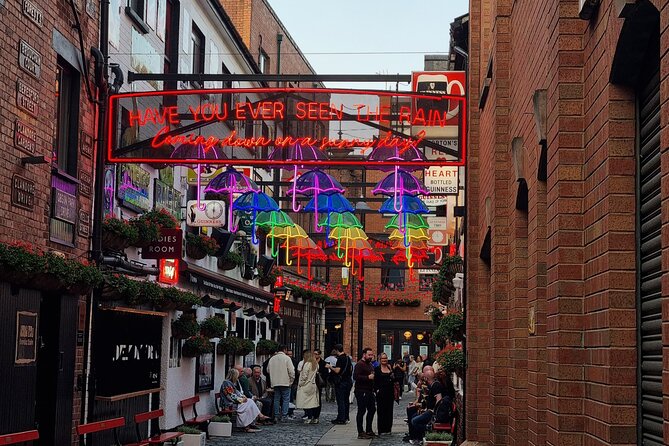
Reviewed · MURALS & PEACE WALL TOURS
Belfast Walking Tour: City Centre History, Troubles & Stories
Belfast rewards a closer look. This 2 to 3 hour walk links grand civic buildings, old industrial streets, peace symbols, and waterfront art while guide Corey explains how the city became what it is today. I like the mix of major sights and personal local stories, and I especially like that the tour tackles Belfast’s political past with honesty and hope. The main drawback is that this is an outdoor walk, so wet weather can affect the experience.
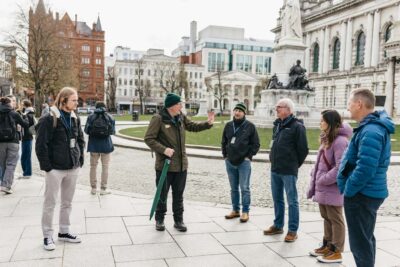
You begin and finish at Belfast City Hall, making this an easy first activity in Belfast. I also like the small maximum of 15 people, plus the supplied audio headsets, which let you hear Corey near traffic or while stepping aside to take photos. This is a good orientation walk, but it is not a deep visit inside every landmark, and most stops are brief exterior visits.
In This Review
- Key points to know before you book
- Starting at Belfast City Hall
- Linenopolis and Belfast’s industrial rise
- St. Anne’s Cathedral and the Cathedral Quarter
- The Albert Memorial Clock and stories of old Belfast
- The Big Fish and Belfast’s waterfront symbols
- The Spirit of Belfast and the city today
- What makes Corey’s guiding style work
- Is $30.16 a fair price?
- Timing, weather, and practical comfort
- Who should book this Belfast walk?
- Should you book the Belfast Walking Tour?
- FAQ
- Where does the Belfast walking tour start?
- Where does the tour finish?
- How long does the walking tour last?
- How much does the tour cost?
- What language is the tour offered in?
- How many people can join the tour?
- Are admission tickets included?
- Are service animals allowed?
- Is the tour close to public transportation?
- What happens if the weather is poor?
- Can I cancel for a full refund?
Key points to know before you book
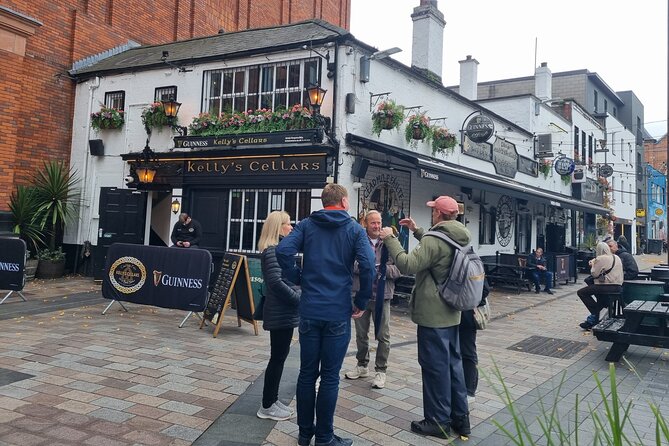
- Local guide Corey: Expect history told by a Belfast native, with personal memories, humour, politics, and practical advice about places to eat and drink.
- Nine central stops: The route covers City Hall, the Linen Quarter, St. Anne’s Cathedral, the Albert Memorial Clock, waterfront sculptures, and more.
- A serious look at Belfast’s past: The tour addresses identity, conflict, childhood memories, and the city’s movement toward peace.
- Headsets make a difference: You can hear the guide without crowding around him, even in noisy parts of the centre.
- Small group size: The maximum is 15 people, which should make questions and conversation easier.
- Good first-day value: At $30.16 per person, the walk gives you an informed city overview without the cost or time commitment of a longer excursion.
Starting at Belfast City Hall
Meet at Belfast City Hall on Donegall Square North. This is one of the clearest meeting points in the city, and the walk begins in a place that quickly explains Belfast’s civic pride.
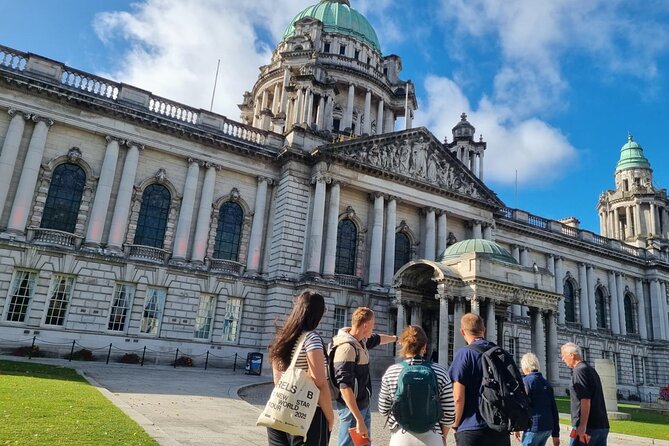
City Hall is a grand Edwardian building with a strong public presence. Corey uses it to open stories about politics, identity, and the decisions that shaped Belfast. You get about 20 minutes here, the longest pause on the route, so there is enough time to take in the exterior and understand why this building matters.
The first stop is free, but that does not mean it is a quick photo stop with no context. The value comes from the explanation around the building. Belfast can seem compact and easy to read at first glance, yet its public spaces carry competing ideas about community and belonging. City Hall is a useful starting point for those themes.
You then move through Donegall Square, the open space around City Hall. This is a practical orientation point, because you are already in the centre of Belfast, close to shops, cafés, transport links, and several later stops.
More City Tours in Belfast
- A History of Terror – Belfast City Centre Walking Tour
★ 5.0 · 2,883 reviews - Private Black Taxi Belfast City Tour
★ 5.0 · 2,188 reviews - City Sightseeing Belfast Hop-On Hop-Off Bus Tour
★ 4.5 · 2,012 reviews
Linenopolis and Belfast’s industrial rise
The Linen Quarter offers a change of mood. Here, the focus shifts from civic life to industry and work.
Belfast was once known as the linen capital of the world. Corey explains how linen helped make the city internationally important and how the old industrial district shaped Belfast’s growth. You spend about 10 minutes here, which is enough for a compact introduction rather than a full industrial-history lesson.
I like this part because it keeps Belfast from being reduced to conflict alone. The city’s story also includes trade, manufacturing, labour, ambition, and international business. If you enjoy understanding how a city earned its wealth and identity, this stop adds useful background.
The walk continues to Linen Hall Library, Belfast’s oldest library. It has preserved books and archives for more than 200 years, making it one of the city’s important cultural landmarks.
The scheduled pause is around 10 minutes, so do not expect a long research visit or a detailed archive tour. Instead, you get a sense of the library’s place in Belfast’s cultural life. It is a reminder that the city’s past survives not only in monuments, but also in institutions that collected and protected its ideas.
St. Anne’s Cathedral and the Cathedral Quarter
Belfast Cathedral, formally the Cathedral Church of St. Anne, brings architecture and religion into the walk. You pause for about 10 minutes and hear about the cathedral as a centrepiece of the Cathedral Quarter.
This area is linked with creativity, nightlife, and city life, so the stop helps you see how older buildings fit into modern Belfast. The cathedral itself gives the route a visual change after the civic and industrial sections.
You should think of this as an outside introduction rather than a full church visit. The tour price includes no separate admission charges, and the listed stops are designed as parts of a moving walking route. If you want to study the architecture in detail or spend quiet time inside, you may need to return on your own.
Still, the stop works well in the larger story. Belfast is not presented as one single type of place. Government, manufacturing, faith, culture, nightlife, and public art all share the same central streets.
The Albert Memorial Clock and stories of old Belfast
The Albert Memorial Clock Tower is one of Belfast’s most recognizable landmarks. Built in honour of Prince Albert, Queen Victoria’s husband, it is often called Belfast’s leaning tower.
Corey uses the clock to share stories linked with sailors and nightlife. That local colour is part of what makes this walk different from reading a plaque or following a bare list of dates. You see the monument, but you also hear about the people and habits that once surrounded it.
The stop lasts about 10 minutes. That is enough time for photographs and a clear explanation, though anyone hoping to climb the tower or spend a long period examining it will not get that during the walk.
This is also a good example of the tour’s tone. The subject matter can be serious, but the delivery includes humour and everyday stories. Several comments about the experience praise Corey for keeping the two-hour walk entertaining without losing its substance. That balance matters in Belfast, where a tour can become either too solemn or too shallow if handled poorly.
More History Tours in Belfast
- Belfast: A History of Terror Walking Tour
★ 4.9 · 854 reviews - Private Political History & Murals Tour Belfast
★ 5.0 · 182 reviews - Belfast: Best of Belfast History, Culture & Art Walking Tour
★ 4.9 · 158 reviews - Belfast Walking Tour with a Local – History & Craic
★ 4.9 · 130 reviews
The Big Fish and Belfast’s waterfront symbols
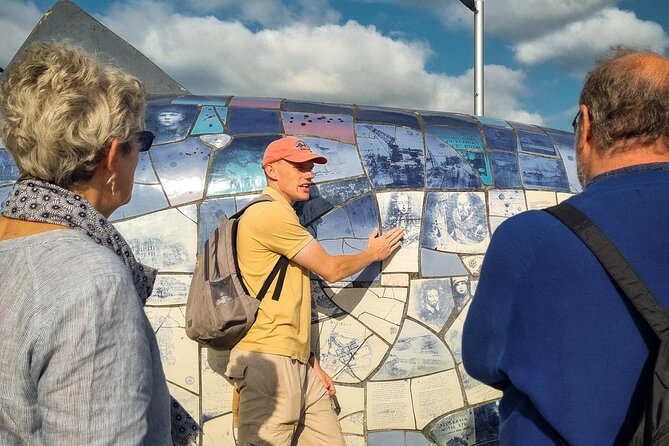
At the Big Fish, you meet one of Belfast’s most unusual public artworks. The sculpture is known as the Salmon of Knowledge and is covered in ceramic tiles that tell parts of the city’s story.
The suggested custom is simple: rub its nose for luck. It is a playful moment after the heavier historical material, and it gives you an easy photo opportunity near the river.
The Big Fish also shows how Belfast uses public art to tell stories outside formal museums. The tiles turn an everyday walk along the waterfront into a short visual record of the city. You do not need to be an art specialist to enjoy it, and Corey’s explanation helps give the sculpture a place in the wider city story.
The route then reaches the Beacon of Hope, a sculpture connected with peace, resilience, and Belfast’s future after conflict. This is one of the points where the tour’s treatment of the Troubles becomes especially important.
You are not simply shown a symbol and sent on your way. Corey’s approach, as reflected in the way the walk is described, connects public art with lived experience. He grew up in Belfast and shares some personal memories of the city. Those memories can include uncomfortable details about childhood behaviour during the conflict, such as children throwing stones across community lines.
That material needs context, and Corey’s own response is clear: such behaviour is not celebrated. It is shared to help you understand the environment and attitudes that shaped Belfast during those years. I consider that a strength when handled with care. You get a more human account of the Troubles, while the focus remains on understanding rather than shock.
The Spirit of Belfast and the city today
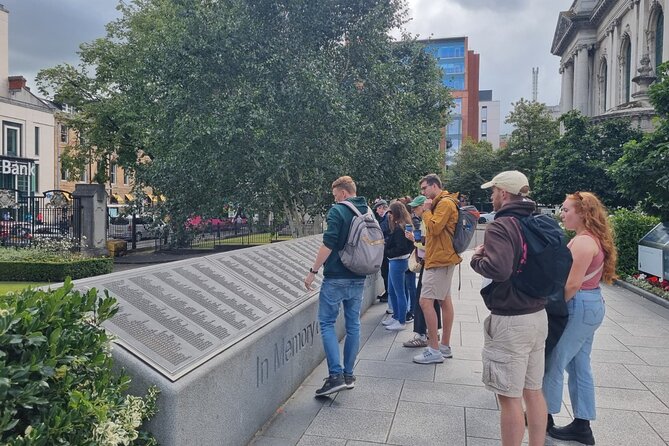
The final stop is the Spirit of Belfast, an abstract sculpture made of steel and light. It reflects the energy and forward-looking mood of the modern city.
Ending with public art rather than another political building gives the route a hopeful finish. Belfast’s past is not brushed aside, but neither is the city frozen in it. The sculpture helps make that point without pretending that history is simple.
The walk ends back at the City Hall meeting point. That makes the route useful for orientation. You can finish near the same central area where you began, then decide what to explore next.
Corey and his wife Michelle also offer practical suggestions about restaurants, attractions, drinking spots, and parts of the city worth seeing. Those tips may be especially useful if you take the walk early in your stay. Several people found that the tour helped shape the rest of their plans.
What makes Corey’s guiding style work
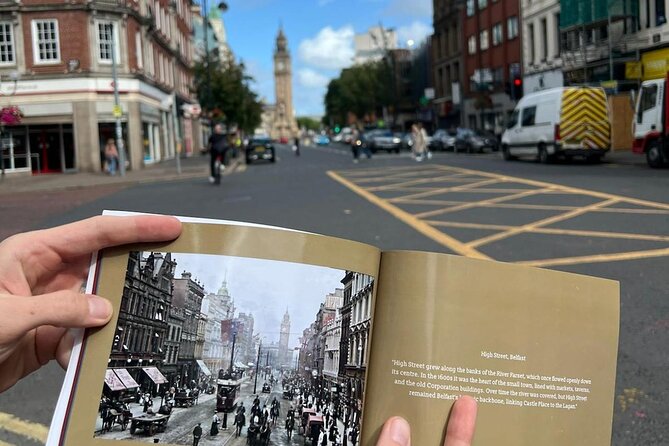
The guide is central to this experience. Corey is repeatedly described as friendly, enthusiastic, funny, and easy to understand. He is also comfortable answering questions about Belfast’s history and politics, which is important because the city’s story raises issues that cannot always be reduced to a tidy script.
I like the personal angle. Corey’s connection to Belfast gives the walk a sense of place that a generic city tour may lack. He shares local memories and explains how the city has changed, while still making room for humour.
The headsets are another practical advantage. You do not have to crowd around the guide to hear him, and you can step away for a photo without losing the explanation. That is useful beside traffic or in noisy streets, and it makes the walk feel less like a tight cluster following one speaker.
The group limit is 15 people. That is small enough to support questions and conversation, though the actual feel will depend on how many people book your date. One particularly unusual possibility is a very small group or even a one-person outing, which allows Corey to tailor the discussion to your interests.
The walk can also show some flexibility. A guest who got lost and arrived late was able to catch up with the group after contacting Corey. You should not treat that as a promise that late arrival is always possible, but it does suggest a friendly and practical attitude. Arrive on time when you can.
Is $30.16 a fair price?
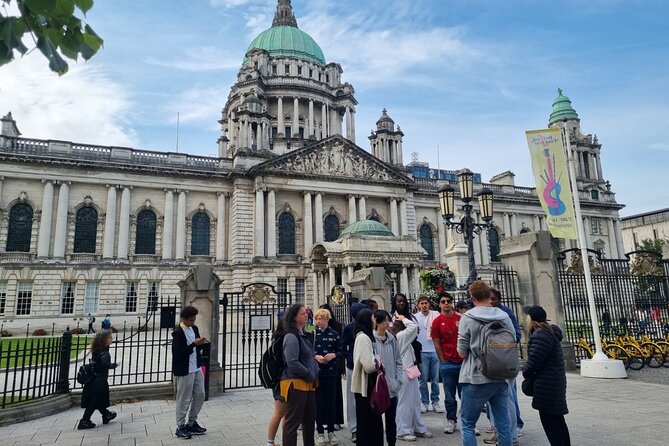
At $30.16 per person, I see this as fair value for a first look at central Belfast. You are paying for about two hours of guiding, local interpretation, a small group limit, and the chance to ask questions as you walk.
All nine stops are free to view, so the price is not buying admission tickets. It is buying the guide’s time and the connections between the places. That distinction matters. If you only want landmarks to photograph, you could walk through the centre alone. If you want to understand why City Hall, the Linen Quarter, the clock tower, and peace sculptures belong in one story, the fee makes more sense.
The walk can also save you planning time. You get a basic map in your head, ideas for later meals and attractions, and a clearer sense of where the central districts sit in relation to one another.
The main value depends on your interest. History-minded visitors, first-time visitors, families, and people who prefer local storytelling should find the price worthwhile. If you dislike guided walks or want long interior visits, you may prefer exploring independently.
Timing, weather, and practical comfort
The advertised duration is approximately 2 to 3 hours, while several descriptions place the walk close to two hours. Allow up to three hours so you are not rushing your next plan.
You will be outside for most of the experience. Belfast weather can be wet, so bring suitable clothing and shoes. The experience requires good weather, and if poor conditions lead to cancellation, you are offered another date or a full refund.
You can cancel for a full refund up to 24 hours before the start time. Cancellations or changes made inside that 24-hour window are not refunded or accepted. The cut-off follows local Belfast time.
The activity is offered in English. A mobile ticket is provided, service animals are allowed, and the meeting point is near public transport. The information says most people can participate, though you should remember that this is a city walking tour with several stops and outdoor movement.
Who should book this Belfast walk?
I would choose this for a first visit, especially if you want to begin your stay with a clear sense of the city. It is also a good fit if you want the Troubles explained by someone with personal roots in Belfast, rather than only through monuments and dates.
Families may appreciate the short stops, unusual sights, and humour. The Big Fish and leaning clock tower give younger participants something concrete to look at, while the guide’s stories keep the route from feeling like a formal lecture.
This also suits anyone who likes to ask questions. Corey’s ability to adjust explanations to a group’s existing understanding is useful when some people know a little about Northern Ireland and others are starting from scratch.
I would be more cautious if you have limited mobility, need frequent indoor breaks, or want detailed access to each building. The tour information says most people can participate, but it does not promise a fully step-free route or interior admission at every stop.
Should you book the Belfast Walking Tour?
Book it if you want a lively, local introduction to Belfast that includes politics, industry, architecture, public art, and personal stories. The strongest reasons are Corey’s local perspective, his friendly delivery, the headsets, and the balanced movement from painful history toward peace and modern city life.
Skip it if you only want a short photo walk or prefer to explore without a guide. For most first-time visitors, though, $30.16 is a sensible price for getting your bearings and learning what to look at once you continue on your own.
FAQ
Where does the Belfast walking tour start?
The tour starts at Belfast City Hall on Donegall Square North, Belfast BT1 5GS, UK.
Where does the tour finish?
The activity ends back at the meeting point at Belfast City Hall.
How long does the walking tour last?
The listed duration is approximately 2 to 3 hours. Several descriptions place the walk close to two hours, but you should allow up to three hours.
How much does the tour cost?
The price is $30.16 per person.
What language is the tour offered in?
The tour is offered in English.
How many people can join the tour?
The group has a maximum of 15 people.
Are admission tickets included?
The listed admission cost for each stop is free. The tour visits the landmarks as part of the walking route, so detailed interior access is not specified for every location.
Are service animals allowed?
Yes. Service animals are allowed.
Is the tour close to public transportation?
Yes. The meeting point is near public transportation.
What happens if the weather is poor?
The experience requires good weather. If it is cancelled because of poor weather, you are offered a different date or a full refund.
Can I cancel for a full refund?
Yes. You must cancel at least 24 hours before the experience start time for a full refund. Cancellations or changes within 24 hours are not accepted, and the amount paid is not refunded.
More Murals & Peace Wall Tours in Belfast
- Belfast: Political Taxi Tour
★ 4.8 · 5,014 reviews - Belfast: Murals Taxi Tour
★ 4.9 · 2,047 reviews - Belfast’s Political Mural Taxi Tour
★ 5.0 · 1,180 reviews - Belfast Troubles Tour: Walls and Bridges
★ 5.0 · 853 reviews
More Walking Tours in Belfast
- Belfast: Political Conflict 3-Hour Walking Tour
★ 4.6 · 2,215 reviews - Belfast: The Troubles Walls & Bridges Guided Walking Tour
★ 4.8 · 583 reviews - Belfast Political Tour-Conflicting Stories Walking Tour
★ 4.5 · 459 reviews - Best of Belfast Walking Tour
★ 5.0 · 399 reviews
Newest reviews from Belfast
- VIP Skip-the Line Titanic Museum and Whiskey Tasting Tour★ 4.8 · 11 reviews
- Titanic Eastside Bike Tour★ 5.0 · 9 reviews
- Private Half Day Winter Magic in the Antrim Glens★ 5.0 · 2 reviews
- Giants Causeway Private Tour★ 5.0 · 3 reviews
- The Single Cask Whiskey Experience★ 5.0 · 6 reviews
- This is Belfast Walking Tours. Our history, our culture.★ 5.0 · 7 reviews
- St Patrick’s Centre & Burial Site + Hillsborough Castle & Gardens★ 5.0 · 2 reviews
- Shore Excursion from Belfast to Giants Causeway & Rope Bridge★ 5.0 · 2 reviews
Murals & Peace Wall Tours, compared.

The Troubles Walls & Bridges Guided Walking Tour
Read our review →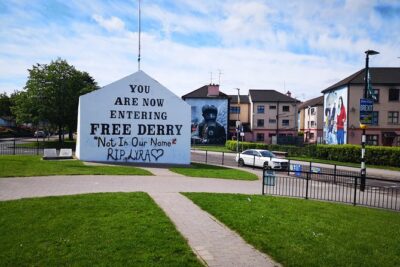
Browse the lists this tour appears in