
Reviewed · MURALS & PEACE WALL TOURS
Belfast: The Troubles Walls & Bridges Guided Walking Tour
Belfast’s walls still speak. This three-hour walk connects City Hall with Divis, the Falls area, the Shankill area, and the Peace Walls while explaining how division shaped everyday life in Belfast. I like the balanced attention to both communities and the way guides such as Steve and Arthur link political events with personal stories. I also like that the route looks beyond the conflict, showing the people and places helping Belfast move forward.
The main drawback is physical and emotional. You will walk roughly 8,500 steps, often without shelter, and the subject includes tragedy and some graphic detail. This is not a light city stroll, and children under 14 are not permitted.
In This Review
- Key points to know before you go
- Why this Belfast walk is different
- Starting beside Belfast City Hall
- Walking toward Divis and the Falls area
- Divis Tower and the first mural
- The International Wall and public memory
- Crossing the security gates into the Shankill area
- The Peace Walls and what they still mean
- Returning through the gates to the Falls area
- Belfast city center and the city moving forward
- The guides: Steve, Arthur, and the human side
- Price, pace, and practical value
- Who should book this tour?
- Final verdict: book it for understanding, not just pictures
- FAQ
- How long does the Belfast Troubles walking tour last?
- Where does the tour start?
- How do I identify the guide?
- Does the tour visit the Shankill Road?
- Is the tour suitable for children?
- Are toilets available during the walk?
- What should I bring?
Key points to know before you go
- A local guide brings the history to life: Steve and Arthur are praised for clear explanations, humor, and personal experience of Belfast.
- You cross real community boundaries: The route passes security gates, peace walls, murals, and streets shaped by the division between Irish and British communities.
- The walking matters: Seeing the walls and gates on foot gives you a stronger sense of their scale and daily purpose than a quick drive-by.
- It is balanced but not softened: The tour explains both political and cultural viewpoints while addressing violence, trauma, power, and social conditions.
- Allow extra time: The scheduled three hours can run to three and a half hours, so leave at least 1.5 hours before your next booking.
- Bring proper rain gear: There are few places to shelter and no planned rest stops until a leisure centre near the walls.
Why this Belfast walk is different
Many Belfast sightseeing tours focus on grand buildings, the Titanic story, or a quick look at a few murals. This experience uses the city center mainly as a starting and ending point. Its real subject is how Belfast’s political divide took physical form in homes, roads, gates, walls, and public art.
I like this approach because it asks you to notice ordinary details. A security gate, a post box, or a 24-hour garage can tell you something about how people lived with separation. The guide’s point is not simply to show famous images. It is to explain what sits behind them, including things you might otherwise walk past without a second thought.
The tone is serious, but it is not grim from start to finish. Guides bring in musicians, boxers, historians, and other people who built connections across the divide. Personal stories, jokes, and observations about modern Belfast keep the tour human. Several guides are praised for being direct, warm, and funny, even when discussing painful events.
You should still arrive with some basic knowledge of Northern Ireland and The Troubles if possible. You do not need to be a historian, but a little preparation will help you follow the names, groups, and political changes that come up during the walk.
More Walking Tours in Belfast
- A History of Terror – Belfast City Centre Walking Tour
★ 5.0 · 2,883 reviews - Belfast: Political Conflict 3-Hour Walking Tour
★ 4.6 · 2,215 reviews - Belfast: A History of Terror Walking Tour
★ 4.9 · 854 reviews
Starting beside Belfast City Hall
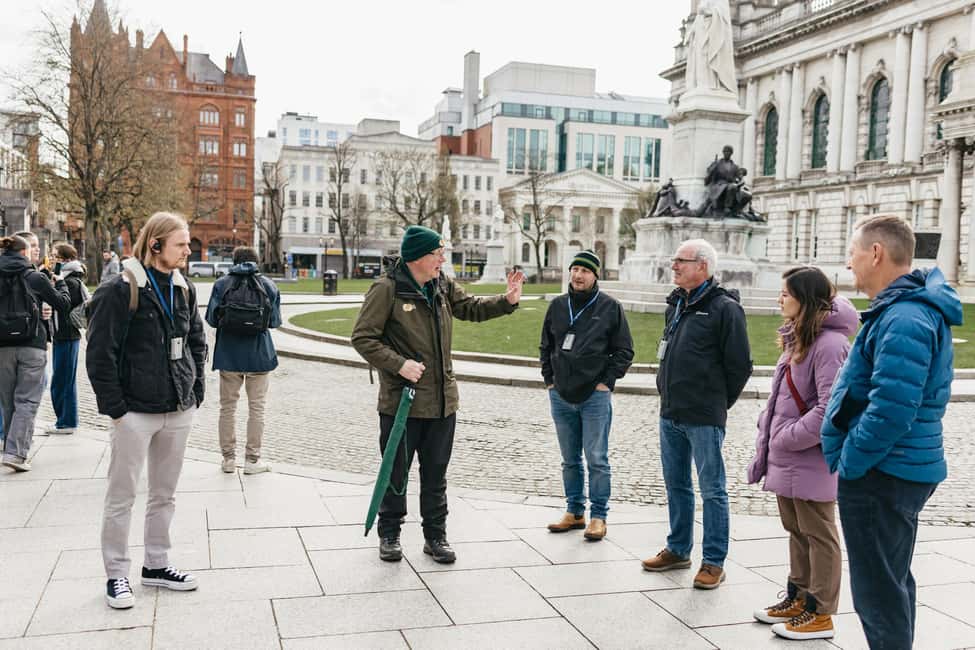
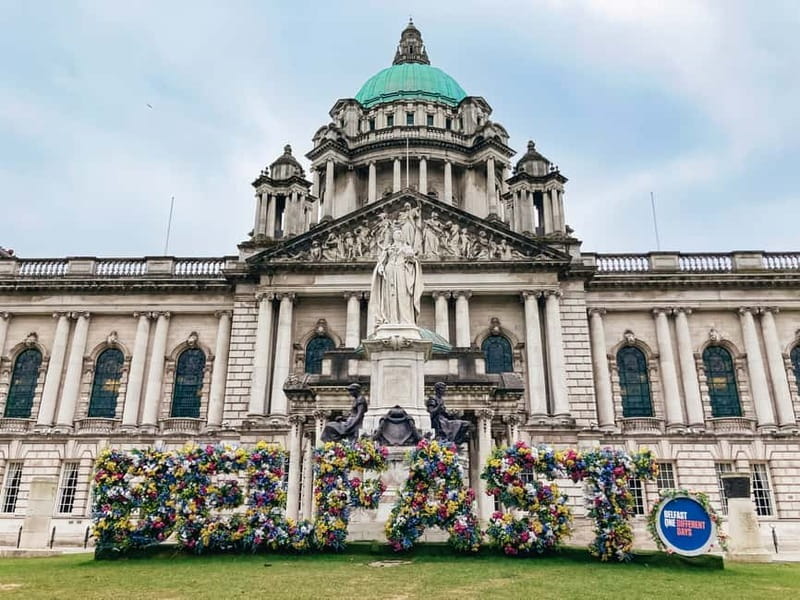
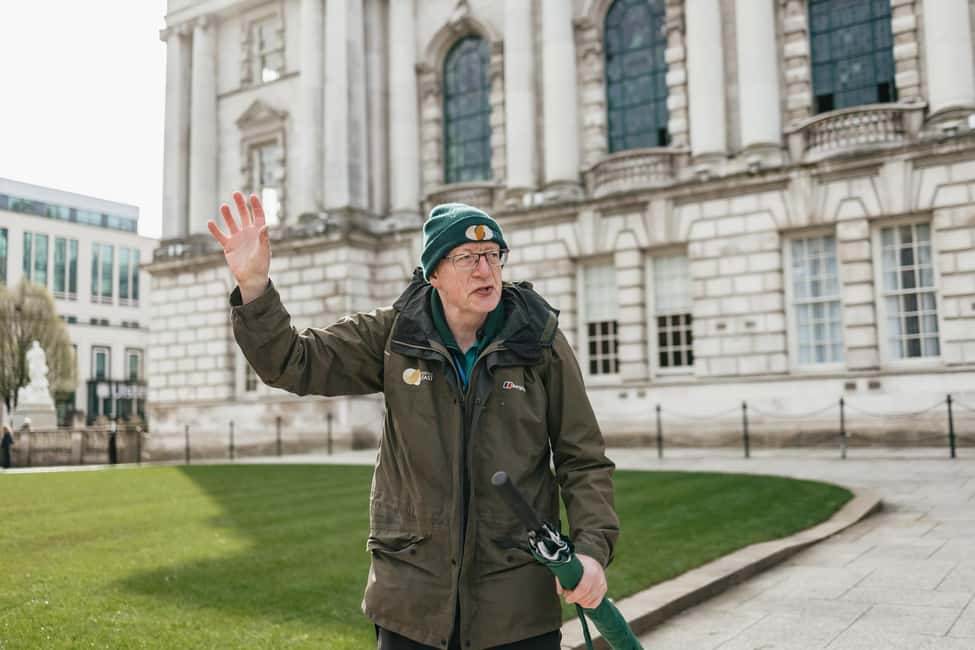
The tour begins outside the large railings of Belfast City Hall, on the pavement beside a blue information table. Look for the guide near a small blue information board positioned between two large black ornamental lamp posts. The guide wears green and carries a large green and white golf umbrella.
This detail matters because some map applications send people to Donegall Square West, where buses park, or to the back of City Hall. The correct meeting point lets you look through the railings toward the statue of Queen Victoria. Across the road, you will see the main shopping avenue and a Nationwide Building Society.
City Hall provides a useful opening point. It places the conflict within Belfast’s wider civic and political setting before the route moves into working-class neighborhoods. The first 20 minutes include a safety briefing, photographs, and an introduction to Belfast’s past and present.
Do not expect a long visit inside City Hall. The building is the orientation point, not the main attraction. Wear shoes that can handle several hours on pavement and neighborhood streets, and keep your phone or camera easy to reach.
Walking toward Divis and the Falls area
From City Hall, you walk toward Divis and the Falls area, traditionally associated with the Irish community. This first stretch takes about 25 minutes and allows the guide to build the story before you reach the most charged sites.
The walk helps you understand that The Troubles did not appear out of nowhere. The guide explains the earlier political, social, and economic divisions that shaped Belfast, then connects them with the events that caused conflict to erupt. The commentary covers key moments but keeps returning to individual lives.
At Divis, you hear how violence exploded with mobs and homes set on fire. This is where the tour shifts from general background to place-based history. Instead of hearing only dates and political labels, you stand in the area where families faced fear, displacement, and destruction.
The pace is usually steady rather than rushed. That is useful because you are listening while walking, crossing roads, and taking in a great deal of information. It also means you should not treat this as a casual wander where you can drift away from the guide.
Divis Tower and the first mural
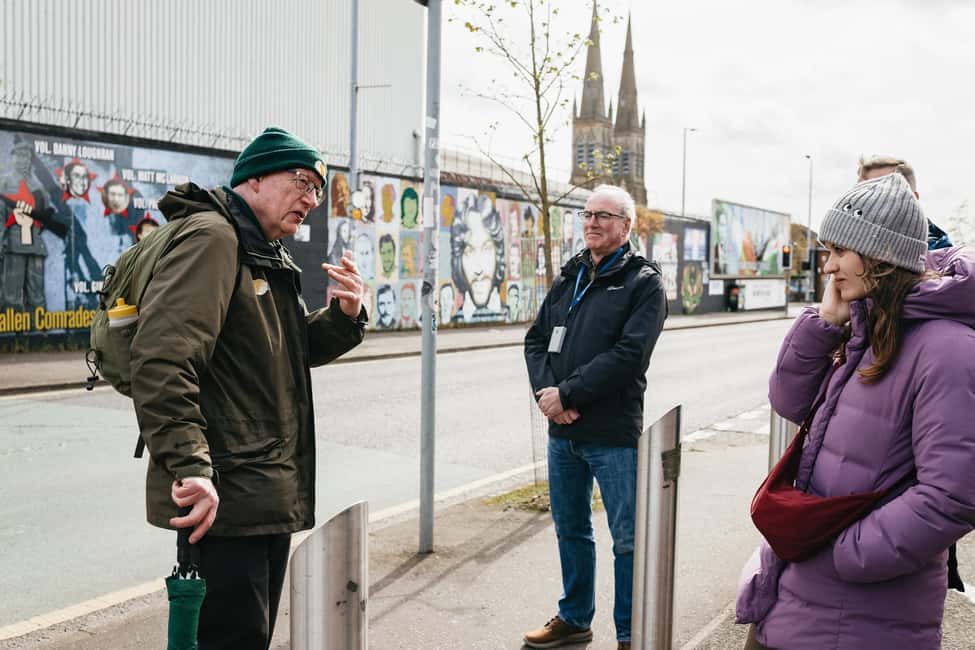
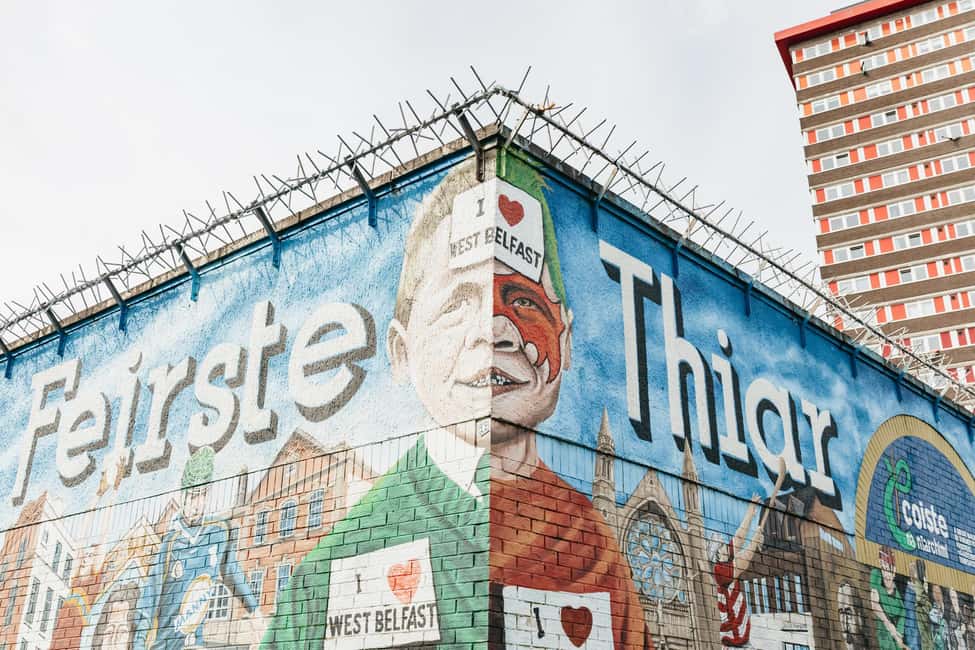
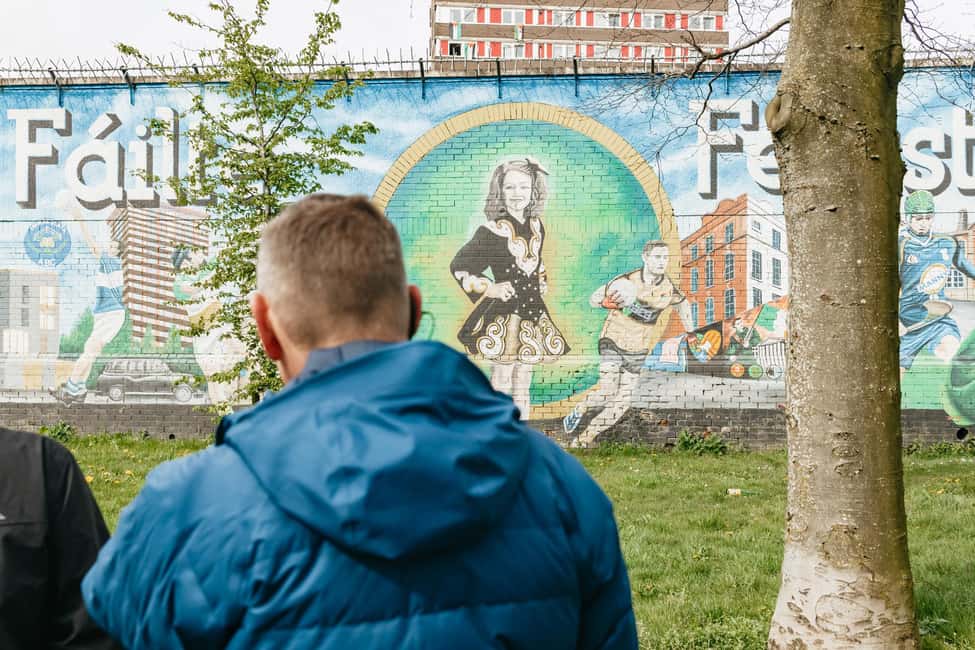
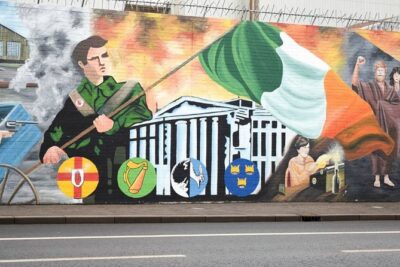
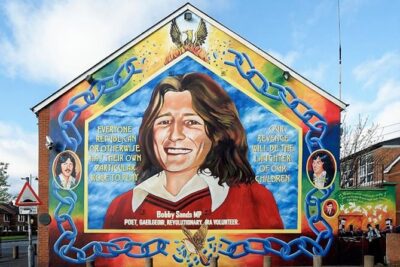
At Divis Tower, the guide points out the first mural on the route. Its message expresses Irish and local identity, and it offers an early lesson in how murals work in Belfast.
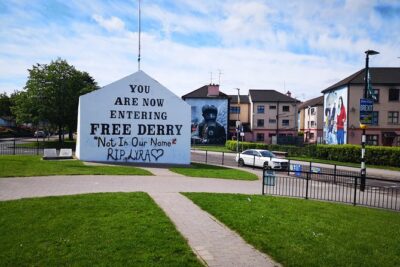
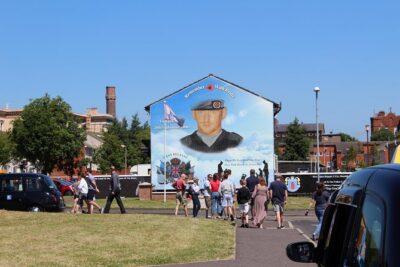
Murals are not simply colorful backdrops for photographs. They can express pride, memory, political claims, grief, anger, and changing ideas about community. The guide explains the symbols and local meaning so you can read later murals with more care.
This is one of the strongest parts of the experience for anyone who has seen Belfast murals in photographs but never understood their purpose. The route gives you the setting around the images, not just the images themselves.
Photography is welcome, but the tour is not built around photo stops. The explanation comes first. If you want a polished set of mural pictures, you may need to take them quickly and keep pace with the group.
Other tours of the murals and peace walls:
- Belfast: Political Taxi Tour
★ 4.8 · 5,014 reviews - Belfast: Murals Taxi Tour
★ 4.9 · 2,047 reviews - Belfast’s Political Mural Taxi Tour
★ 5.0 · 1,180 reviews - Belfast Troubles Tour: Walls and Bridges
★ 5.0 · 853 reviews
The International Wall and public memory
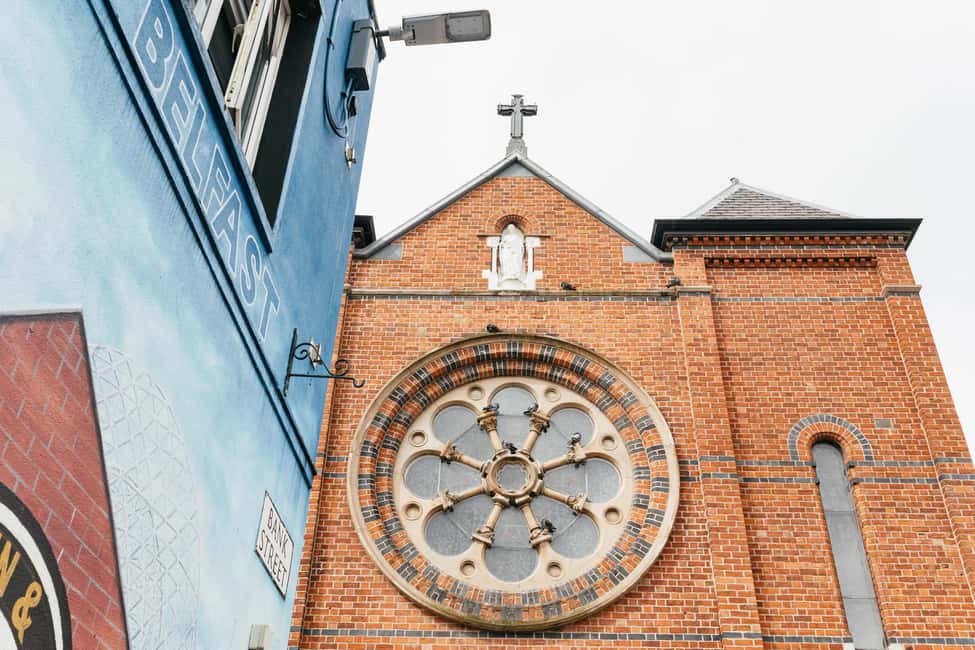
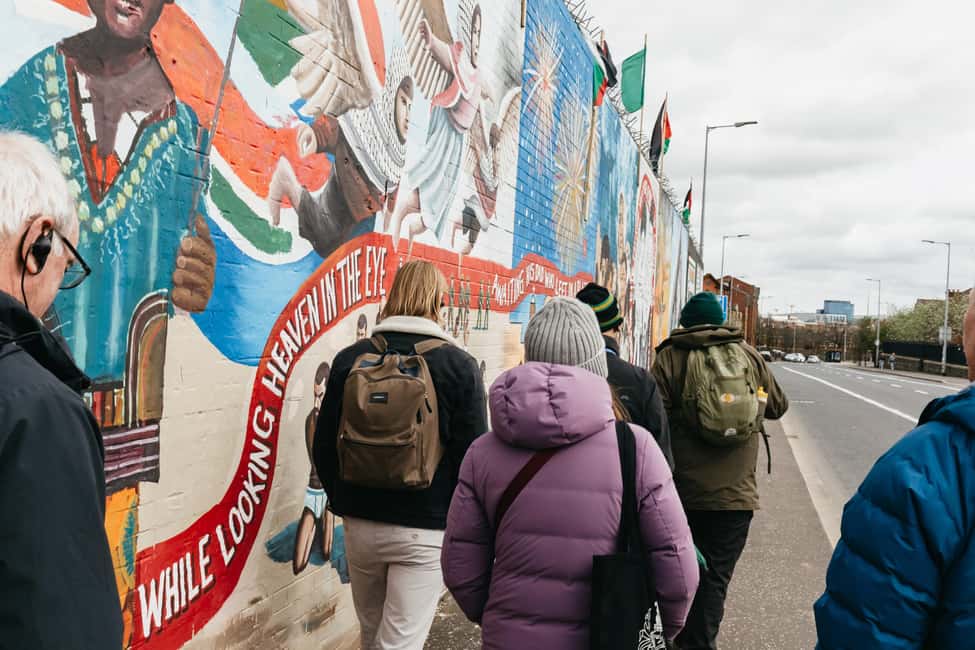
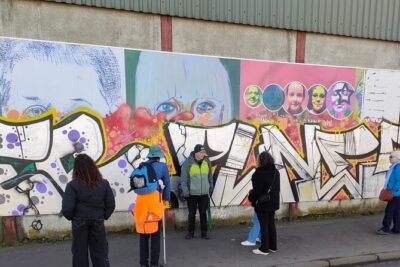
The walk continues toward the colorful International Wall, where political murals reflect local and world events. The artwork changes over time, so the exact display can vary, but the larger lesson remains: Belfast’s public walls are living political spaces.
This section can feel visually striking, but the guide keeps the focus on meaning. You learn how local politics connects with wider struggles and how communities use public art to tell their own story.
I appreciate that the tour does not present one side as simple and the other as villainous. The aim is to explain competing identities and the damage caused when political power, housing, security, and community belonging become tightly linked. That does not mean every viewpoint receives equal moral weight. It means the guide works to explain how people understood their own actions and fears.
The best guides, including Steve and Arthur, appear to handle this subject with both firmness and care. Their humor helps the group stay engaged, but it does not turn suffering into entertainment.
Crossing the security gates into the Shankill area
One of the most revealing moments comes when you cross through heavily fortified security gates into the Shankill area, associated with the British community. The route does not visit the Shankill Road itself because of the tour’s logistics, so you should not book this expecting a full road-by-road tour of that street.
You do, however, enter the wider Shankill area and see the physical border between communities. The gates are not old museum pieces. They show how separation operated in daily life, including the way roads and movement could be controlled.
This is where the walk becomes more than a lesson in murals. You can see how the city’s structure carried the memory of conflict. The guide explains the British and Irish identities represented in the neighborhoods and points out the different visual language used on each side.
The route also involves street crossings and uneven attention to your surroundings. Guides are careful about group safety, but you still need to watch your step and stay close enough to hear.
The Peace Walls and what they still mean
The Peace Walls receive the longest section of the tour, about 75 minutes including the visit, explanations, and time for photographs. You have time to look closely at the height and construction of the walls, as well as the relationship between the gates and the roads beside them.
The walls were created as a response to violence and insecurity. The guide explains why they were built, why they remain, and how they can offer safety while also preserving separation. That tension is the heart of the stop.
You may come away asking how much division has really disappeared if gates still close at night or walls still tower over roads. The tour does not pretend that a peace agreement erased old fears. At the same time, it points to cooperation and the ordinary people who have tried to build links between communities.
There is plenty of time for photographs here, but the setting deserves more than a quick picture and a check mark. Stop and think about what it means for a city to use a wall as both protection and a sign of unfinished work.
Facilities are limited. There are no regular rest stops, and the first usable facilities are at a leisure centre near the walls, roughly two hours into the route. Plan accordingly.
Returning through the gates to the Falls area
After the Peace Walls, you walk back toward the Irish Falls area through more security gates. The route can include the sound of an Irish ballad, which adds an emotional and cultural layer to the crossing.
As you look back, the gates and walls become part of the view rather than an abstract political idea. You can see how high they are, how closely they shape movement, and how strange it is to find such structures within a city that also presents itself as modern and open.
The return section gives the guide time to connect earlier events with the Peace Process and current Belfast. The emphasis is not only on what happened, but on what remains difficult and what has improved.
This is also where the walk may feel long. You have already covered substantial ground, and the subject demands concentration. If you need a gentler day, or if you have mobility concerns, ask before booking because the route was never designed as a tourist trail.
Belfast city center and the city moving forward
The final walk back to the center takes about 25 minutes. Here the subject widens again, moving from neighborhood division to the economic and political forces behind the Peace Process and Belfast’s changing identity.
The guide highlights people who built bridges between communities, including musicians, boxers, and historians. This is an important correction to the usual image of Belfast as a city defined only by conflict. The past still matters, but so do the people creating a different future.
The tour finishes at a historic church on Rosemary Street, near the center of Irish history and Belfast’s cultural life. Before that, you see a beautiful Victorian building repurposed as an arts venue. Together, these final stops present a city with old scars and new uses for old spaces.
I like ending in the city center rather than beside a wall. It leaves you with more than images of conflict. You finish thinking about identity, memory, creativity, and the ways people can reject simple divisions.
The guides: Steve, Arthur, and the human side
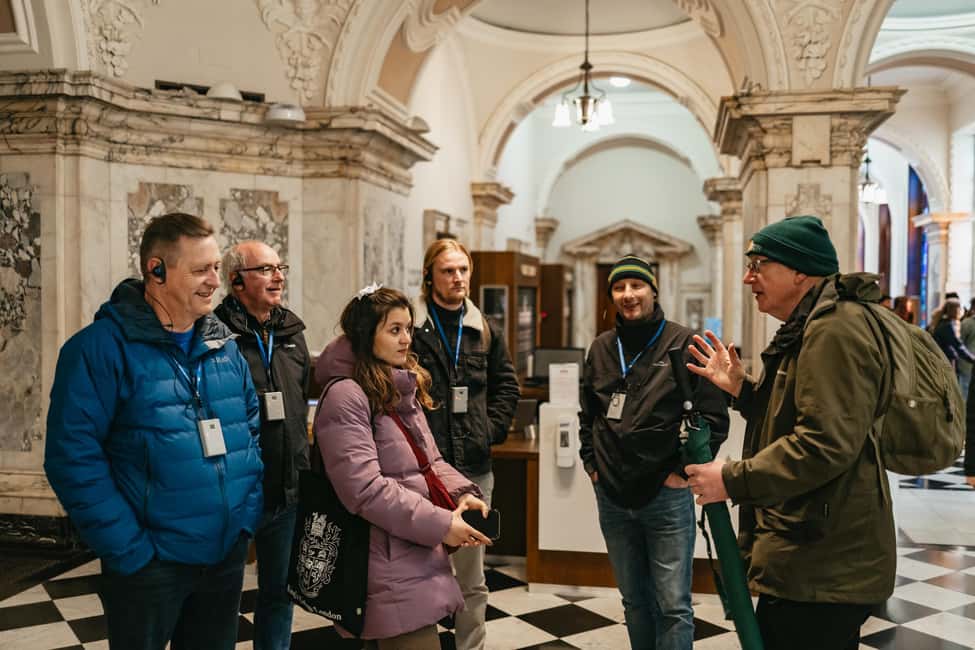
Guide quality is central to this experience. Steve is repeatedly praised for clear, factual, and balanced delivery, along with a personal connection to Belfast. Arthur is described as witty, direct, and engaging, with lived experience that gives his stories unusual force.
The guides do not all sound identical, and that can be a strength. You might get a more formal history lesson from one guide or a more personal and humorous presentation from another. The shared goal is to explain both sides while connecting the past to the present.
Listening sets are supplied, and headsets are used for larger groups. This is more useful than it may sound. Belfast traffic, street noise, and group movement can make outdoor commentary hard to follow, while the earpieces let you hear the guide as you walk.
The personal material can be powerful. It can also be blunt. Some stories involve violence and trauma, and the language may be direct rather than polished for a family audience. You should book this only if you are comfortable hearing difficult material in a public setting.
Price, pace, and practical value
At $32 per person, the tour offers a strong return if your goal is to understand Belfast rather than simply photograph it. Three hours with a local guide, a long route through the communities, explanations at the walls, and audio equipment costs less than many short private experiences.
The value comes from interpretation. You could walk near some murals and walls on your own, but you would miss much of the political context and the personal meaning. A taxi tour may cover more ground, while this walk gives you time to notice barriers, gates, murals, and the way neighborhoods meet.
The cost is less attractive if you want a relaxed sightseeing tour or a quick introduction to Belfast. You are paying for concentration, walking, and difficult subject matter, not snacks, drinks, or indoor attractions. Food and drinks are not included.
The tour is in English, with an English-speaking guide and English audio support. If English is not your first language, the pace and amount of detail may require extra effort. One participant found it hard to understand everything but still took away the main message.
Free cancellation is available up to 24 hours before the start, and you can reserve while paying later. Starting times vary, so check availability when you choose a date.
Who should book this tour?
I would choose this tour if you want a serious introduction to The Troubles, prefer walking to riding in a vehicle, and value a guide who can explain personal as well as political history.
It suits adults, students, history fans, journalists, and anyone who wants to understand Belfast beyond the city center. It also works well during a short stop in Belfast, including a cruise visit, as long as you allow enough time around the scheduled finish.
You should think twice if you dislike long walks, need frequent indoor breaks, or want a cheerful sightseeing outing. Bad weather can make the route harder because shelter is limited. A raincoat and comfortable shoes are not optional extras here.
The tour is not suitable for children under 14. Even older teenagers may find the stories heavy, so consider the individual child rather than relying only on the age rule.
Final verdict: book it for understanding, not just pictures
I recommend the Belfast: The Troubles Walls & Bridges Guided Walking Tour for adults who want an honest, carefully explained look at Belfast’s divided past and uncertain future. Its strongest features are the local guides, the balanced treatment of both communities, the personal stories, and the chance to stand beside the actual walls and gates.
Book it early in your Belfast stay if you can. The route will give later sightseeing more meaning, and you will notice details around the city that might otherwise pass unseen.
Skip it if you want a short, easy walk or a simple mural tour. But if you can manage the distance, the weather, and the subject, $32 buys a thoughtful lesson in how history remains visible in everyday streets.
FAQ
How long does the Belfast Troubles walking tour last?
The scheduled duration is three hours, though it may last longer. You should allow at least 1.5 hours between the tour’s expected finish and your next activity.
Where does the tour start?
Meet on the pavement outside the large railings of Belfast City Hall, beside a blue information table and blue information board between two black ornamental lamp posts.
How do I identify the guide?
The guide wears green and carries a large green and white golf umbrella. If you cannot find the meeting point, check that you are not at the back of City Hall or at Donegall Square West.
Does the tour visit the Shankill Road?
The route visits the Shankill area but does not visit Shankill Road itself because of the tour’s logistics.
Is the tour suitable for children?
No. The tour is not suitable for children under 14 and includes some graphic detail about violence and tragedy.
Are toilets available during the walk?
Facilities are limited, and there are no planned rest stops. A leisure centre near the Peace Walls can be used approximately two hours into the tour.
What should I bring?
Bring comfortable shoes and weather-appropriate clothing. An umbrella or waterproof layer is sensible because much of the route is outdoors and there is little shelter.
Newest reviews from Belfast
- VIP Skip-the Line Titanic Museum and Whiskey Tasting Tour★ 4.8 · 11 reviews
- Private Half Day Winter Magic in the Antrim Glens★ 5.0 · 2 reviews
- Giants Causeway Private Tour★ 5.0 · 3 reviews
- Titanic Eastside Bike Tour★ 5.0 · 9 reviews
- The Single Cask Whiskey Experience★ 5.0 · 6 reviews
- This is Belfast Walking Tours. Our history, our culture.★ 5.0 · 7 reviews
- St Patrick’s Centre & Burial Site + Hillsborough Castle & Gardens★ 5.0 · 2 reviews
- Small Group Giant’s Causeway Day Tour from Belfast★ 5.0 · 11 reviews
Murals & Peace Wall Tours, compared.
Belfast Political Tour-Conflicting Stories Walking Tour
Read our review →Browse the lists this tour appears in