
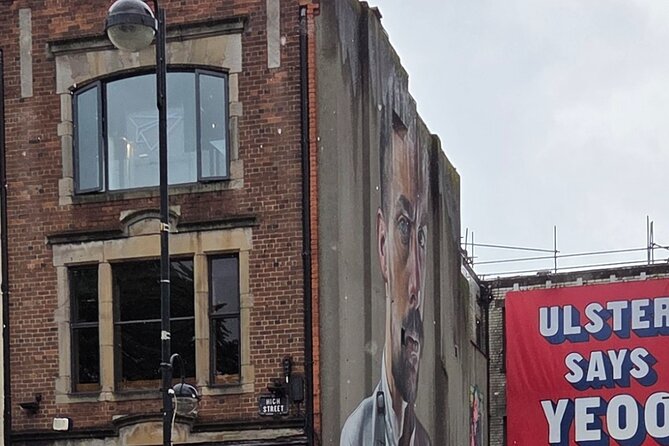
Reviewed · HISTORICAL TOURS
This is Belfast Walking Tours. Our history, our culture.
Belfast tells its story in stone and water. This walking tour links the River Lagan, shipbuilding, rebellion, religion, industry, music, and the Troubles in a compact route through central Belfast. I like the way it begins with the Big Fish, a playful city symbol, then ends at the solemn Titanic Memorial beside City Hall. I also like the small maximum of 15 people, which should make questions and conversation easier.
The tour costs $27.15 and takes about two to three hours, a fair price for a broad first look at Belfast. You should know that it is mostly an outdoor history lesson, so weather matters, and the First Presbyterian Church stop does not include admission. Still, the pace is broken into short stops, and the route gives you useful bearings before exploring more of the city alone.
A first-time visitor praised the tour for being especially informative and said it revealed plenty of things they did not already know. That is the clearest reason to book: you get a quick, connected introduction rather than a string of unrelated landmarks.
In This Review
- Key points to know before booking
- Why this Belfast walk works well for a first visit
- Starting beside the Big Fish and the River Lagan
- Customs House and Belfast’s commercial power
- The secret of Albert Memorial Clock Tower
- Joy’s Entry and the 1798 rebellion
- First Presbyterian Church and a different side of reform
- Cathedral Quarter, from neglect to nightlife
- Royal Avenue and Victorian Belfast
- City Hall and the Titanic Memorial
- What the $27.15 price really buys you
- Practical points for a smooth walk
- Who should book this Belfast walking tour?
- Should you book Belfast Walking Tours?
- FAQ
- Where does the Belfast walking tour begin?
- Where does the tour finish?
- How long does the walking tour last?
- What language is the tour offered in?
- How many people can join the tour?
- Can I cancel for a full refund?
Key points to know before booking
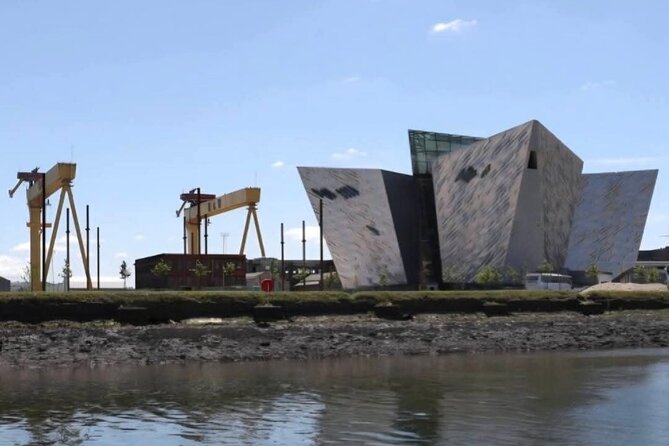
- The Big Fish makes a memorable start: Its tiled scales tell stories about Belfast, its people, the River Lagan, shipbuilding, and Belfast Lough.
- The route covers more than famous buildings: You hear about industrial power, Presbyterian reformers, the 1798 rebellion, punk music, slavery, and the Troubles.
- The tour ends at City Hall: The final stop includes the grounds, historic statues, a war memorial, and the Titanic Memorial Garden.
- The group is capped at 15 people: That is a useful size for a walking tour where clear explanations and questions matter.
- The price covers a wide central route: At $27.15, you pay mainly for the guide’s local storytelling, with no major attraction admissions included.
- You need comfortable outdoor clothes: The experience lasts two to three hours and moves between several city-center stops.
Why this Belfast walk works well for a first visit
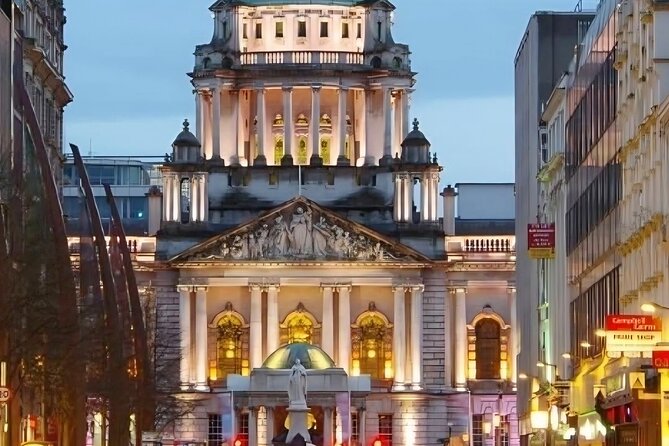
Belfast can be hard to read at first. Its grand Victorian buildings, shipbuilding identity, religious divisions, political memories, and modern food and music scene do not always sit neatly together. This tour gives you a framework for understanding how those pieces connect.
I like that the route does not focus only on the Troubles, even though that period is an important part of Belfast’s story. You also hear about commerce, architecture, religious reform, the United Irishmen, slavery, punk music, and public life. That wider view helps you see Belfast as a working city with many chapters, not simply a place defined by conflict.
The walking route is also practical. It starts at the Big Fish on Donegall Quay and finishes at City Hall. You move through central streets and landmarks rather than spending the morning on transport. The tour is offered in English, with a mobile ticket, and the meeting point is near public transportation.
The two to three hour length is long enough to build a useful picture of the city but short enough to leave time for a museum, lunch, or independent exploring. Because the stops last about 10 to 15 minutes each, you should expect a steady rhythm rather than a long indoor visit at any one site.
More History Tours in Belfast
- A History of Terror – Belfast City Centre Walking Tour
★ 5.0 · 2,883 reviews - Belfast: A History of Terror Walking Tour
★ 4.9 · 854 reviews - Private Political History & Murals Tour Belfast
★ 5.0 · 182 reviews
Starting beside the Big Fish and the River Lagan
The Big Fish is an excellent opening point because it is easy to recognize and carries more meaning than its nickname suggests. Known locally as the Salmon of Knowledge, this large mosaic sculpture draws on legend and myth. Its tiled scales tell stories about Belfast and its people.
The sculpture also points you toward the River Lagan, Belfast Lough, and the city’s shipbuilding past. Under the area flows the Farset, a hidden river that gives Belfast its name. That is a small but useful detail: the city’s identity is tied not only to its buildings and industries, but also to the water beneath and around it.
You spend about 15 minutes here, and there is no admission charge. I like this beginning because it sets the tone. Belfast’s public art can be playful, but the stories behind it are serious and specific.
Customs House and Belfast’s commercial power
From the Big Fish, the tour moves to Customs House, where the focus shifts from legend to business. Here you hear how Belfast became a major force during the Industrial Revolution and punched above its size in trade and commerce.
This stop helps explain why the center has such impressive civic and commercial buildings. Belfast’s wealth did not appear by accident. It grew through industry, shipping, trade, and the people who turned those advantages into economic power.
Customs House also has a more recent public role. It has served as a gathering place for public meetings and now works as an outdoor amphitheater for summer music. That change in use gives you a good sense of how old buildings can remain part of everyday city life.
The stop lasts about 10 minutes. That is enough for a clear explanation, but not enough for a lengthy architectural study. If industrial Belfast interests you, note the themes here and ask the guide for extra context.
The secret of Albert Memorial Clock Tower
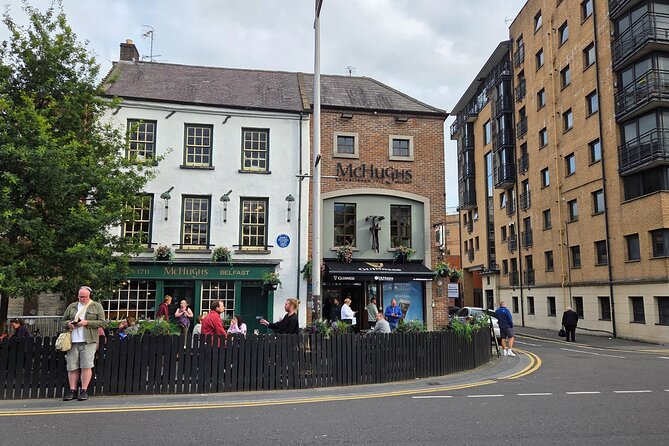
The Albert Memorial Clock Tower is one of Belfast’s best-known landmarks. It was built after the death of Prince Albert, Queen Victoria’s husband, and serves as a memorial to him.
The tour promises the clock’s big secret, which gives this stop a touch of local character. The supplied details do not spell out the secret, so you will need to hear the guide’s explanation on the day. That is part of the appeal of a live walking tour: a landmark you might photograph in passing gets a story attached to it.
You spend about 10 minutes here. The stop is brief, but it adds a royal and Victorian layer to the industrial story introduced at Customs House. It also shows how Belfast marked status, loyalty, and civic pride through public architecture.
More Walking Tours in Belfast
- Belfast: Political Conflict 3-Hour Walking Tour
★ 4.6 · 2,215 reviews - Belfast: The Troubles Walls & Bridges Guided Walking Tour
★ 4.8 · 583 reviews - Belfast Political Tour-Conflicting Stories Walking Tour
★ 4.5 · 459 reviews - Best of Belfast Walking Tour
★ 5.0 · 399 reviews
Joy’s Entry and the 1798 rebellion
At Joy’s Entry, the tour enters Belfast’s famous network of narrow historic passages. High Street is described as the birthplace of the city, and these entries offer a more intimate view than the broad civic avenues.
The main figure here is Henry Joy McCracken, a Presbyterian leader of the United Irishmen Rebellion of 1798. His story brings politics and religion together in a way that is central to understanding Belfast. He was a liberal and revolutionary figure, and this stop explores the role of Presbyterian radicals in the city’s past.
I like this part of the route because it moves away from grand monuments. A narrow entry can reveal more about an old city than a formal square. You get a sense of Belfast as a place of movement, debate, and rebellion, not simply wealth and industry.
The stop takes around 15 minutes. Watch your footing on the walk and listen closely, since the story is likely to carry more weight than the physical setting suggests.
First Presbyterian Church and a different side of reform
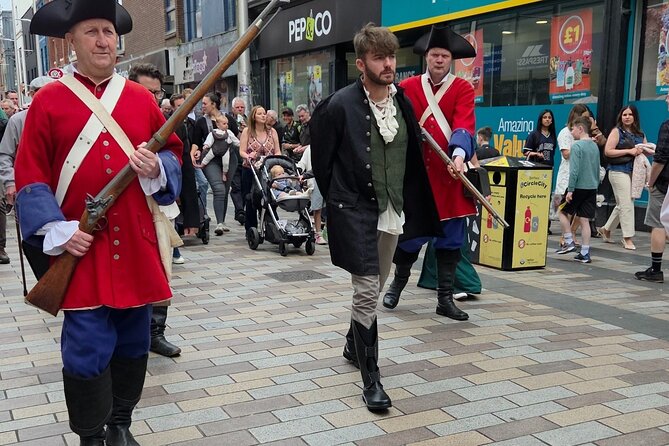
The First Presbyterian Church sits in the heart of what the tour describes as Presbyterian Belfast. This was a setting for liberal thinkers, radicals, and people who helped shape Belfast’s commercial and social development.
The stop also tells the story of a Presbyterian who took a brave stand against slavery. That detail broadens the tour again. Belfast’s religious history is not presented only as a source of division. It also includes reform, conscience, social action, and people willing to challenge accepted ideas.
The exterior visit lasts about 10 minutes, and admission is not included. Since the route is primarily outdoors, you should not assume that you will have an extended interior church visit. Even so, the location matters because it connects faith with politics, business, and social change.
This is one of the stops where the guide’s explanation makes the difference. The building alone may not tell you why it matters. The story gives it a place in the larger history of Belfast.
Cathedral Quarter, from neglect to nightlife
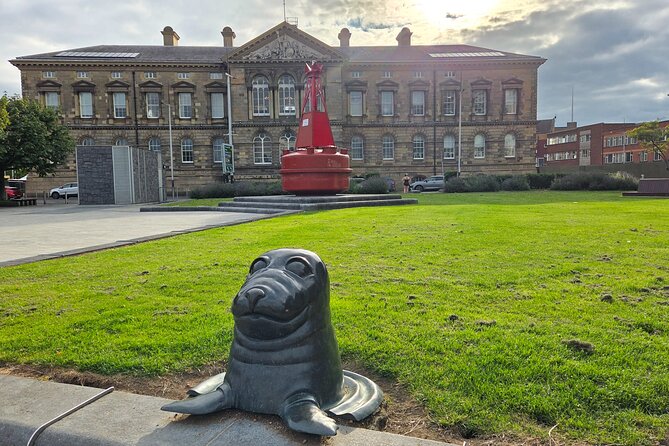
The Cathedral Quarter provides one of the tour’s sharpest changes of mood. Once rundown and overlooked, the area has become a center for food and entertainment. You hear about the origins of Belfast punk music, the Duke of York pub, the Merchant Hotel, and the historic cathedral itself.
This is a useful stop if you want to understand present-day Belfast as well as its past. The district shows how an old part of a city can gain a new identity without losing every trace of what came before. Music, pubs, restaurants, hotels, and historic buildings now share the same streets.
The Duke of York adds a famous pub connection, while the Merchant Hotel represents Belfast’s polished side. The cathedral brings the focus back to older architecture and religious life. In just 15 minutes, the tour moves across several versions of the city.
That quick pace is both a strength and a limitation. You get a good introduction to the quarter, but you will not have time to stop for food or music during the tour. I would return here later if the area interests you.
Royal Avenue and Victorian Belfast
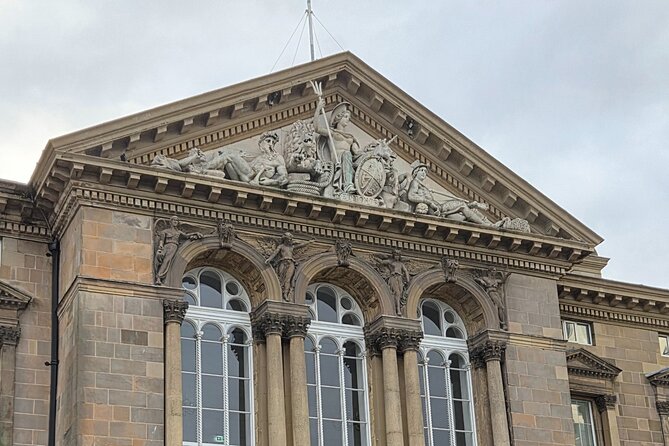
Royal Avenue reveals Belfast at its most formal. The tour uses the street to tell the story of Victorian grandeur and a city that became one of the world’s economic powerhouses.
This part of the walk is valuable because it lets you connect earlier themes. Industry and commerce created wealth. Wealth shaped architecture. Architecture then announced Belfast’s confidence to residents, visitors, and the wider world.
You spend about 15 minutes here. The route does not promise entry into buildings, so the focus is on the street, its appearance, and the story attached to it. I find that approach useful on a first visit because you learn how to read the city center before deciding which buildings deserve a closer look.
Royal Avenue also provides a bridge between Belfast’s older commercial identity and the civic heart of the city. The final stop is close, so the tour keeps its central route efficient.
City Hall and the Titanic Memorial
The walk finishes at Belfast City Hall, the city’s central civic landmark. It has been a focal point for protests, meetings, commemorations, and celebrations. That range of uses makes it more than a pretty building. It is a place where Belfast has argued with itself, remembered its losses, and marked public occasions.
The tour also looks at how City Hall bore the story of the Troubles and points toward a positive future. The subject is serious, but the setting helps place it in public life rather than treating it as an isolated chapter.
The ending at the Titanic Memorial is especially fitting. The memorial offers a quiet contrast to the city’s grand civic center and links Belfast to one of its most famous historical associations. The tour finishes in the grounds of City Hall, where you can see historic statues, the war memorial, and the Titanic Memorial Garden.
I like this ending because it does not simply leave you at a busy street corner. You finish in a place where you can pause, reflect, and continue exploring at your own speed.
What the $27.15 price really buys you
At $27.15 per person, this is not a ticket to a major indoor attraction. The listed stops are free, apart from the fact that admission to the First Presbyterian Church is not included. Your payment mainly covers the guide’s time, route planning, local context, and the value of having Belfast’s stories explained in sequence.
For a first-time visitor, I think the price is reasonable. You cover eight stops in two to three hours, and the route connects details that could otherwise feel scattered. A self-guided walk would cost less, but you would need to research the Farset, Henry Joy McCracken, Presbyterian reform, Victorian commerce, Belfast punk, the Troubles, and the Titanic Memorial yourself.
The small group limit also matters. With no more than 15 people, you have a better chance of hearing clearly and asking a question than you would in a large crowd. The tour has received a full five-star rating from seven submitted reviews, and the strongest praise focuses on its value for first-time visitors and its informative content.
That is a modest review base, so I would not treat the rating as proof that every part will suit every person. Still, the feedback supports the main strength of the experience: it helps you learn a lot quickly.
Practical points for a smooth walk
The meeting point is the Big Fish at Donegall Quay, Belfast BT1 3NG. The tour ends at City Hall, Belfast BT1 5GS. Both points are in central Belfast, and the meeting area is near public transportation.
Bring a mobile ticket and plan for an outdoor walk lasting around two to three hours. Comfortable shoes are sensible, and weather-ready clothing will make the experience easier. The tour is in English.
Service animals are allowed, and most people can participate. Because the group is limited to 15, the walk should feel more personal than a large city tour, though the route still involves moving between several stops.
Free cancellation is available if you cancel at least 24 hours before the local start time. Cancellations or changes made less than 24 hours ahead are not accepted for a refund.
Who should book this Belfast walking tour?
I would choose this tour if you are visiting Belfast for the first time and want a clear introduction before exploring on your own. It suits people who like history explained through streets, public buildings, religious sites, and local characters rather than through a single museum.
It is also a good fit if you want a balanced look at Belfast. The route includes difficult subjects such as rebellion, slavery, and the Troubles, but it also covers industry, architecture, music, public life, and the city’s hopeful present.
You may want something else if you prefer long visits inside buildings, a slower photography walk, or a tour focused only on the Troubles. This experience is broad and active. Its strength is the range of stories packed into one central route.
Should you book Belfast Walking Tours?
Book it if you want an informative first orientation to Belfast at a reasonable price. The Big Fish, Joy’s Entry, Cathedral Quarter, Royal Avenue, and City Hall each show a different side of the city, and the route finishes in a thoughtful place rather than ending abruptly.
I especially recommend it for visitors who want local context before making their own plans. With a maximum of 15 people, an English-speaking format, and a two to three hour route, it offers a practical introduction without taking over your whole day. Just remember that it is an outdoor walk, and the value comes from the storytelling rather than admission to major attractions.
FAQ
Where does the Belfast walking tour begin?
The tour begins at the Big Fish on Donegall Quay, Belfast BT1 3NG, UK.
Where does the tour finish?
The tour finishes at Belfast City Hall, Belfast BT1 5GS, in the grounds near the historic statues, war memorial, and Titanic Memorial Garden.
How long does the walking tour last?
The tour takes approximately two to three hours.
What language is the tour offered in?
The tour is offered in English.
How many people can join the tour?
The maximum group size is 15 people.
Can I cancel for a full refund?
Yes. You can cancel for a full refund at least 24 hours before the experience start time. Cancellations or changes made less than 24 hours before the start time are not accepted for a refund.
Newest reviews from Belfast
- VIP Skip-the Line Titanic Museum and Whiskey Tasting Tour★ 4.8 · 11 reviews
- Titanic Eastside Bike Tour★ 5.0 · 9 reviews
- Private Half Day Winter Magic in the Antrim Glens★ 5.0 · 2 reviews
- Giants Causeway Private Tour★ 5.0 · 3 reviews
- The Single Cask Whiskey Experience★ 5.0 · 6 reviews
- St Patrick’s Centre & Burial Site + Hillsborough Castle & Gardens★ 5.0 · 2 reviews
- Shore Excursion from Belfast to Giants Causeway & Rope Bridge★ 5.0 · 2 reviews
- Small Group Giant’s Causeway Day Tour from Belfast★ 5.0 · 11 reviews
Historical Tours, compared.
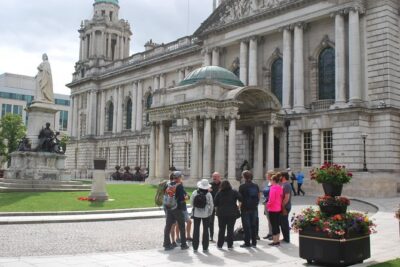
A History of Terror – Belfast City Centre Walking Tour
Read our review →
McCrossan’s Public Walking Tour of the Historic City
Read our review →
Private Political History & Murals Tour Belfast
Read our review →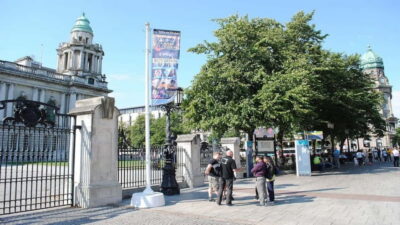
Best of Belfast History, Culture & Art Walking Tour
Read our review →
Belfast Walking Tour with a Local – History & Craic
Read our review →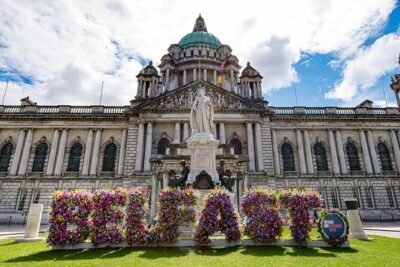
Belfast Political/history/troubles private taxi/cab tour
Read our review →Browse the lists this tour appears in