
Reviewed · MURALS & PEACE WALL TOURS
Belfast Political Tour-Conflicting Stories Walking Tour
The wall still closes at night. That fact gives this Belfast walk its force: you hear personal accounts from both sides while standing in the places where the conflict unfolded. I especially like the two-guide format, with republican and loyalist perspectives, and the close look at murals and memorial gardens that most city tours skip. The main drawback is simple: you spend about three hours outdoors beside busy roads, and the subject matter can be painful.
You begin near Divis Tower and finish on the Lower Shankill, covering both sides of the peace wall on foot. The walk is mostly level, but it is still a full three hours, so wear solid shoes and bring layers. Paul, Ian, Jack, and Mark are among the guides named by past participants, though the pair you meet can vary.
In This Review
- Key points to know before you book
- Why this Belfast walk feels different
- Starting at Divis Tower and entering the Falls
- Bobby Sands mural and the republican story
- Crossing toward Shankill Road
- Shankill Road and the loyalist perspective
- Personal stories without a neat ending
- What the $36.05 price buys you
- How to prepare for the three-hour walk
- Who should book this experience?
- Should you book the Belfast Political Tour?
- FAQ
- Where does the Belfast Political Tour begin?
- Where does the tour finish?
- How long does the tour last?
- What will I see on the Falls Road section?
- What will I see on the Shankill Road section?
- Is the tour suitable for most people?
- Can I cancel for a refund?
Key points to know before you book
- Two sides of Belfast’s divide: The tour moves from the nationalist Falls area to the loyalist Shankill Road, with a different guide for each section.
- Former participants tell personal stories: Ex-political prisoners explain how the conflict affected their own lives and neighborhoods.
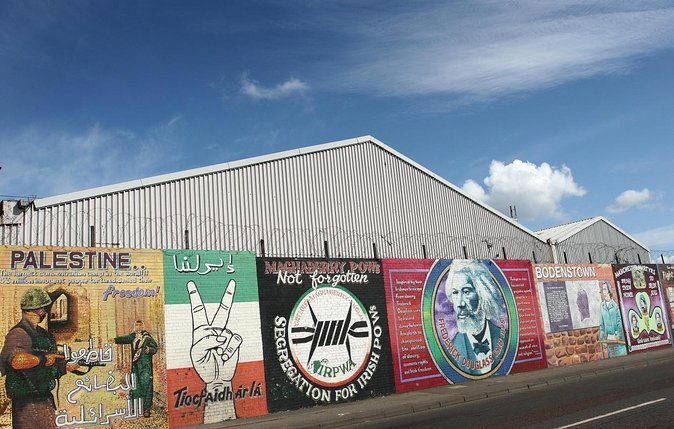
- Bobby Sands and the International Wall: The Falls section includes major republican murals, the Bobby Sands mural, Bombay Street, and the D Company memorial garden.
- Memorials on Shankill Road: The loyalist section visits the Shankill Memorial Garden, the Bayardo bombing site, a UVF memorial, Frizzells Fish Shop, and the Somme Memorial.
- Three hours outside: Wind, traffic noise, and changing weather are part of the experience, not minor details.
- Good value at $36.05: You are paying for local voices, a carefully linked route, and access to personal stories rather than a quick mural photo stop.
Why this Belfast walk feels different
Many Belfast sightseeing tours explain the conflict from a safe distance. This one puts you between Falls Road and Shankill Road, where murals, memorials, gates, and street corners still carry political meaning.
The route does not present one tidy answer. It shows how the same decades can be remembered in sharply different ways. On the nationalist side, republican volunteers may be honored as people who fought for Irish unity. On the loyalist side, those same years are remembered through the deaths of Protestant civilians, security personnel, and community members.
That contrast is the point. The title is accurate, but it does not mean the guides simply argue with each other. The strongest tours use two personal accounts to explain why people on both sides still carry grief, anger, pride, and suspicion.
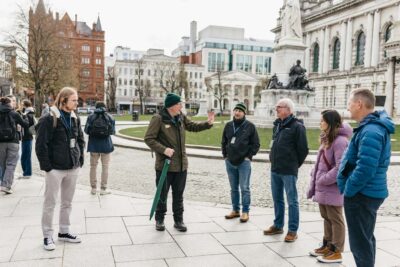
The guides have lived through the period they describe. Past tours have included Paul and Ian, as well as Jack and Mark. One guide may speak from an IRA or republican viewpoint, while the other presents a loyalist or unionist experience. The exact pairing can change, but the format is built around first-hand accounts rather than a single official version.
You should arrive ready to listen. This is not a light city stroll, and some stories involve murder, bombings, imprisonment, and the loss of children and friends. The guides may speak passionately, and personal views can be blunt. That makes the experience more human, but it also means you need an open mind.
More Walking Tours in Belfast
- A History of Terror – Belfast City Centre Walking Tour
★ 5.0 · 2,883 reviews - Belfast: Political Conflict 3-Hour Walking Tour
★ 4.6 · 2,215 reviews - Belfast: A History of Terror Walking Tour
★ 4.9 · 854 reviews
Starting at Divis Tower and entering the Falls
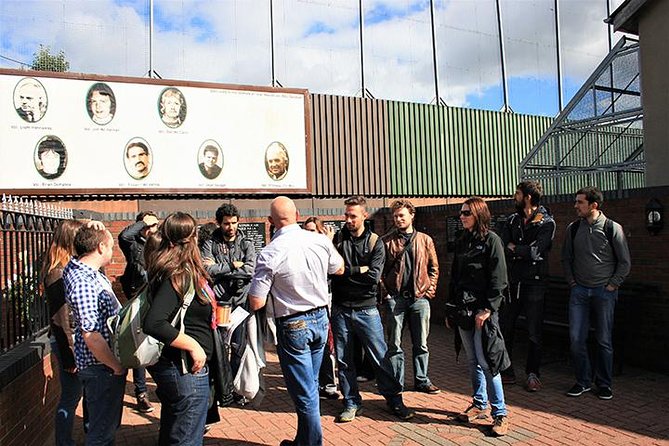
The meeting point is Divis Tower in West Belfast, at Belfast BT12 4QA. From there, the first section heads through the nationalist area around the Falls Road and the west side of the peace wall.
This opening part lasts about 90 minutes. The pace is moderate because the group stops often for explanations, photographs, murals, and memorials. You will be walking on city streets rather than hiking, but the route still covers enough ground to make comfortable footwear important.
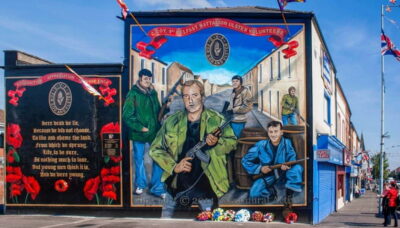
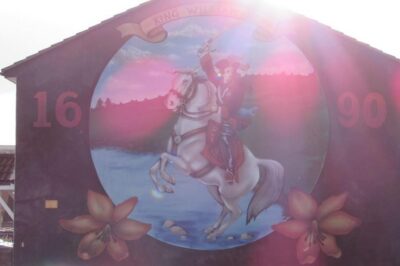
The guide sets the political frame through local places. Instead of hearing only dates and names, you see where memories have been fixed onto walls and gardens. The murals are not just decoration. They identify people, causes, neighborhoods, and versions of the past.
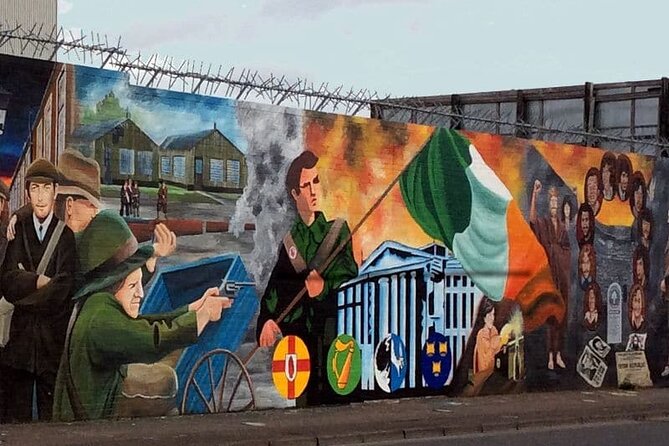
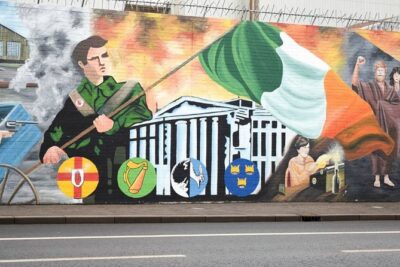
The International Wall is one of the major early sights. Its murals connect Belfast’s republican story with wider political struggles. The wall can be visually striking, but the guide’s explanation is what gives it meaning. Pay attention to the symbols and names, since a quick photograph cannot tell you why a particular image matters.
Bobby Sands mural and the republican story
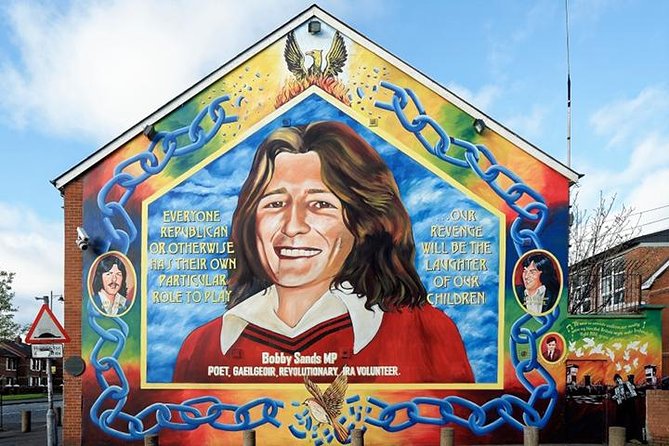
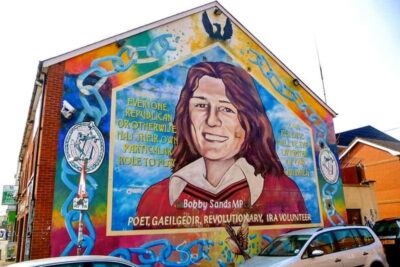
The Bobby Sands mural is one of the best-known political images in Belfast. Sands was an IRA member who died during the 1981 hunger strike in prison. His face has become an international symbol, but the local story is more complicated than a famous mural suggests.
Here, the republican guide explains how Sands and other volunteers are viewed within the nationalist community. You may hear about the political conditions, prison experience, and beliefs that shaped the republican movement. The guide’s own background can make this section especially direct.
The D Company memorial garden adds another layer. It honors republican volunteers and places the conflict within a particular neighborhood. You are not simply being shown a list of events. You are being shown who a community chose to remember, and how those memories remain visible.
Bombay Street is another important stop. The street became associated with violence and displacement during the early years of the Troubles. The guide uses it to explain how ordinary homes and families were caught in the conflict.
This section is often the strongest part of the walk for visitors who want a clear basic timeline alongside personal testimony. One guide, Jack, has been praised for combining dates, key figures, and his own republican viewpoint. Still, you should remember that the account is not a neutral lecture. It is a personal interpretation shaped by lived experience.
Crossing toward Shankill Road
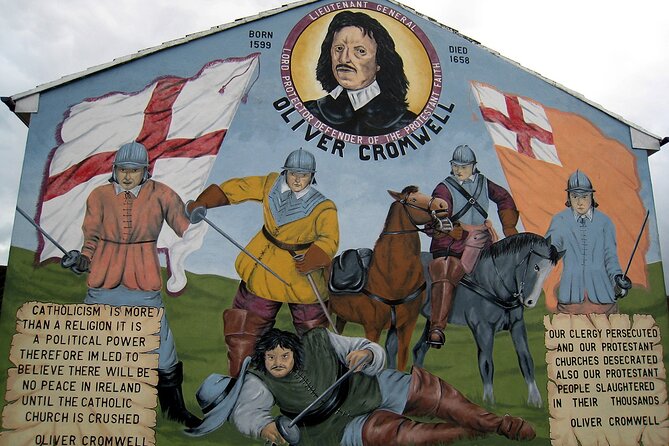
The tour then moves toward the peace wall and the loyalist area. The change is physical but also emotional. You cross from one community’s memorials and symbols into another community’s version of the same conflict.
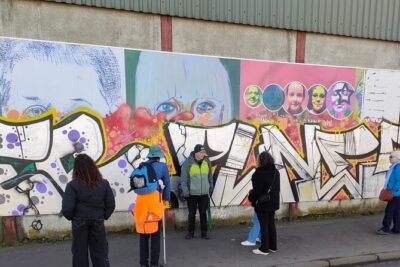
The peace wall is not a single short barrier. It is part of a network of walls, gates, and boundaries around Belfast. Several stops take place along it, giving you time to understand how the division worked on the ground.
One detail can surprise you: gates in parts of the wall are still closed at night, with one account placing the closing time at 8 p.m. That is a useful reminder that the peace process did not erase every daily barrier. The wall can feel like a relic, but it also remains part of local security arrangements and community life.
You may have a chance to sign the peace wall. Bring a pen or marker if that matters to you, since one past participant specifically recommended it. The act is small, but it can feel meaningful after hearing why the barrier was built and why it has not simply disappeared.
Traffic noise is a real issue here. Some sections run beside busy roads with buses and trucks, and one poorly received tour had trouble with a muffled microphone. Group positioning and guide technique matter. You should move close enough to hear, and do not hesitate to tell the guide if the speaker is unclear.
Other tours of the murals and peace walls:
- Belfast: Political Taxi Tour
★ 4.8 · 5,014 reviews - Belfast: Murals Taxi Tour
★ 4.9 · 2,047 reviews - Belfast’s Political Mural Taxi Tour
★ 5.0 · 1,180 reviews - Belfast Troubles Tour: Walls and Bridges
★ 5.0 · 853 reviews
Shankill Road and the loyalist perspective
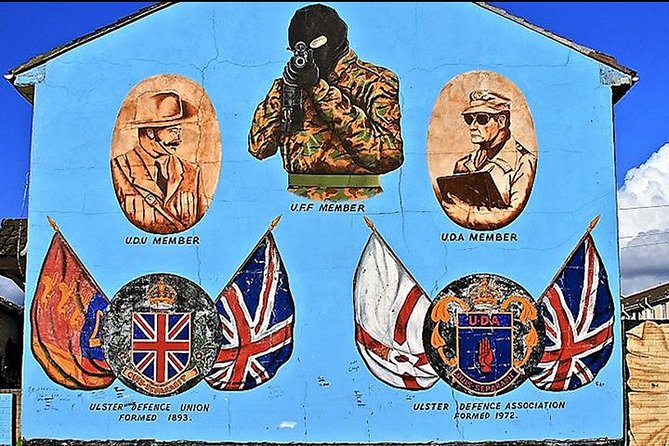
The Shankill section takes another 90 minutes and ends at 154 Shankill Road, Belfast BT13 2BE. This part focuses on loyalist murals, memorial gardens, bomb sites, and the deaths remembered by the Protestant community.
The Shankill Memorial Garden is a central stop. It honors local people lost during the conflict and helps explain the sense of siege that shaped many loyalist communities. The guide may also talk about childhood friends, family members, and neighbors who were killed or drawn into paramilitary groups.
The Bayardo bombing site brings the violence into sharper focus. You hear about the people killed there and the place where it happened, rather than receiving a general account of bombings across the city.
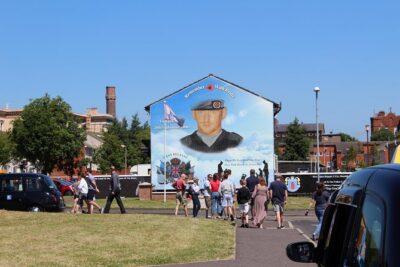
The route also includes a UVF memorial, the former Frizzells Fish Shop bombing site, and the Somme Memorial. Each carries a different kind of political message. Some connect the community to paramilitary history, while others link loyalist identity to military service and the First World War.
This half of the tour can feel less structured if the guide mainly points out murals and names without giving enough wider context. One account rated the Falls section more highly because it included a clearer historical framework. That is a fair caution. The experience depends heavily on the guide assigned to your group.
At its best, the Shankill section balances the republican story. It does not excuse violence, but it explains how people in the area understood their fear, loyalties, and losses. Mark, one named guide, has been praised for describing how his life was affected and how friends from both Catholic and Protestant backgrounds were lost.
Personal stories without a neat ending
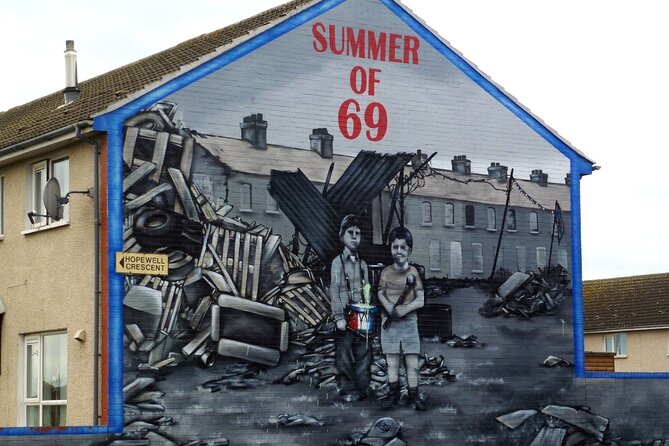
The greatest strength of this walk is also what can make it uncomfortable. Former political prisoners do not speak like museum labels. They bring memory, emotion, and political belief to the street.
That can help you understand the Troubles in a way a textbook cannot. It can also mean you hear strong opinions, including hostility toward people associated with the other side or with Britain. One participant found a guide’s anti-English remarks difficult to accept. That reaction is worth taking seriously.
The tour works best when you separate explanation from agreement. You can listen to why a guide believes something without accepting every conclusion. The guides may describe their past actions or community loyalties, then speak about the need for peace today. That tension is part of the lesson.
Several guides have been praised for answering questions openly and for presenting both sides without telling you which community was right. Other accounts describe uneven delivery, unclear sound, or a guide who focused too heavily on personal views. You cannot control the exact personalities on the day, but the two-guide structure gives the experience a useful balance.
Do not expect a final debate or a political plan for removing the wall. The walk explains the conflict and its continuing effects, but it does not offer a solution to Northern Ireland’s constitutional future. Some people may find that frustrating. I see it as an honest limit: the guides are there to share experience and local memory, not settle a question that remains politically alive.
What the $36.05 price buys you
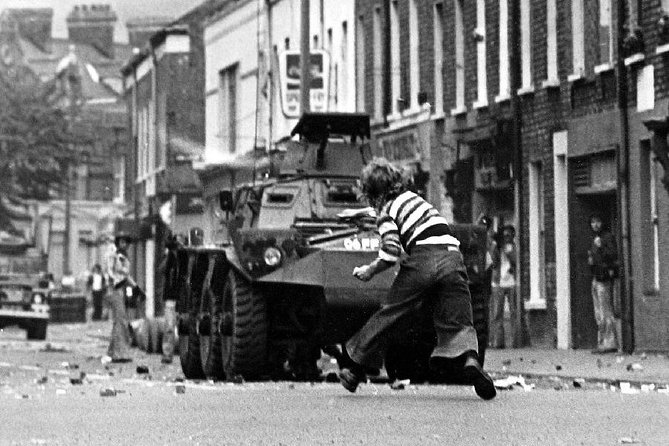
At $36.05 per person, this is not the cheapest way to see Belfast murals. You could walk through parts of West Belfast on your own and photograph many of the same sites.
The value comes from interpretation. You are paying for two local guides, a linked route through both communities, and access to personal stories that are difficult to find in a standard sightseeing visit. You also save time working out where to go and what each memorial means.
The maximum group size is 20 people. That is large enough to create a social tour but small enough for a guide to speak directly to the group, provided everyone stays close. With a full group, hearing beside traffic can be difficult, so stand near the guide and ask for a repeat when needed.
The tour is offered in English and uses a mobile ticket. It runs for about three hours, with free admission to the sites along the route. Most people can take part, and service animals are allowed. The route is near public transport, though the supplied meeting and ending points are the details to use when planning your day.
At the end, you are on Lower Shankill Road. It is about an eight-minute walk back toward the starting point and roughly 15 minutes to Belfast city centre. The guide can help with directions or assist you in getting a taxi.
How to prepare for the three-hour walk
Treat this as an outdoor activity, even though it takes place in an urban area. The route has no notable hills according to one detailed account, but you still walk for the full three hours, with repeated stops on hard city surfaces.
Wear comfortable shoes. Bring a warm layer even if the forecast looks mild, since open and windy sections near the wall can feel colder than expected. Water and a small snack are sensible, especially because the tour can run continuously for a long stretch.
A few practical tips will improve the experience:
- Stay close enough to hear the guide over traffic.
- Ask questions, but allow space for painful personal stories.
- Bring a marker if you want to sign the peace wall.
- Keep your phone ready for the mobile ticket.
- Plan your next stop from Shankill Road, not from Divis Tower.
- Leave room in your schedule for the tour to affect you emotionally.
The activity requires good weather. If poor weather causes cancellation, you can choose another date or receive a full refund. You can also cancel for a full refund up to 24 hours before the start time. Changes or cancellations made inside that period are not accepted.
Who should book this experience?
I would choose this tour if you want to understand Belfast through people who lived through the Troubles, not just through murals viewed from a taxi window. It suits adults and older teenagers who can handle difficult subjects and listen to political views without treating the walk as a contest.
It is especially useful early in a Belfast visit. The route gives you context for the city’s memorials, neighborhoods, and continuing divisions. You may leave with more questions than answers, but that is a useful result when the subject is this complex.
I would think twice if you dislike emotionally charged storytelling, long outdoor walks, or strong political opinions. A poor guide match or sound problem can weaken the experience, and one section may feel less organized than the other.
Should you book the Belfast Political Tour?
Yes, if your goal is an honest introduction to West Belfast and you are prepared for a serious walk. The two perspectives, the former prisoners’ personal accounts, and the stops at the Bobby Sands mural, Bombay Street, Shankill memorials, and bombing sites make this far more than a mural tour.
Book it with warm clothes, good shoes, and patience. The peace wall may look like a tourist sight, but the gates still close at night and the memories around it remain raw. At $36.05, I consider it good value for a three-hour, first-hand look at a part of Belfast that deserves more than a quick photograph.
FAQ
Where does the Belfast Political Tour begin?
The tour begins at Divis Tower, Belfast BT12 4QA, in West Belfast.
Where does the tour finish?
It ends at 154 Shankill Road, Belfast BT13 2BE, on the Lower Shankill Road.
How long does the tour last?
The experience lasts approximately three hours, with about 90 minutes in the Falls area and about 90 minutes on Shankill Road.
What will I see on the Falls Road section?
You will visit political murals in the nationalist area, including the International Wall, Bobby Sands mural, D Company memorial garden, and Bombay Street.
What will I see on the Shankill Road section?
The route includes the Shankill Memorial Garden, Bayardo bombing site, UVF Memorial, Frizzells Fish Shop bombing site, and Somme Memorial.
Is the tour suitable for most people?
Most people can participate, and service animals are allowed. You should be comfortable walking outdoors for about three hours and standing near city streets.
Can I cancel for a refund?
You can cancel up to 24 hours before the start time for a full refund. If poor weather cancels the tour, you will be offered another date or a full refund.
Newest reviews from Belfast
- VIP Skip-the Line Titanic Museum and Whiskey Tasting Tour★ 4.8 · 11 reviews
- Titanic Eastside Bike Tour★ 5.0 · 9 reviews
- Private Half Day Winter Magic in the Antrim Glens★ 5.0 · 2 reviews
- Giants Causeway Private Tour★ 5.0 · 3 reviews
- The Single Cask Whiskey Experience★ 5.0 · 6 reviews
- This is Belfast Walking Tours. Our history, our culture.★ 5.0 · 7 reviews
- St Patrick’s Centre & Burial Site + Hillsborough Castle & Gardens★ 5.0 · 2 reviews
- Shore Excursion from Belfast to Giants Causeway & Rope Bridge★ 5.0 · 2 reviews
Murals & Peace Wall Tours, compared.
The Troubles Walls & Bridges Guided Walking Tour
Read our review →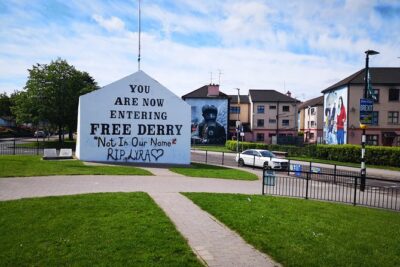
Browse the lists this tour appears in