
Reviewed · BLACK TAXI TOURS
Belfast: Murals Taxi Tour
Belfast’s walls still speak plainly. This 90-minute taxi tour makes the city’s political past easier to understand, using murals, memorials, and streetside stories rather than a classroom lecture. I like the private format, which gives you room to ask questions, and I like the chance to see both Catholic and Protestant areas in one carefully guided route. The main drawback is time: an hour and a half gives you a strong introduction, but anyone wanting every mural explained in detail may wish the tour lasted longer.
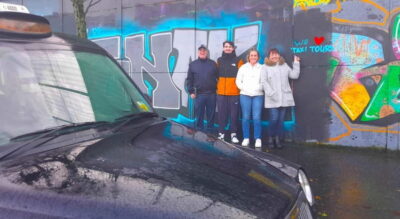
The guides are the heart of the experience. Sean, Edward, Jim, Nigel, Dan, and Jimmy are among the guides praised for clear explanations, respectful delivery, local insight, and good humor. One practical note: the tour is described as taking place in a traditional black taxi, but some departures use clean, comfortable Mercedes vans instead. You get a private air-conditioned vehicle either way, but the classic cab is not guaranteed.
In This Review
- Key things to know before you book
- Why a black taxi is the right way to see Belfast
- Divis Tower and the first view of West Belfast
- The International Wall and murals that keep changing
- The Peace Wall and a message in your own handwriting
- Falls Road murals and the story of Catholic West Belfast
- Bombay Street and a memorial garden
- Crumlin Road Gaol and the mechanics of segregation
- Lower Shankill and the Protestant side of the story
- How much history fits into 90 minutes?
- The guides make or break the experience
- Is the $51 price good value?
- Who should book this Belfast taxi tour?
- Should you book it?
- FAQ
- How long does the Belfast Murals Taxi Tour last?
- How much does the tour cost?
- Is hotel pickup included?
- Is the tour private?
- What language is the tour in?
- Is the tour wheelchair accessible?
- What vehicle is used?
- What places does the tour visit?
- Can I cancel the tour?
Key things to know before you book
- You see both sides of Belfast’s divide: The route connects the Catholic Falls Road area with the Protestant Shankill Road, helping you compare the murals, flags, memorials, and stories on each side.
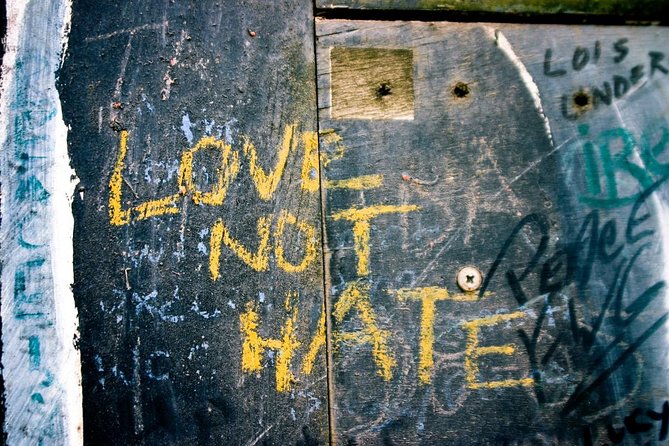
- The Peace Wall is more than a photo stop: Your guide explains why sections are still locked each day and gives you time to write a message on the wall.
- Bombay Street brings the past close: This is where the tour connects the wider conflict to a residential street and a memorial garden.
- Local guides shape the experience: Guides including Sean, Edward, Jim, Nigel, Dan, and Jimmy are praised for answering questions and explaining difficult subjects with care.
- The route works well in bad weather: Hotel pickup, a private vehicle, and umbrellas provided by some guides make this a practical Belfast activity on a rainy day.
- The tour offers a useful first look, not the final word: At $51 per person, it is good value for a focused introduction, though the short duration limits the amount of detail.
Why a black taxi is the right way to see Belfast
Belfast’s murals are spread through working neighborhoods, not gathered in one tidy museum. A taxi lets you move between the Falls and Shankill Roads without worrying about directions, parking, or crossing unfamiliar streets on your own.
The vehicle also matters because the tour is built around local storytelling. You sit with your guide in a small private group, stop for photographs, and ask questions as the route unfolds. That is more personal than a large bus tour, where the story can feel fixed and distant.
The experience is described as a historic black taxi tour, but the vehicle may be a modern Mercedes van. Several people praised the cars for being clean, comfortable, and well kept. One guide supplied umbrellas during wet weather, a thoughtful touch in a city where rain can arrive without much warning.
Pickup and drop-off are included at city-center hotels. That saves you from finding a meeting point and makes the tour easy to fit into a short Belfast stay. The tour is wheelchair accessible, though you should confirm the vehicle arrangement when booking if you have specific mobility needs.
Other black taxi tours in Belfast:
- Belfast: Political Taxi Tour
★ 4.8 · 5,014 reviews - Cab Tours Belfast Famous Black Taxi Tours
★ 5.0 · 3,633 reviews - Private Black Taxi Belfast City Tour
★ 5.0 · 2,188 reviews
Divis Tower and the first view of West Belfast
Divis Tower is an early stop and a useful marker for understanding West Belfast. Your guide explains why this tower became important during the Troubles, then gives you time to take photographs.
The value here is not simply the building itself. Divis Tower helps you see how political conflict was tied to ordinary homes, apartment blocks, roads, and sightlines. Belfast’s past was not sealed away in a distant battlefield. It took place among residents going to work, children going to school, and families living close to the barriers.
A good guide will also help you place the tower within the wider city. Reviews of Sean, Edward, Jim, and Nigel repeatedly praise their ability to make difficult subjects easy to follow. That matters at an opening stop like this, because the tour introduces names, communities, and events that can otherwise blur together.
The International Wall and murals that keep changing
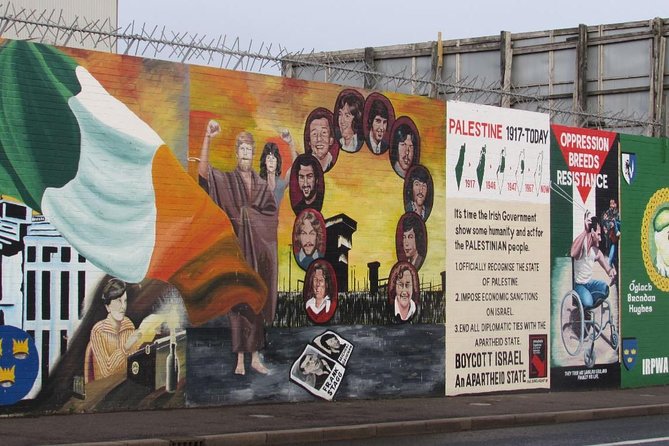
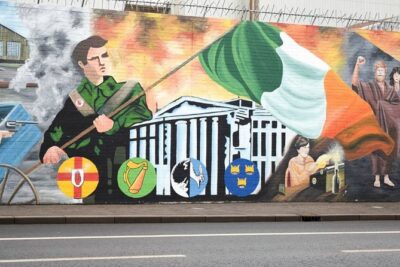
The International Wall is one of the most visually striking parts of the route. Its murals connect Belfast’s political concerns with causes and conflicts elsewhere in the world.
Look closely at the subjects and symbols. The wall is not just a collection of local scenes. It shows how mural art has been used to express solidarity with groups outside Northern Ireland and to frame local politics in a wider international setting.
This is a good place to ask questions. The murals change over time, so the exact images you see may not remain in place forever. Your guide can explain what the current artwork means and how the wall functions today.
The tour gives you a chance to stop and take pictures rather than viewing everything through a taxi window. Still, do not expect a long art-history lesson at every painting. The guide’s job is to link the images to the city’s political story, not to catalogue every brushstroke.
The Peace Wall and a message in your own handwriting
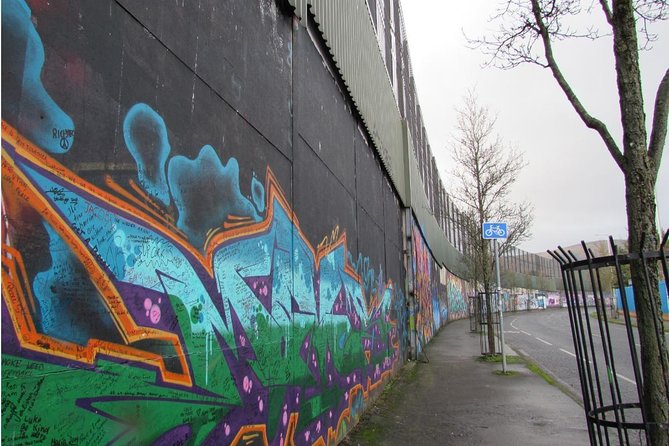
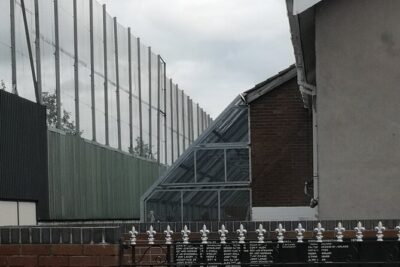
The Peace Wall is probably the stop that makes the city’s divisions most tangible. Your guide explains its history and why sections are locked each day, a detail that underlines how recent and unfinished the story remains.
You also have the chance to write a message on the wall. It is a small act, but it gives you a personal connection to a place that can otherwise feel like an abstract political symbol.
The wall is not presented as a simple monument to peace. It is also a physical barrier between communities. That tension is important. You can admire the progress Belfast has made while recognizing that the structures built during the Troubles still affect daily life.
The route takes you around parts of the Peace Wall in the Falls Road and Shankill Road area. Seeing the different sides helps you notice how flags, colors, names, and subjects shift from one community to the other. The contrast is one of the strongest reasons to choose this tour rather than a general city sightseeing drive.
Other tours of the murals and peace walls:
- Belfast: Political Conflict 3-Hour Walking Tour
★ 4.6 · 2,215 reviews - Belfast’s Political Mural Taxi Tour
★ 5.0 · 1,180 reviews - Belfast Troubles Tour: Walls and Bridges
★ 5.0 · 853 reviews - Belfast: The Troubles Walls & Bridges Guided Walking Tour
★ 4.8 · 583 reviews
Falls Road murals and the story of Catholic West Belfast
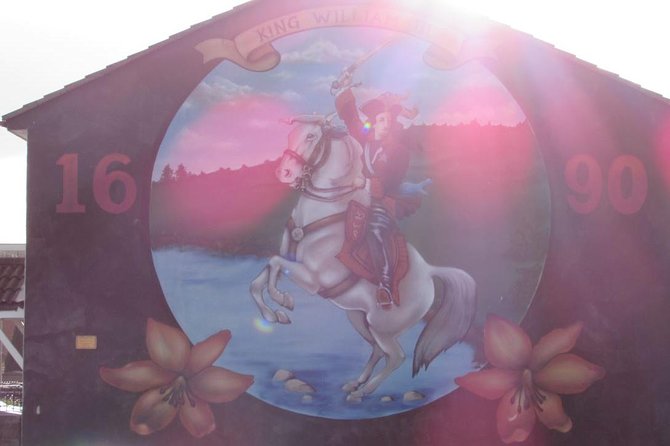
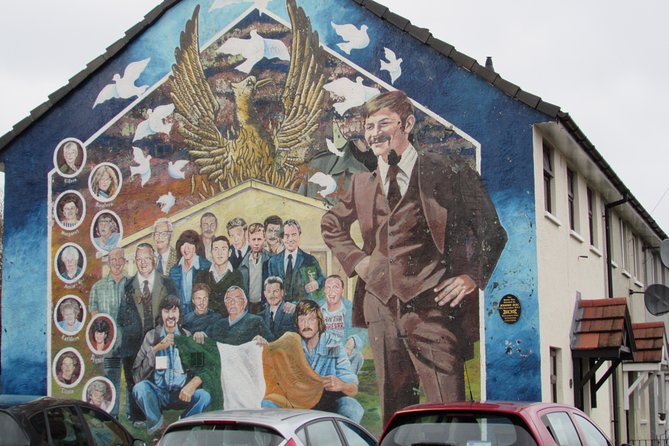
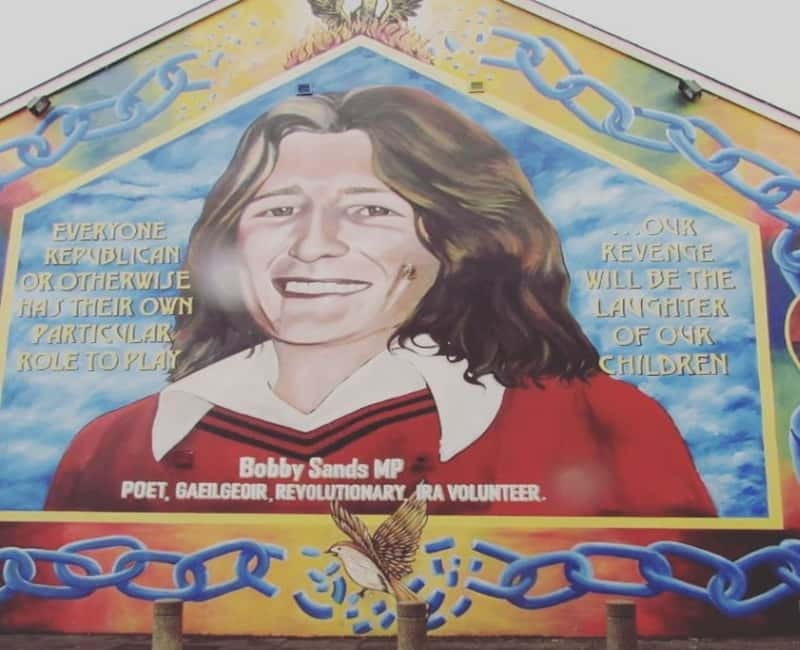
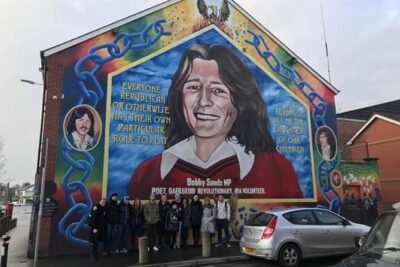
The tour continues through West Belfast and the Falls Road area, where political murals cover walls, gable ends, and other prominent surfaces. Your guide explains the people and events represented, along with the way the artwork has changed as Belfast has changed.
This is where the tour can feel most emotionally demanding. Some images honor victims, some represent political movements, and others connect Belfast with struggles around the world. The subjects are not decorative in the usual tourist sense. They reflect memory, identity, grief, and competing versions of the past.
I appreciate the chance to hear local accounts here, especially when the guide explains how families and communities were affected. Dan, for example, is praised for sharing his experience of growing up in Belfast during the Troubles. That kind of perspective can add a human layer that dates and political labels alone cannot provide.
Your guide should also help you keep the language clear and fair. Belfast’s history contains strong opinions on every side, so impartial delivery is important. Jim is frequently praised for balancing serious stories with kindness and humor, while Edward is singled out for explaining complex subjects in a calm, accessible way.
Bombay Street and a memorial garden
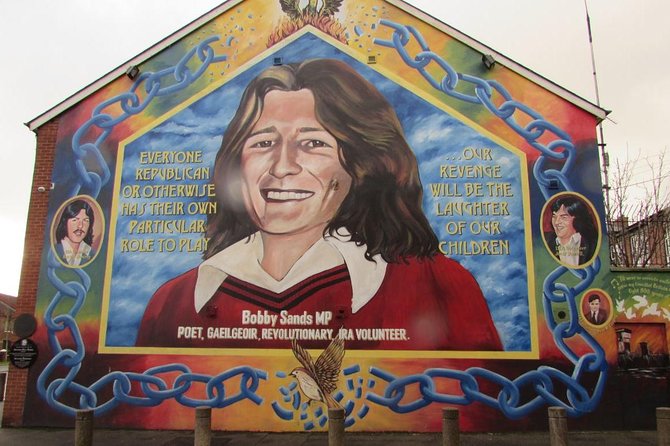
Bombay Street is one of the most significant stops because it brings the conflict back to a particular residential place. The tour presents it as the location where the Troubles began, then takes you to a memorial garden.
The stop helps you understand that political violence was not confined to major public buildings. Streets where people lived could become symbols, targets, and places of remembrance. A memorial garden gives the tour a quieter pause after the murals and barriers.
This section may be especially meaningful if you want to understand the civilian cost of the conflict. The guides explain how local families were affected and point out memorials connected with victims from different parts of the conflict.
The tone can be poignant and, at times, harrowing. That is appropriate to the subject, but you should not expect a light sightseeing ride. The best guides keep the mood human and approachable without making jokes at the wrong moment. Several accounts praise Jim and Nigel for striking that balance.
Crumlin Road Gaol and the mechanics of segregation
Crumlin Road Gaol provides another way to understand how Belfast was divided. The tour discusses political segregation and the role the prison played in the city’s troubled past.
You may not spend a long time inside the gaol on this excursion. It is used as a landmark and a talking point within the wider driving route. That makes it useful for orientation, but it is not a substitute for a full prison visit.
The stop also helps connect physical locations across Belfast. The Peace Wall, the separate neighborhoods, memorial gardens, murals, and prison were not isolated features. Together, they show how political identity shaped movement, housing, public space, and security.
If you already know a lot about Northern Ireland, this portion may feel brief. If the subject is new to you, it gives you a helpful framework for understanding what you see next in the Shankill area.
Lower Shankill and the Protestant side of the story
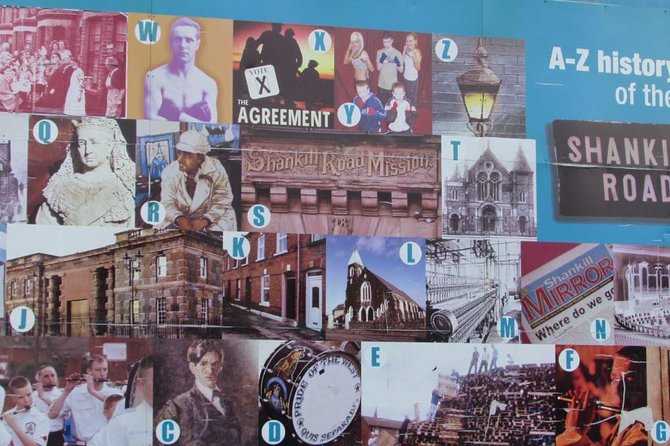
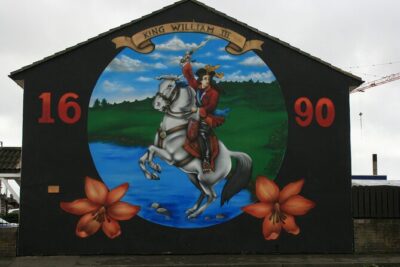
The route then reaches Lower Shankill, Belfast’s main Protestant area, where you see important murals and hear the history behind them. This is essential to the tour’s balance. Seeing only the Falls Road would give you an incomplete picture of Belfast.
The artwork in Shankill reflects a different political identity, set of symbols, and historical memory. Your guide explains the meaning behind the murals and the role they play in the community.
The contrast with the Falls Road is one of the tour’s strongest teaching tools. You are not simply looking at two neighborhoods with different colors. You are seeing two communities preserve and display their own accounts of the past, often only a short distance apart.
One useful detail from the experience is that the Shankill section includes a garden of remembrance, although it may have fewer murals than you expect. If your main goal is wall art, the Falls Road and International Wall may offer more visual material. If your goal is understanding both communities, the Shankill stop is indispensable.
How much history fits into 90 minutes?
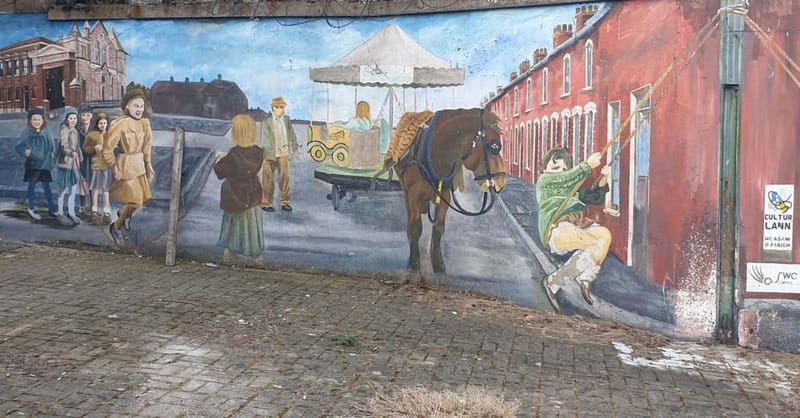
The tour moves quickly, but it is not meant to be a full course on the Troubles. It gives you a route through key places, then uses those places to explain the conflict, its victims, and its continuing effects.
I would book it early in a Belfast visit. It can help you understand the city before you spend time exploring museums, historic neighborhoods, or the Crumlin Road Gaol on your own.
The short length is also a strength for some people. You get a focused experience without giving up half a day, and hotel pickup makes the timing simple. Families and mixed-age groups can manage 90 minutes more easily than a longer walking tour.
Still, you should allow time for questions. Some people found themselves wanting more detail near the end, when the driver had to keep to the schedule for the next booking. A private group gives you more freedom than a large tour, but it cannot turn an hour and a half into three hours.
The guides make or break the experience
The clearest pattern is that the guide matters more than any individual mural. Sean is praised for his enthusiasm, especially in heavy rain. Edward is repeatedly described as thoughtful, friendly, and able to make complex subjects clear. Jim receives high marks for humor, impartiality, and adjusting his explanations for adults and students.
Nigel is praised for personal insight, storytelling, and helpful navigation through the history. Dan brings lived experience of growing up in Belfast during the Troubles. Jimmy is described as friendly, thorough, and willing to give visitors time for questions.
You cannot choose a specific guide from the information provided, so the exact tone will vary. But the tour’s private format gives each guide room to respond to your interests. Ask about a mural, a family story, a memorial, or the current role of the Peace Wall. The more you engage, the more useful the experience becomes.
Is the $51 price good value?
At $51 per person, this is not the cheapest way to see Belfast’s murals. But the price includes private air-conditioned transport, city-center hotel pickup and drop-off, a live English-speaking guide, and stops across both sides of the divide.
For a couple or small group, the cost compares well with arranging separate taxis and trying to make sense of the route yourself. You are paying for access to local context, not just transport. The guide’s ability to explain what you are seeing is the main value.
The rating is 4.9 from 2,047 reviews, and 90 percent of ratings give the transport a perfect score. Those figures suggest a very dependable experience, though they should not erase the two practical cautions: the tour is short, and the promised black taxi may sometimes be a modern Mercedes van.
Free cancellation up to 24 hours before departure and the option to reserve now and pay later add useful flexibility. They are especially handy if Belfast is one stop on a larger Northern Ireland trip and your plans may shift.
Who should book this Belfast taxi tour?
I would recommend it to first-time visitors who want a clear introduction to the Troubles without spending hours walking between neighborhoods. It suits families, older visitors, and mixed-age groups particularly well because the vehicle is private, the route is structured, and wheelchair access is available.
It is also a good fit if rain, limited time, or mobility concerns make a long walking tour less appealing. The vehicle keeps you moving while still allowing stops for photographs and short visits to important landmarks.
You should think twice if you want an extended art tour focused only on murals. You should also know that the subject is serious. The tour covers deaths, segregation, memorials, and personal loss. It is presented respectfully, but it is not a carefree sightseeing loop.
Should you book it?
Yes, if you want to understand Belfast rather than simply photograph it. The route connects Divis Tower, the International Wall, the Peace Wall, Bombay Street, Crumlin Road Gaol, Falls Road, and Shankill in a way that gives the city’s political geography real meaning.
Book it early, ask questions, and treat the tour as an introduction to a complicated past. At $51 per person, it offers strong value for a private 90-minute experience, especially when the guide is as engaging as Sean, Edward, Jim, Nigel, Dan, or Jimmy. Just keep your expectations realistic: you will come away with a much clearer picture of Belfast, not every answer to its history.
FAQ
How long does the Belfast Murals Taxi Tour last?
The tour lasts 1.5 hours.
How much does the tour cost?
The listed price is $51 per person.
Is hotel pickup included?
Yes. Pickup and drop-off are included for hotels in Belfast city center.
Is the tour private?
Yes. The experience is offered as a private group tour.
What language is the tour in?
The live tour guide speaks English.
Is the tour wheelchair accessible?
Yes, the activity is listed as wheelchair accessible.
What vehicle is used?
The tour takes place in a historic black taxi, although some departures may use a modern Mercedes van instead. The vehicles are air-conditioned, and several departures have been described as clean and comfortable.
What places does the tour visit?
The route includes Divis Tower, the International Wall, the Peace Wall, West Belfast and the Falls Road, Bombay Street and its memorial garden, Crumlin Road Gaol, and Lower Shankill.
Can I cancel the tour?
Yes. You can cancel up to 24 hours in advance for a full refund. You can also reserve now and pay later.
Newest reviews from Belfast
- VIP Skip-the Line Titanic Museum and Whiskey Tasting Tour★ 4.8 · 11 reviews
- Private Half Day Winter Magic in the Antrim Glens★ 5.0 · 2 reviews
- Giants Causeway Private Tour★ 5.0 · 3 reviews
- Titanic Eastside Bike Tour★ 5.0 · 9 reviews
- The Single Cask Whiskey Experience★ 5.0 · 6 reviews
- This is Belfast Walking Tours. Our history, our culture.★ 5.0 · 7 reviews
- St Patrick’s Centre & Burial Site + Hillsborough Castle & Gardens★ 5.0 · 2 reviews
- Small Group Giant’s Causeway Day Tour from Belfast★ 5.0 · 11 reviews
Black Taxi Tours, compared.
Browse the lists this tour appears in