
Reviewed · HISTORICAL TOURS
Belfast: A History of Terror Walking Tour
Belfast’s streets carry difficult stories. This 2.5-hour city-center walk uses those streets as its classroom, tracing the long road from 800 years of political division to The Troubles and the peace process. I like the clear local perspective and the way guides such as James, Mylie, Anne, Jim, and Roisin connect large political events with ordinary life. I also like the short, flat route, which covers about 1.5 miles without hills or steps.
The main consideration is the subject matter. This is a serious tour about bombings, killings, fear, and loss, so it may feel heavy at times. The guides use suitable humor and an upbeat view of Belfast’s future, but this is not a light sightseeing stroll. The tour is also in English only, and you need a good standard of English to follow its many details.
In This Review
- Key points to know before booking
- Why this walking tour helps explain Belfast
- Belfast City Hall and the opening history lesson
- Major bombing sites and the city as evidence
- Former security cordons and the daily reality of fear
- Memorial stops and the cost paid by ordinary people
- Peace, reconciliation, and Belfast today
- The guides are the heart of the experience
- Is $35 a fair price?
- Practical details for the 2.5-hour route
- Who should book this Belfast history walk?
- Should you book A History of Terror?
- FAQ
- Where does the Belfast History of Terror tour meet?
- How long does the walking tour last?
- How far do you walk?
- Is the tour available in languages other than English?
- What does the tour cover?
- Is the tour suitable for children?
- Is the tour wheelchair accessible?
- What should I wear or bring?
Key points to know before booking
- The tour begins at Belfast City Hall: You get the broad historical setting before moving to places linked with The Troubles.
- It covers ten city-center stops: These include bombing sites, attack locations, former security cordons, memorials, and places for quiet reflection.
- Local guides shape the experience: Several guides grew up in Belfast during the conflict and add personal insight without presenting only one political side.
- The Forgotten Troubles Memorial adds a human focus: The tour does not stop with dates and factions. It considers people still affected by the conflict.
- The route is short and flat: You walk roughly 1.5 miles over 2.5 hours, with audio headsets helping you hear clearly.
- The price is $35 per person: For a long, carefully explained history walk with a local guide, I consider that fair value, especially early in your Belfast visit.
Why this walking tour helps explain Belfast
The Troubles can be hard to grasp from a quick visit. The names of political parties, paramilitary groups, police forces, communities, and historical agreements can blur together. This tour gives you a framework first, then places the events in the streets around you.
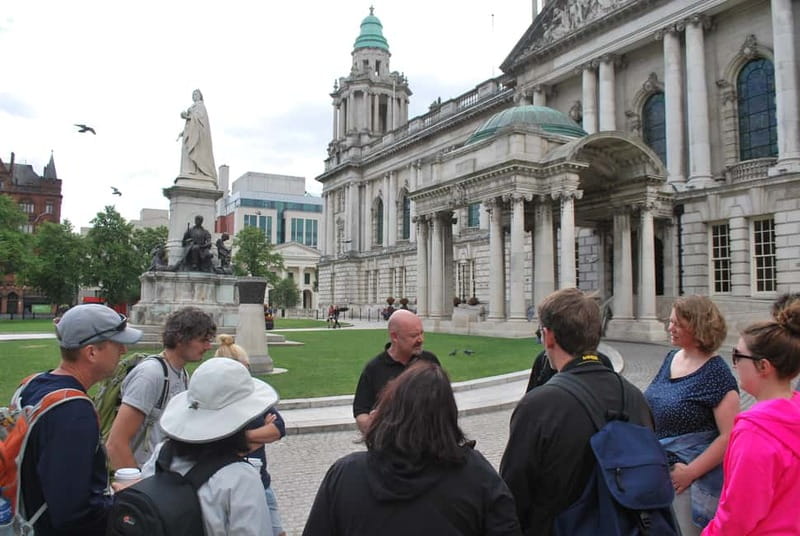
The starting point is not simply a convenient meeting place. Belfast City Hall gives the guide room to explain the older forces behind the conflict. You learn how centuries of rule, settlement, religion, politics, and competing ideas about national identity helped shape the divisions that became violent in the late 1960s.
That long introduction matters. Without it, the Troubles can seem like a sudden burst of unexplained violence. With it, you begin to see how political arguments affected housing, work, public space, policing, and daily routines. I appreciate that the tour aims to explain causes rather than reduce everything to a simple story of good people and bad people.
The guide also explains why Belfast became the center of the conflict. The focus stays on Northern Ireland, but the story reaches beyond the city. You hear how local events fitted into the wider question of whether Northern Ireland should remain part of the United Kingdom or become part of a united Ireland.
More History Tours in Belfast
- A History of Terror – Belfast City Centre Walking Tour
★ 5.0 · 2,883 reviews - Private Political History & Murals Tour Belfast
★ 5.0 · 182 reviews - Belfast: Best of Belfast History, Culture & Art Walking Tour
★ 4.9 · 158 reviews
Belfast City Hall and the opening history lesson
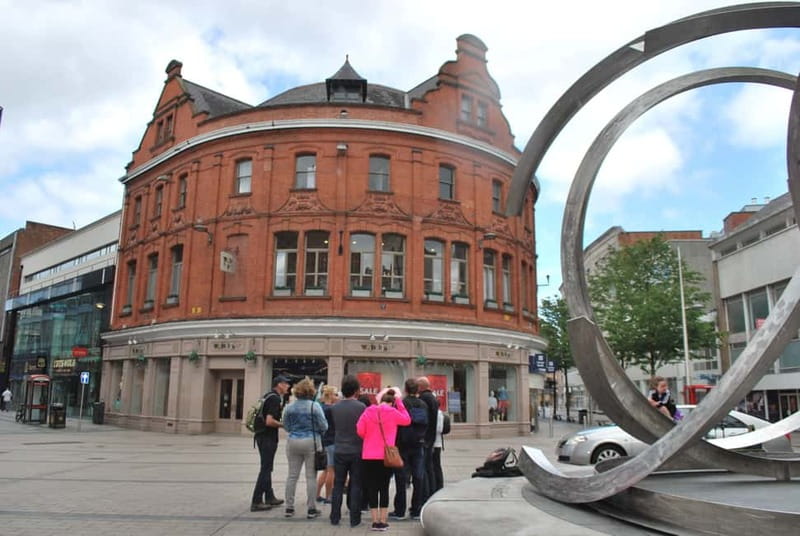
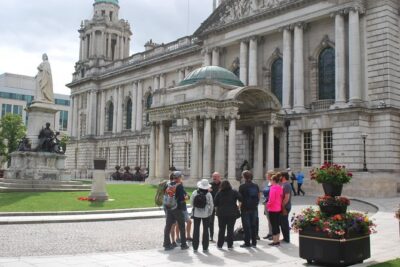
Meet at the front gates of Belfast City Hall in Donegall Square North. Look for a guide wearing a black jacket or T-shirt with the DC Tours logo on the left breast. Arrive about ten minutes early, since the opening context sets up everything that follows.
At this first stop, expect a broad explanation rather than a rush into graphic detail. The guide introduces the political and religious divisions that shaped Belfast, then shows how those divisions hardened over time. The tour reaches back roughly 800 years, but the aim is not to make you memorize a long list of dates.
The best part of this opening is the connection between national history and city life. You learn how power and identity shaped the places people lived, worked, worshipped, and gathered. That makes the later stops easier to understand.
This section can feel dense if you know little about Irish or British history. Do not worry if you cannot retain every name. Listen for the basic pattern of competing identities, unequal power, political pressure, and growing mistrust. The guide will return to those ideas throughout the walk.
Major bombing sites and the city as evidence
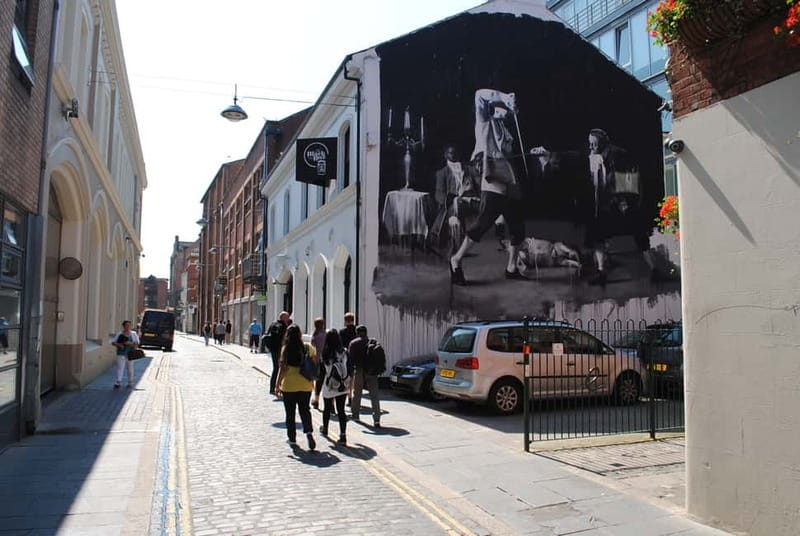
The middle part of the route visits city-center locations where major Troubles-era events took place. The supplied details do not identify every site by name, and that is useful to keep in mind when setting expectations. You are not signing up for a museum tour with large displays or a fixed collection of objects. The streets and buildings provide the setting, while the guide supplies the detail.
At these stops, you learn how violence affected civilians, businesses, workers, shoppers, and public spaces. A city center that now feels familiar and usable once had to deal with attacks, disruption, fear, and sudden changes to movement. The guide explains what happened at each location and places the event within the wider conflict.
This is where the walking format earns its keep. A textbook can tell you that bombings changed Belfast life. Standing in the actual city center helps you think about what that meant in practical terms: routes altered, areas closed, businesses damaged, and ordinary activities interrupted.
The tour also deals with the human cost. Personal stories and survivor accounts give the history a face, but the presentation is intended to remain careful and balanced. The best guides do not turn suffering into spectacle. They use the stories to show how fear and normality existed side by side.
Several people who took the tour singled out this mix of sadness, clarity, and occasional humor. Jim is praised for keeping a difficult subject engaging, while Mylie is noted for telling local stories with care and empathy. That balance is important. Two and a half hours of grim facts would be exhausting. Appropriate humor gives you a moment to breathe without making light of the subject.
Former security cordons and the daily reality of fear
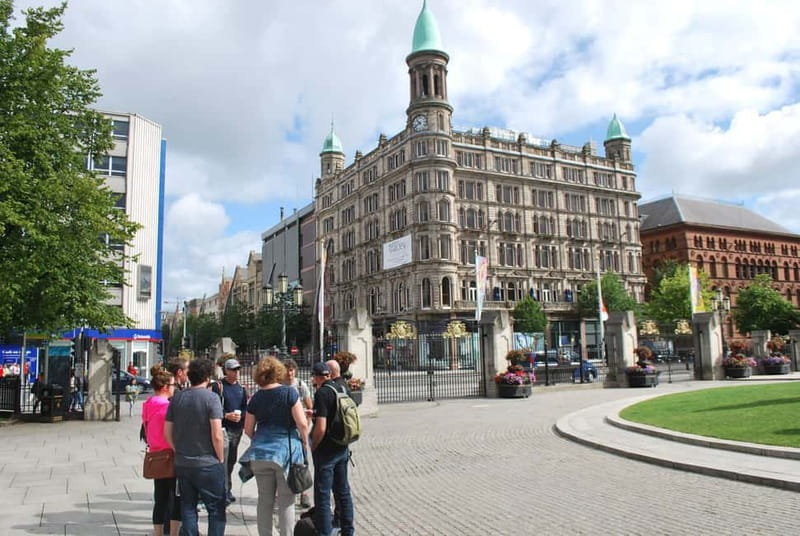
The tour includes former security cordon locations. These points help explain how the conflict changed the practical shape of Belfast. Security was not an abstract idea. It affected where you could walk, how you entered areas, and how the city center functioned.
Your guide discusses the role of the British Army, the police, and paramilitary organizations. The goal is not to present one institution or community in isolation. Instead, you hear how several forces interacted, and how civilians lived with the results.
This part should be especially useful if your knowledge of The Troubles comes mainly from headlines. Headlines tend to focus on attacks and political statements. A walking guide can add the less visible side: the repeated checks, the disruption, the tension, and the effort required to carry on with work and family life.
The guides also explain that people experienced the conflict in different ways. Political identity, religion, neighborhood, age, and personal circumstance all mattered. A balanced tour cannot make every story feel tidy, and this one appears to avoid pretending that it can.
James receives particularly strong praise for explaining complex material in a simple way. He also studied politics and history in Belfast and has described his own experience of growing up during the Troubles. Anne, who was born and raised in the city, brings a personal perspective as well. These experiences can make the subject more immediate, though the tour still aims to give room to different sides.
More Walking Tours in Belfast
- Belfast: Political Conflict 3-Hour Walking Tour
★ 4.6 · 2,215 reviews - Belfast: The Troubles Walls & Bridges Guided Walking Tour
★ 4.8 · 583 reviews - Belfast Political Tour-Conflicting Stories Walking Tour
★ 4.5 · 459 reviews - Best of Belfast Walking Tour
★ 5.0 · 399 reviews
Memorial stops and the cost paid by ordinary people
The Forgotten Troubles Memorial gives the walk a quieter change of pace. Here, the emphasis moves away from the mechanics of conflict and toward remembrance. You consider people who died or suffered, as well as the challenges that remain after a peace agreement.
This is one of the most important features of the tour because peace is not treated as a clean finish line. Belfast has regenerated, but the legacy of The Troubles still affects the city and its people. The memorial helps you understand that political progress and personal healing do not always move at the same speed.
Expect some emotional moments. Mylie’s careful delivery has moved people to tears, and other guides have been praised for telling local stories with compassion. You are not pressured to react in any particular way. The tone is reflective rather than dramatic.
The memorial also keeps the tour from becoming a political history lesson only. Dates and organizations matter, but the lasting question is what violence does to people. That human focus is why I would place this tour before a more specialized political or military study of Northern Ireland.
Peace, reconciliation, and Belfast today
The final part looks at how peace was achieved and how Belfast has changed since the conflict. The tour does not suggest that every division disappeared. Instead, it presents a city that has regenerated while still facing unresolved questions.
This ending gives the experience a needed sense of proportion. You spend much of the walk learning about fear and violence, then hear about the choices and efforts that made a more peaceful Belfast possible. Several guides are praised for leaving people with a realistic but hopeful view of the city’s future.
I like that the focus is not just on what Belfast suffered. You also learn how people adapted, rebuilt, and carried on. That makes the tour more than a catalog of attacks. It becomes a story about civic change and the continuing work of reconciliation.
If you are visiting Belfast for only a day or two, this final section can shape how you see the rest of the city. You may notice public spaces, memorials, businesses, and neighborhoods with more care. You will also have better context for later visits to other historical sites.
The guides are the heart of the experience
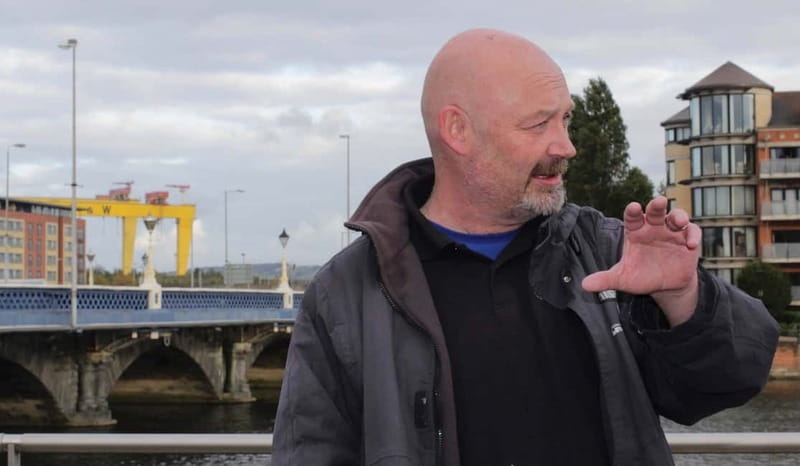
The company is locally owned, and the guide quality is the strongest part of this tour. Names appearing across the feedback include James, Mylie, Anne, Jim, Chris, Rory, Roisin, Steve, Paul, Finn, and Miles. That is a sizable guide team, so the exact personality and delivery will vary by departure.
The common thread is local experience, strong command of the subject, and an effort to remain impartial. James is praised for checking that people understand each stop and for looking after the group in rainy weather. Chris is praised for making the full two and a half hours hold attention. Roisin is noted for remembering names and making the group feel comfortable during a difficult discussion.
The use of audio headsets is a practical plus. City streets can be noisy, and hearing every sentence matters on a history tour. The headsets are also helpful if you have hearing difficulties, as one person specifically appreciated.
Group size can vary. One small group allowed James to make the walk feel personal, but no fixed maximum is provided. If you prefer a private tour or a very small group, you should not assume that is guaranteed. Still, the guides appear willing to respond to the people in front of them rather than deliver a rigid speech.
Is $35 a fair price?
At $35 per person, this is not the cheapest way to spend a morning in Belfast. You can walk around the city center without paying anything. But the comparison is not really between a free walk and a paid walk. It is between finding and interpreting these places yourself, or spending 2.5 hours with a local expert who connects them into one clear story.
I consider the price reasonable for the amount of time and explanation. The route is only about 1.5 miles, but the slow pace is deliberate. You stop often, listen, ask questions, and take in the setting. You are paying for interpretation, not mileage.
The value is highest if you are starting with limited knowledge of The Troubles. A good guide can save you hours of reading and help you avoid the usual oversimplifications. It is also useful for visitors who have already seen Belfast’s main landmarks but want to understand what shaped the modern city.
The value is lower if you want a casual sightseeing walk, dislike long explanations, or already have a strong academic grasp of the conflict. The title can also sound more sensational than the actual content. In practice, the tour is presented as careful and respectful rather than theatrical.
Practical details for the 2.5-hour route
The meeting point is at Belfast City Hall, Donegall Square North. Guides wear DC Tours clothing, so finding the group should be straightforward. The tour lasts 2.5 hours and is offered in English only.
The route is around 1.5 miles and Belfast city center is flat, with no hills or steps on the walk. It is listed as wheelchair accessible. You should still wear comfortable shoes because you will be on your feet for a long period.
Weather deserves attention. The tour operates in rain, and Belfast weather can change quickly. Bring a waterproof jacket, dress warmly in winter, and do not rely on a small umbrella as your only protection. One guide has supplied rain capes when needed, but I would treat that as helpful guide service rather than something guaranteed.
Children under 12 are not suitable for this experience. Older teens may appreciate it if they are comfortable with serious modern history and can follow a long English-language explanation.
You can cancel up to 24 hours before the start for a full refund, and the reserve-now, pay-later option keeps your plans flexible. Those terms are useful if the weather forecast is uncertain, although rain alone does not stop the tour.
Who should book this Belfast history walk?
I would recommend it to adults and teens interested in modern Irish and British history, visitors who want context beyond the usual landmarks, and anyone trying to understand Belfast without choosing a partisan version of events.
It is also a good fit if you value personal storytelling. The local guides do not just recite political facts. They explain how the conflict affected homes, streets, public life, and family memories. That makes the material easier to follow and harder to forget.
You should think twice if you want a cheerful introduction to Belfast, dislike emotionally difficult subjects, or find spoken English tours tiring. The pace is manageable, but the information is substantial. You will need to listen closely.
I would schedule it near the beginning of your stay. The tour can give you a useful map for the rest of Belfast, and you can then revisit places with a better sense of what they mean.
Should you book A History of Terror?
Yes, if you want to understand Belfast rather than simply photograph it. At $35, the combination of local guides, ten stops, audio headsets, and 2.5 hours of explanation offers solid value.
Book it with comfortable shoes and waterproof clothing, and arrive ready for a serious discussion. The tour does not make The Troubles simple, but it makes the subject easier to approach. That is exactly what you need from a first history walk in Belfast.
FAQ
Where does the Belfast History of Terror tour meet?
The tour meets at the front gates of Belfast City Hall on Donegall Square North in Belfast.
How long does the walking tour last?
The tour lasts 2.5 hours.
How far do you walk?
The route is about 1.5 miles. Belfast city center is flat, with no hills or steps involved.
Is the tour available in languages other than English?
No. The tour is offered in English only, and a good standard of English is needed to fully appreciate the information.
What does the tour cover?
It covers the causes and key events of The Troubles, the human effect of the conflict, the roles of the British Army, paramilitary groups, and police, the peace process, Belfast’s regeneration, and challenges that remain.
Is the tour suitable for children?
Children under 12 are not suitable for this tour. Older teens may be suitable if they are comfortable with serious historical topics and an English-language presentation.
Is the tour wheelchair accessible?
Yes, the tour is listed as wheelchair accessible.
What should I wear or bring?
Bring comfortable shoes and clothing suited to the weather. A waterproof jacket is recommended for rain, and warm clothing is strongly advised during winter.
Newest reviews from Belfast
- VIP Skip-the Line Titanic Museum and Whiskey Tasting Tour★ 4.8 · 11 reviews
- Private Half Day Winter Magic in the Antrim Glens★ 5.0 · 2 reviews
- Giants Causeway Private Tour★ 5.0 · 3 reviews
- Titanic Eastside Bike Tour★ 5.0 · 9 reviews
- The Single Cask Whiskey Experience★ 5.0 · 6 reviews
- This is Belfast Walking Tours. Our history, our culture.★ 5.0 · 7 reviews
- St Patrick’s Centre & Burial Site + Hillsborough Castle & Gardens★ 5.0 · 2 reviews
- Small Group Giant’s Causeway Day Tour from Belfast★ 5.0 · 11 reviews
Historical Tours, compared.
A History of Terror – Belfast City Centre Walking Tour
Read our review →
McCrossan’s Public Walking Tour of the Historic City
Read our review →
Private Political History & Murals Tour Belfast
Read our review →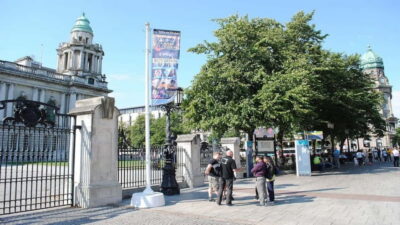
Best of Belfast History, Culture & Art Walking Tour
Read our review →
Belfast Walking Tour with a Local – History & Craic
Read our review →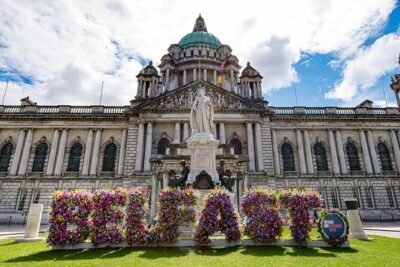
Belfast Political/history/troubles private taxi/cab tour
Read our review →
Peacewall and Political History Black Taxi Cab Tour
Read our review →Browse the lists this tour appears in