
Reviewed · HISTORICAL TOURS
Belfast: Best of Belfast History, Culture & Art Walking Tour
Belfast rewards a slower look. This three-hour walk connects the Cathedral Quarter, historic Entries, Waterfront, street art, and Victorian buildings into one clear story of a city shaped by trade, conflict, music, and reinvention. I especially like the use of headsets, which helps you hear every word on busy streets, and the guides’ mix of major events with small human stories. The main drawback is that three hours can feel long if you prefer a quick landmark tour, though the route covers less than two miles.
I also like the tour’s broad view of Belfast. Titanic and the Troubles receive attention, but they do not swallow the entire experience. Guides such as Mark, James, Steve, Chris, and Mylie have been praised for their warmth, humour, clear storytelling, and practical advice on food, music, shops, and free things to do. The walk takes place in all weather, so good shoes and a rain jacket are not optional extras here.
In This Review
- Key points at a glance
- Starting at Belfast City Hall
- From river settlement to industrial city
- Victorian buildings and modern Belfast
- The Cathedral Quarter and its creative pulse
- Belfast’s historic Entries
- Legends, people, and Belfast character
- Titanic and the Troubles, with needed context
- The Waterfront and Belfast today
- What the $35 price delivers
- Who will get the most from this walk
- Booking advice and final verdict
- FAQ
- Where does the Belfast walking tour meet?
- How will I recognise the guide?
- How long does the tour last?
- How far do you walk?
- What language is the tour offered in?
- Are headsets provided?
- Is the tour wheelchair accessible?
- Does the tour operate in bad weather?
- What should I wear or bring?
- Can I cancel for a full refund?
Key points at a glance
- Fourteen stops in under two miles: A manageable route gives you a useful first look at central Belfast without turning the day into a march.
- The Cathedral Quarter and historic Entries: You see the lanes and old passages that are easy to miss when walking between major sights.
- A wider story than the Troubles: The tour also covers medieval Belfast, the linen trade, industry, rebellion, reform, music, public art, and modern architecture.
- Headsets make a real difference: You can hear the guide while standing outdoors, crossing streets, or gathered around a small detail.
- Music and local culture are part of the story: You learn where to seek Irish traditional music and why punk matters to Belfast.
- Strong orientation for first-time visitors: Guides offer useful ideas for places to eat, drink, shop, and visit after the walk.
Starting at Belfast City Hall
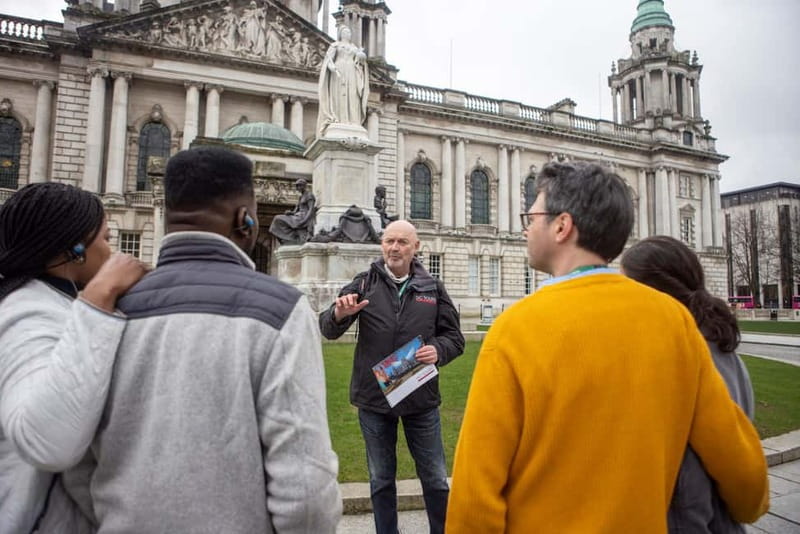
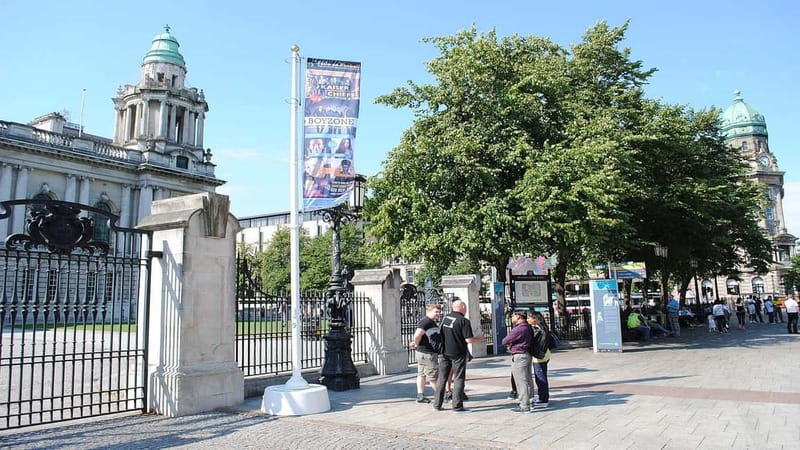
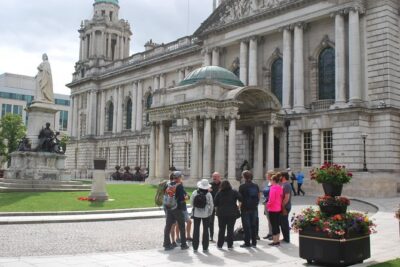
The tour begins at the front gates of Belfast City Hall on Donegall Square North. That is a handy meeting point in the city centre, and you should arrive looking for a guide wearing a black jacket or T-shirt with the DC Tours logo on the left breast.
City Hall is a fitting place to begin. It represents Belfast’s civic confidence during the period when the city grew through linen, shipbuilding, engineering, and trade. From here, the guide can place the streets around you in context rather than treating Belfast as a string of unrelated buildings.
I like this kind of opening because it gives you a mental map before the details begin. You are not simply told that a building is old or attractive. You learn how Belfast developed, who paid for its grand public architecture, and how the city’s fortunes changed over time.
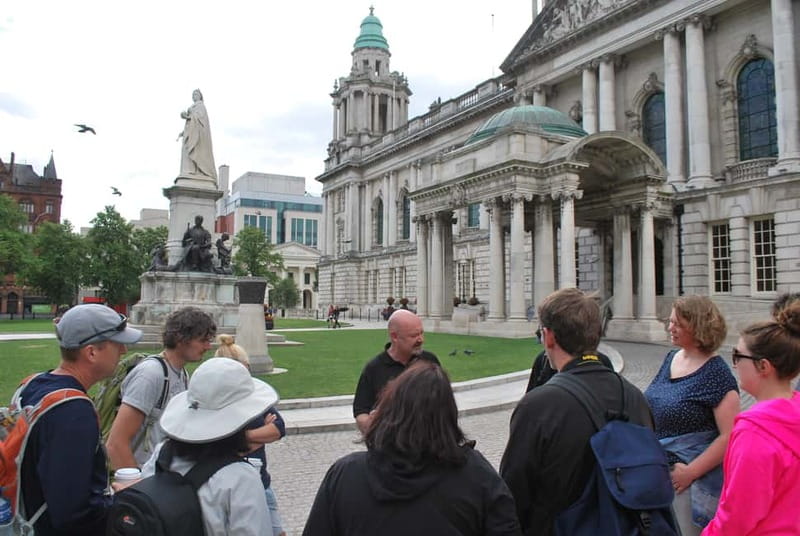
The walking pace is generally moderate. The route is less than two miles, but fourteen stops mean you pause often for explanations. The result is less strenuous than the duration might suggest. One useful point from the practical feedback is that the headsets allow you to keep listening without crowding around the guide.
More History Tours in Belfast
- A History of Terror – Belfast City Centre Walking Tour
★ 5.0 · 2,883 reviews - Belfast: A History of Terror Walking Tour
★ 4.9 · 854 reviews - Private Political History & Murals Tour Belfast
★ 5.0 · 182 reviews
From river settlement to industrial city
Early in the walk, the story reaches back to Belfast’s medieval beginnings and its position near the River Lagan. The city did not begin as the major industrial centre you see today. Its growth came through trade, work, migration, industry, and changing political power.
The guide explains how Belfast expanded from a modest river settlement into a global industrial city. That long view matters because it helps explain the city’s mixture of grand civic buildings, narrow lanes, working districts, churches, warehouses, and newer cultural spaces.
The linen trade receives particular attention. Belfast’s industrial success was closely tied to linen production, and that past still shapes the city’s identity. You get a better sense of why Victorian architecture appears with such confidence in central Belfast and why the city developed a strong commercial and manufacturing character.
This section should suit you if you like history presented through streets rather than dates alone. The guides also connect large economic changes with ordinary life, including the social structures that affected Belfast’s population. That wider approach is one of the tour’s strengths.
Victorian buildings and modern Belfast
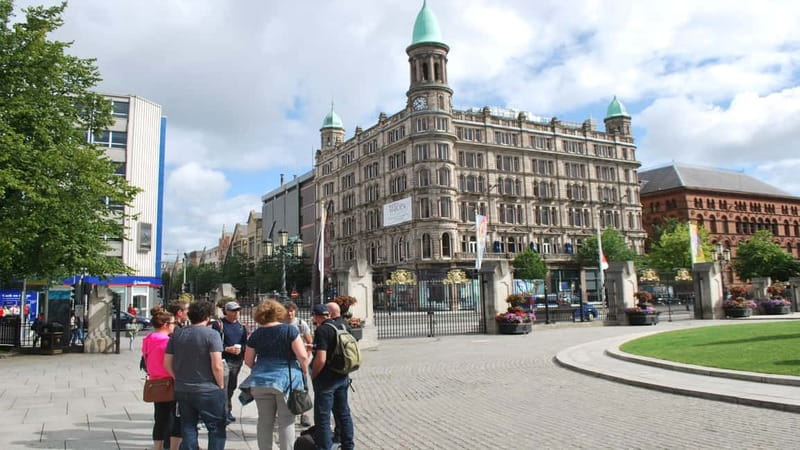
Belfast offers a useful contrast between nineteenth-century grandeur and present-day design. The walk points out architectural details that are easy to pass without a second look, from civic buildings to commercial facades and older structures tucked into the centre.
You will hear how architecture reflects money, ambition, politics, and the changing role of the city. Victorian Belfast wanted to look prosperous and important. Modern Belfast often uses public art and new buildings to express a different identity, one that looks forward while still arguing with the past.
The guide does not treat architecture as decoration alone. That is important. A building can tell you who held power, which industries mattered, and how the city wanted to present itself. The route also includes public art, giving you a chance to see how newer creative work responds to Belfast’s older stories.
If you enjoy taking photographs, keep your eyes above shopfront level and pay attention in the side streets. The walk is designed to reveal details you might overlook on your own. You should not expect a formal architectural lecture, but you will leave with a sharper eye for the city’s buildings.
The Cathedral Quarter and its creative pulse
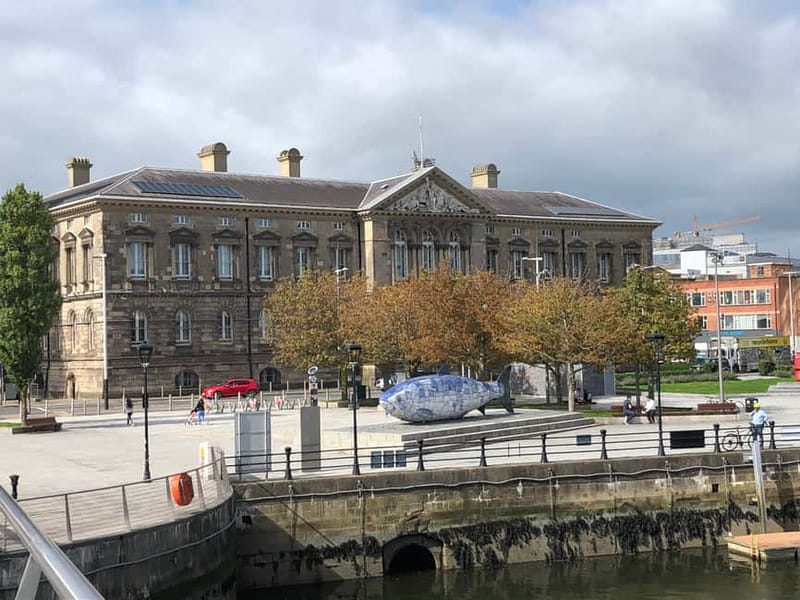
The Cathedral Quarter is one of the most atmospheric parts of the route. Its streets now form a cultural centre filled with art, music, nightlife, and older architecture, but the guide also explains how the area developed and changed.
The quarter is a good place to discuss Belfast’s creative identity. Street art, small lanes, historic buildings, and modern cultural spaces sit close together. The setting helps you understand why this part of town became associated with artists, performers, independent businesses, and evening entertainment.
Irish traditional music comes into the conversation here, including advice on where you can hear it during your stay. The tour also explains the importance of punk in Belfast. That is a valuable inclusion because it shows another side of the city’s cultural life, one tied to energy, frustration, independence, and social change.
You should take notes when the guide recommends music venues, pubs, restaurants, or shops. Several guides have been praised for useful suggestions that helped shape the rest of the day. A city walk is worth more when it sends you somewhere good afterward.
More Walking Tours in Belfast
- Belfast: Political Conflict 3-Hour Walking Tour
★ 4.6 · 2,215 reviews - Belfast: The Troubles Walls & Bridges Guided Walking Tour
★ 4.8 · 583 reviews - Belfast Political Tour-Conflicting Stories Walking Tour
★ 4.5 · 459 reviews - Best of Belfast Walking Tour
★ 5.0 · 399 reviews
Belfast’s historic Entries
The Entries are among the best reasons to take a guided walk rather than simply follow a map. These narrow historic passages and laneways can look like shortcuts, but they carry evidence of earlier Belfast life.
The guide points out what these spaces reveal about movement, work, trade, and the way the city grew. You might walk past them alone without realising their age or importance. With a guide, an ordinary-looking passage becomes part of the city’s story.
This is also where the tour feels most local. Major landmarks are useful, but the smaller spaces often give you a stronger sense of how a city was lived in. The Entries connect the polished centre with a less formal, more intimate Belfast.
The route does not promise that every stop will be a dramatic reveal. Some details are subtle. That is part of the appeal, but you need to enjoy listening and observing rather than expecting a constant parade of famous sights.
Legends, people, and Belfast character
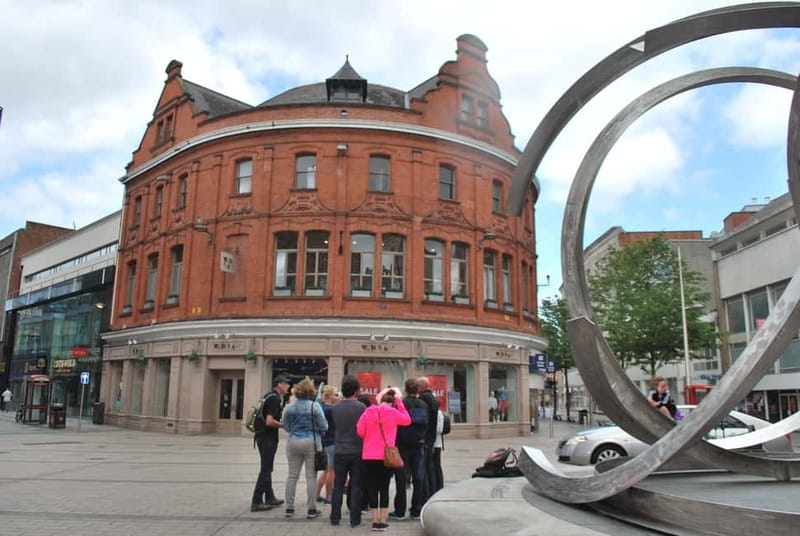
The tour brings in figures from different periods, including merchants, rebels, reformers, artists, and other people who shaped Belfast. This human focus keeps the walk from becoming a list of industries and political events.
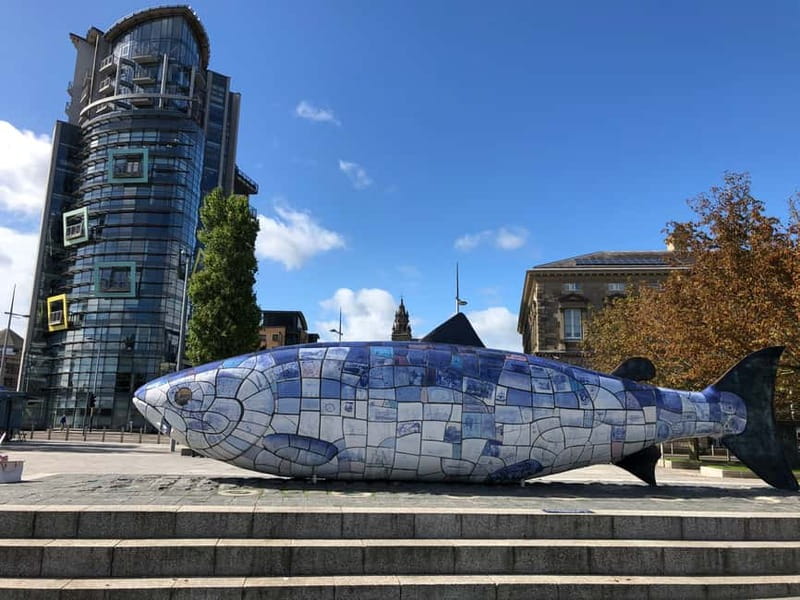
You also hear the legend of the Salmon of Knowledge. The story is more than a colourful local tale. It opens a door into Belfast’s older cultural memory and shows how folklore can sit alongside political and industrial history.
The guides’ personalities matter here. Mark has been praised for giving just enough detail without cramming the walk with facts. James has been noted for learning names and making a small group feel personal. Steve is often described as witty and especially strong at linking ancient events with modern Belfast. Chris is praised for dry humour and entertaining stories, while Mylie has been appreciated for tying historical names and events together clearly.
Guides change, so you should not book expecting one particular person unless the operator confirms it. Still, the pattern is clear: the experience depends heavily on local guides who enjoy telling Belfast’s story. That is a strength, but it also means the tone may vary slightly from one departure to another.
Titanic and the Troubles, with needed context
Titanic is included, but this is not a substitute for a dedicated visit to Titanic Belfast. You receive context about Belfast’s shipbuilding past and the city’s industrial ambition, along with other stories that place the famous ship into a much larger setting.
The Troubles are also discussed, but the tour aims to avoid making them the whole story. That balance will appeal to you if you want to understand the conflict without reducing Belfast to it. The guide covers key political and social developments, while also explaining how religion, work, class, industry, and everyday life shaped the city.
A careful tone matters here. Several guides have been praised for remaining neutral while explaining difficult subjects. The walk can touch on transgenerational trauma and the ways the past continues to affect people today, but it does so without turning the experience into a heavy political speech.
You should be comfortable with light historical themes and serious material. The tour is not designed as a memorial walk focused only on loss. It offers a broader account, with humour used to keep the pace human rather than to make light of painful events.
The Waterfront and Belfast today
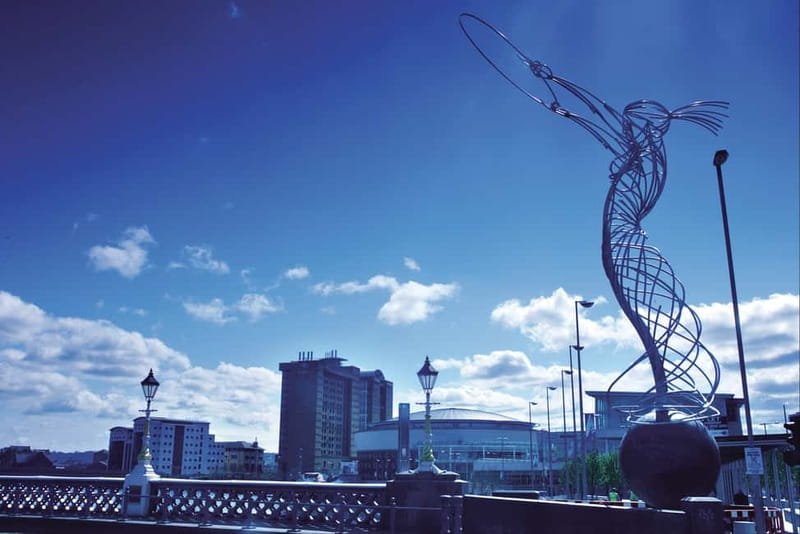
The route includes the Waterfront and the River Lagan, linking Belfast’s past to its current identity. The river helps explain the city’s trade and industrial growth, while the surrounding architecture and public art show how central Belfast has changed.
This part of the walk is useful because it gives you a sense of Belfast as a living city, not an open-air museum. Modern design and creative work sit beside reminders of older industries and political divisions. The guide helps connect those layers.
You may find the Waterfront less intimate than the Entries or Cathedral Quarter, but it provides welcome contrast. It also helps you judge distances and plan the rest of your stay. After the tour, you should feel more confident moving between central areas and choosing what deserves a longer visit.
Some departures have included a short coffee and comfort break, with a stop near a theatre or cafe. Treat this as a welcome pause rather than a guaranteed part of every exact itinerary. Three hours outdoors is easier when you have a moment to rest and regroup.
What the $35 price delivers
At $35 per person, this is fairly priced for a three-hour guided introduction to Belfast. You are paying for a local English-speaking guide, a planned route with fourteen stops, headsets, and the ability to ask questions as the city unfolds around you.
The real value is the connection between places. You could walk through the Cathedral Quarter, see street art, pass the Entries, and reach the Waterfront without understanding how they fit together. The guide supplies that missing link.
I would not compare this with a simple free stroll. The subject matter includes medieval origins, linen, Victorian architecture, industrial growth, political history, music, art, and present-day Belfast. A paid guide is useful when the background is complex and the details are easy to miss.
The price is less attractive if you want only famous photo stops or a short overview. One person found the tour went on too long and felt some other highlights were missed. That is a fair caution. The walk favours explanation and range over a quick checklist.
Who will get the most from this walk
I would choose this tour early in a Belfast visit. It gives you orientation, local recommendations, and enough background to make later visits to museums, churches, galleries, or political sites more meaningful.
It suits:
- First-time visitors who want a city-wide introduction
- People who prefer stories and context to rapid sightseeing
- History and culture enthusiasts
- Adults and teens comfortable with serious historical themes
- Curious walkers who enjoy architecture, public art, music, and local legends
- Visitors who want practical advice on food, pubs, shops, and free activities
The tour is wheelchair accessible, and the stated route is under two miles. Even so, you should wear comfortable shoes because the experience lasts three hours and takes place outdoors. Belfast weather can change quickly, and the walk operates rain or shine.
The English-only format is important to note. If you need another language, this experience will not meet that need. Headsets help with audibility, but they do not change the language of the tour.
Booking advice and final verdict
I would book the Belfast: Best of Belfast History, Culture & Art Walking Tour if you want to understand the city before exploring it on your own. Its strongest feature is balance: industry alongside politics, music alongside architecture, folklore alongside modern art, and difficult memories alongside signs of hope.
You should book it near the start of your stay, bring weatherproof clothing, and leave room afterward to follow the guide’s suggestions. The $35 cost is sensible for three hours of local interpretation, especially if you value the small stories that a guidebook cannot point out in real time.
Skip it if you dislike long walking tours, want a dedicated Troubles or Titanic experience, or prefer to see only headline sights. For most first-time visitors, though, this is a thoughtful and practical introduction to Belfast, with enough character to make the city feel less like a collection of landmarks and more like a place shaped by real people.
FAQ
Where does the Belfast walking tour meet?
The meeting point is at the front gates of Belfast City Hall in Donegall Square North.
How will I recognise the guide?
The guide will wear a black jacket or T-shirt with the DC Tours logo on the left breast.
How long does the tour last?
The tour lasts three hours.
How far do you walk?
The entire route is less than two miles and includes fourteen stops.
What language is the tour offered in?
The live tour is offered in English.
Are headsets provided?
Yes. Headsets are included so you can hear the guide clearly during the walk.
Is the tour wheelchair accessible?
Yes, the activity is wheelchair accessible.
Does the tour operate in bad weather?
Yes. The tour takes place rain or shine, so bring weather-appropriate clothing.
What should I wear or bring?
Bring comfortable shoes and clothing suited to the weather.
Can I cancel for a full refund?
Yes. You can cancel up to twenty-four hours in advance for a full refund. You can also reserve now and pay later to keep your plans flexible.
Newest reviews from Belfast
- VIP Skip-the Line Titanic Museum and Whiskey Tasting Tour★ 4.8 · 11 reviews
- Private Half Day Winter Magic in the Antrim Glens★ 5.0 · 2 reviews
- Giants Causeway Private Tour★ 5.0 · 3 reviews
- Titanic Eastside Bike Tour★ 5.0 · 9 reviews
- The Single Cask Whiskey Experience★ 5.0 · 6 reviews
- This is Belfast Walking Tours. Our history, our culture.★ 5.0 · 7 reviews
- St Patrick’s Centre & Burial Site + Hillsborough Castle & Gardens★ 5.0 · 2 reviews
- Shore Excursion from Belfast to Giants Causeway & Rope Bridge★ 5.0 · 2 reviews
Historical Tours, compared.
A History of Terror – Belfast City Centre Walking Tour
Read our review →
McCrossan’s Public Walking Tour of the Historic City
Read our review →
Private Political History & Murals Tour Belfast
Read our review →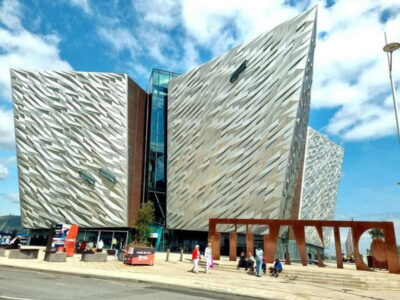
Belfast Walking Tour with a Local – History & Craic
Read our review →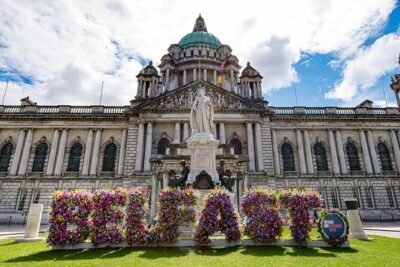
Belfast Political/history/troubles private taxi/cab tour
Read our review →
Peacewall and Political History Black Taxi Cab Tour
Read our review →Browse the lists this tour appears in