
Reviewed · MURALS & PEACE WALL TOURS
Belfast: Political Conflict 3-Hour Walking Tour
Belfast’s walls still speak. This three-hour walking tour takes you through Falls Road and Shankill Road with guides who lived through The Troubles, including former Republican and Loyalist political prisoners. I like the two-guide format, and I like that the stories are told in the streets where the conflict happened, not from a distant lecture hall.
The tour gives you two strongly held viewpoints without pretending the past is tidy. Guides such as Robert, Jack, Mark, Gerard, and Jake have been praised for their personal accounts and passionate delivery, though the exact guides can vary. The main drawback is the subject matter: accounts of violence can be painful, and some people may find the competing political views challenging.
In This Review
- Key points at a glance
- Why this Belfast walking tour matters
- Meeting at Divis Tower and entering Falls Road
- Crossing the Peace Line to Shankill Road
- Murals, memorials, and the meaning behind them
- Signing the Peace Wall
- How the two-guide format works
- Is $35 a fair price?
- Walking comfort, age, and accessibility
- Who will get the most from this tour?
- My booking advice
- FAQ
- Where does the tour start?
- Where does the tour finish?
- How long is the walking route?
- Which areas does the tour visit?
- Will I hear both Republican and Loyalist perspectives?
- Who leads the tour?
- Is the tour suitable for children?
- Is the tour wheelchair accessible?
Key points at a glance
- Two guides, two communities: Spend part of the walk with a Republican guide on Falls Road, then hear a Loyalist or former security-force perspective on Shankill Road.
- About 4 kilometers on foot: The route takes roughly three hours and ends about a 15-minute walk from the starting point.
- Murals with context: You see Belfast’s political art as part of living community memory, not simply as colorful photo stops.
- Peace Walls up close: Pass through electronically controlled gates between neighborhoods and add your thoughts to the Peace Wall.
- Personal stories matter: The guides explain how violence, grief, fear, and mistrust affected ordinary families.
- Good value for serious history: At $35 per person, the tour gives you direct access to two perspectives that are difficult to understand from guidebooks alone.
Why this Belfast walking tour matters
Belfast is easy to visit without understanding its divisions. You can see the murals, photograph the walls, and move on. This tour asks you to pause and listen.
The Troubles lasted for more than 30 years and involved competing claims about Northern Ireland’s future. Republican and Nationalist communities generally wanted a united Ireland. Loyalist and Unionist communities wanted Northern Ireland to remain part of the United Kingdom. Religion was part of the divide, but the conflict was also about identity, political power, housing, voting rights, jobs, policing, territory, and the legacy of British rule.
That distinction matters. The conflict was not simply Catholics against Protestants. It was political, social, and deeply personal. A strong point of this tour is that you hear how those larger issues felt at street level.
You are not just shown a mural and given a date. You are told why a community chose that image, whom it honors, and what message it wants to send. You also hear how the same events can be remembered in sharply different ways.
More Walking Tours in Belfast
- A History of Terror – Belfast City Centre Walking Tour
★ 5.0 · 2,883 reviews - Belfast: A History of Terror Walking Tour
★ 4.9 · 854 reviews - Belfast: The Troubles Walls & Bridges Guided Walking Tour
★ 4.8 · 583 reviews
Meeting at Divis Tower and entering Falls Road
The walk begins in front of Divis Tower on Divis Street. This is a useful starting point because you are already in the West Belfast area associated with the Republican and Nationalist community.
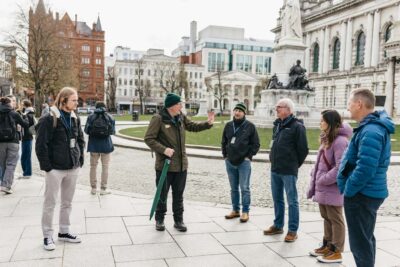
Your first guide leads you along Falls Road and through nearby streets. Expect political murals, memorials, flags, and other visible signs of a community that has long expressed support for an Irish Republic. The area is not presented as a museum. People live and work here, so you should treat the streets and memorials with respect.
The Falls section is where many people first realize how much they would miss on their own. A visitor walking past a mural might notice the image but miss the reference, the person being remembered, or the argument behind it. The guide supplies that missing layer.
Personal experience is central here. Several guides have been praised for explaining what it was like to grow up in West Belfast during the conflict. Robert, in particular, has been described as warm, engaging, and able to connect with people along the Falls and Divis area. Other guides, including Jack and Gerard, have also been singled out for clear and passionate presentations.
The tone can be moving. You may hear about imprisonment, injury, death, fear, and the way violence shaped childhood. Some guides also speak about reconciliation and hope. That mix is important because the tour is not only about what happened. It also asks what peace means now.
Crossing the Peace Line to Shankill Road
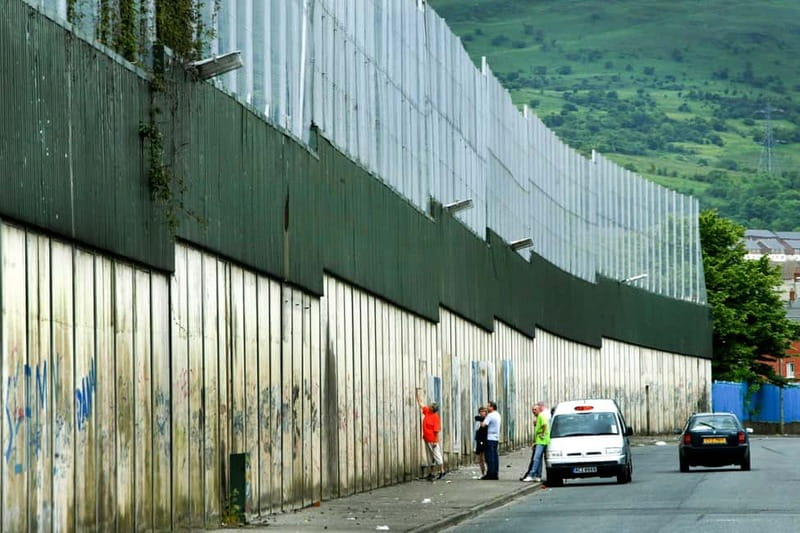
The route then reaches the boundary between the two communities. You pass through electronically controlled gates into the mainly Protestant Shankill Road area.
That physical crossing is one of the tour’s most effective moments. The distance between the neighborhoods is not great, yet the Peace Line makes the division visible. You are not crossing an ancient border or a national frontier. You are moving between adjoining parts of one city that still carry separate memories and identities.
On Shankill Road, you meet a Loyalist former political prisoner, a former member of the security forces, or another guide from the area. The exact person varies, but the purpose remains the same: to hear why many local people wanted Northern Ireland to stay within the United Kingdom.
This second section can feel different from the first. The views are often more reserved or firm, depending on the guide. That is not a flaw in itself. The point is not to make both accounts sound alike. The value comes from hearing how each community understood threat, loyalty, belonging, and loss.
You may hear about families affected by attacks, injuries, and service in the security forces. You also hear the continuing emotional weight of the conflict. The past is not presented as fully settled, and that can leave you with a clearer sense of why mistrust remains.
Murals, memorials, and the meaning behind them
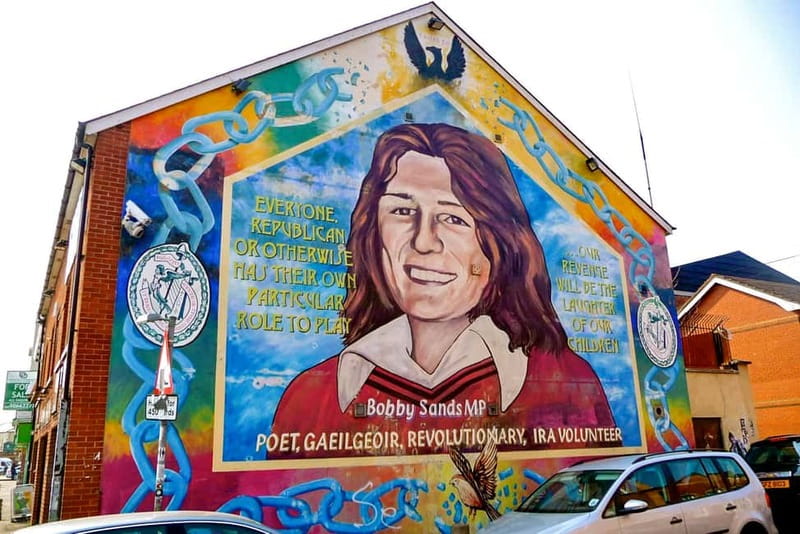
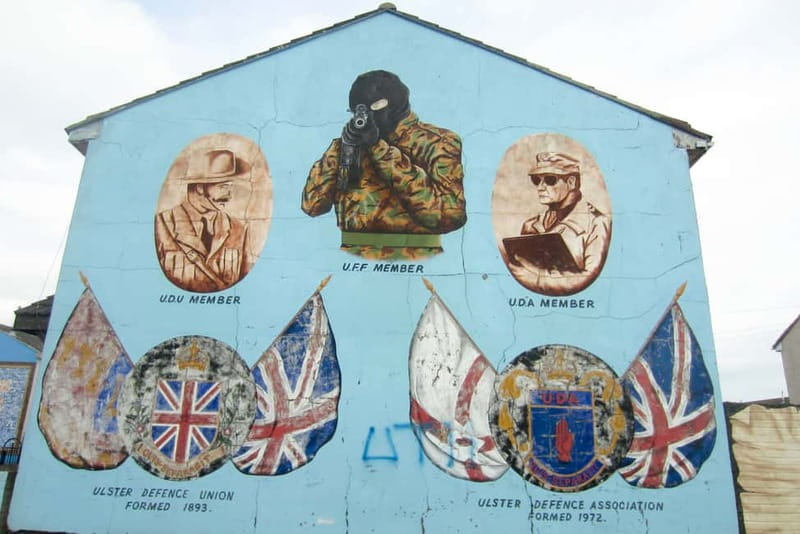
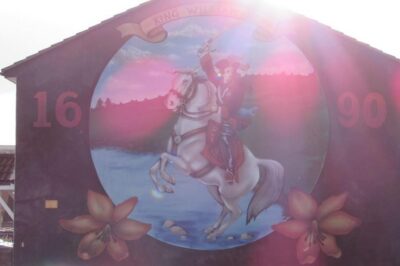
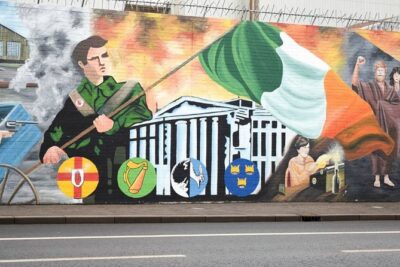
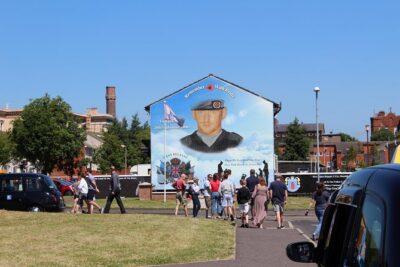
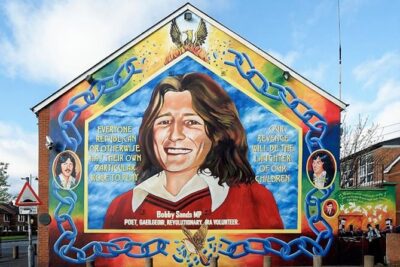
Belfast’s political murals are the tour’s visual backbone. They are sometimes described as the world’s largest outdoor art gallery, but that phrase can make them sound like harmless public decoration. Here, the murals are political statements and memorials.
On Falls Road, images may express Republican identity, remembrance, international solidarity, or opposition to injustice. On Shankill Road, murals can honor Loyalist figures, military links, community identity, and the wish to remain British. The guides explain the symbols from within their own traditions.
I appreciate that the tour does not ask you to treat every mural as neutral artwork. Some commemorate people involved in violence. Others honor victims or express political claims that remain disputed. You are given room to think rather than pushed toward a simple conclusion.
The memorials can be especially difficult. One review noted that the group felt rushed at some stops, including memorials and the Shankill graveyard. That is worth knowing if you want a slow photography walk. This is a moving historical tour with a fixed route and limited time, not an unhurried art tour.
City traffic can also make listening harder. One participant suggested wireless microphones because nearby traffic sometimes competes with the guides’ voices. Stay close, and do not hesitate to ask a guide to repeat a point if you miss it.
Other tours of the murals and peace walls:
- Belfast: Political Taxi Tour
★ 4.8 · 5,014 reviews - Belfast: Murals Taxi Tour
★ 4.9 · 2,047 reviews - Belfast’s Political Mural Taxi Tour
★ 5.0 · 1,180 reviews - Belfast Troubles Tour: Walls and Bridges
★ 5.0 · 853 reviews
Signing the Peace Wall
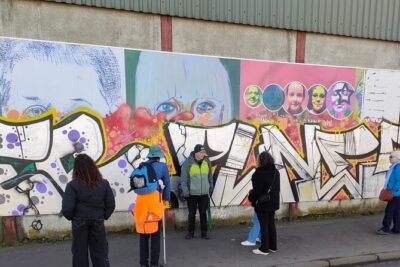
The Peace Walls are the tour’s clearest physical reminder that Belfast’s peace is real but unfinished. These barriers were built to reduce contact and violence between communities. They still separate areas that sit close together.
You get the chance to sign the wall and leave a message alongside names and comments from public figures including Bill Clinton and the Dalai Lama. It is a small gesture, but it gives the stop a personal quality.
Do not expect the Peace Wall to provide a neat ending. The tour’s strongest lesson is that a ceasefire and political agreement do not erase memory. The barriers, murals, memorials, and personal accounts show how peace can exist alongside division.
The walk ends on Lower Shankill Road, not back at Divis Tower. Allow about 15 minutes to walk back to the starting area. This is easy enough for most people, but it matters if you have an appointment immediately afterward.
How the two-guide format works
The tour is split into two main sections. You spend the first part with the Republican guide around Falls Road, then continue with the guide representing the Loyalist or security-force viewpoint around Shankill Road.
This format is the main reason I would choose this experience over a standard sightseeing bus. A bus can cover more ground, but it cannot give you the same close look at the boundary between neighborhoods. It also tends to keep the story at a safer distance.
The two guides may not agree, and their presentation styles can differ. One may be openly warm and hopeful, while another is more reserved. That contrast is useful, though it can also feel uncomfortable. You should come prepared to listen without treating every statement as an uncontested fact.
The best approach is to ask respectful questions. You are hearing lived experience, not a formal academic seminar. The guides provide history and context, but they also speak from memory, identity, and emotion.
Is $35 a fair price?
At $35 per person, I consider this good value for a three-hour, English-language walking tour with two guides and two political viewpoints.
You are paying for more than a route through West Belfast. You get access to people who were directly involved in, or personally affected by, The Troubles. That kind of access is difficult to recreate independently, especially if you do not know the area or the background.
The price also compares well with the amount of time involved. You cover about 4 kilometers, visit Falls Road, Shankill Road, the Peace Walls, murals, and memorials, and receive explanations throughout. If your main interest is Belfast’s political history, this is a better use of $35 than a short photo stop at the murals.
The value is lower if you want a relaxed walk, frequent café breaks, or broad coverage of Belfast’s other attractions. There is no programmed food stop, and toilet arrangements are limited. One account noted opportunities for comfort breaks and a small shop stop, but you should not depend on a full meal break.
Walking comfort, age, and accessibility
The route covers about 4 kilometers over three hours. Wear comfortable shoes, especially if wet weather is forecast. Rain did not stop one participant from finding the experience worthwhile, but Belfast weather can make any walking tour more tiring.
The activity is listed as wheelchair accessible. Because the tour passes through urban streets, gates, and community areas, you should confirm current route details if you have specific mobility needs.
The subject is the larger concern for families. The tour may not suit children under 15 because extreme violence can be discussed. Guardians must decide what is appropriate, but I would choose a different Belfast activity for young children.
There are no food or toilet stops built into the schedule. Use facilities before meeting at Divis Tower, and tell your guide if you need a break. Guides have allowed comfort stops, but the walk is not designed around them.
Who will get the most from this tour?
I recommend it most strongly if you want to understand Belfast rather than simply photograph it. It suits people interested in modern history, politics, community identity, conflict resolution, and personal testimony.
It is also useful early in a Belfast visit. The tour can give you context for murals, flags, neighborhoods, and public debates that might otherwise seem confusing. Afterward, other parts of the city may make more sense.
You should think twice if you dislike emotionally charged discussions or prefer history presented from one agreed viewpoint. The guides hold strong opinions, and the subject remains sensitive. Some accounts may challenge what you already believe.
This is not a ghost tour, a pub walk, or a light introduction to Belfast. It is serious, sometimes confronting, and often very moving. That is exactly why it can become the most meaningful activity of your visit.
My booking advice
I would book this tour if you have three free hours and want direct insight into West Belfast’s past and present. The two-guide structure is its great strength, and the price is fair for the time, access, and range of subjects covered.
Arrive early at Divis Tower so you do not miss the opening explanations or any photographs shown before departure. Keep close enough to hear over traffic, wear good shoes, and leave space in your schedule after the walk.
Book it for understanding, not entertainment. You may leave with fewer easy answers, but you will have a much clearer sense of why Belfast’s divisions still matter.
FAQ
Where does the tour start?
It starts in front of Divis Tower on Divis Street in Belfast.
Where does the tour finish?
The tour ends on Lower Shankill Road, about a 15-minute walk from the starting point.
How long is the walking route?
The tour lasts approximately three hours and covers about 4 kilometers, or 2.5 miles.
Which areas does the tour visit?
The route includes Falls Road, Shankill Road, and the Peace Walls.
Will I hear both Republican and Loyalist perspectives?
Yes. The tour includes two perspectives on The Troubles, with one guide from the Republican community and another representing the Loyalist or security-force viewpoint.
Who leads the tour?
It is led in English by local guides who include former political prisoners or people directly connected to the conflict. Guide names can vary, with Robert, Jack, Mark, Gerard, Jake, and others appearing among the named guides.
Is the tour suitable for children?
It may not be suitable for children under 15 because extreme violence may be discussed. Guardians must use their own judgment.
Is the tour wheelchair accessible?
The activity is listed as wheelchair accessible. The route still covers about 4 kilometers, so you should confirm any specific mobility requirements before booking.
Newest reviews from Belfast
- VIP Skip-the Line Titanic Museum and Whiskey Tasting Tour★ 4.8 · 11 reviews
- Private Half Day Winter Magic in the Antrim Glens★ 5.0 · 2 reviews
- Giants Causeway Private Tour★ 5.0 · 3 reviews
- Titanic Eastside Bike Tour★ 5.0 · 9 reviews
- The Single Cask Whiskey Experience★ 5.0 · 6 reviews
- This is Belfast Walking Tours. Our history, our culture.★ 5.0 · 7 reviews
- St Patrick’s Centre & Burial Site + Hillsborough Castle & Gardens★ 5.0 · 2 reviews
- Small Group Giant’s Causeway Day Tour from Belfast★ 5.0 · 11 reviews
Murals & Peace Wall Tours, compared.
The Troubles Walls & Bridges Guided Walking Tour
Read our review →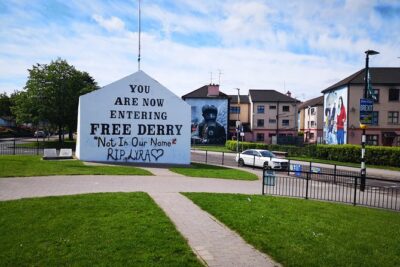
Belfast Political Tour-Conflicting Stories Walking Tour
Read our review →Browse the lists this tour appears in