
Reviewed · BLACK TAXI TOURS
Belfast: Peacewall and Political History Black Taxi Cab Tour
Belfast’s past is written on its walls. This 90-minute private black cab tour connects the murals, streets, and dividing walls of the Shankill and Falls districts with the lived experience of guides such as David and Matthew. I like the direct access to both communities and the chance to ask questions in a small, personal setting. The main consideration is pace: 1.5 hours gives you a sharp introduction, not a full study of The Troubles.
I also like the hotel pickup and drop-off, which removes the hassle of finding your way across Belfast’s political districts. Guides bring personal memories, humor, and local knowledge to difficult subjects, but this is still an emotional outing. You should arrive ready to listen, ask respectful questions, and accept that some parts of the story are painful.
In This Review
- Key points to know before booking
- Why this Belfast cab tour matters
- Starting with pickup in central Belfast
- Shankill Road and the unionist story
- Falls Road and the nationalist viewpoint
- Crumlin Road Gaol and the Peace Wall
- A balanced guide makes the difference
- What the 90-minute schedule really gives you
- Price, comfort, and practical value
- Who should book this experience?
- Should you book the Belfast Peacewall cab tour?
- FAQ
- How long is the Belfast Peacewall and Political History Black Taxi Cab Tour?
- What places does the tour visit?
- Is hotel pickup included?
- What happens if my accommodation is outside central Belfast?
- Is the tour private?
- What language is the tour in?
- Is the tour wheelchair accessible?
- Can I cancel for a full refund?
- What should I bring?
Key points to know before booking
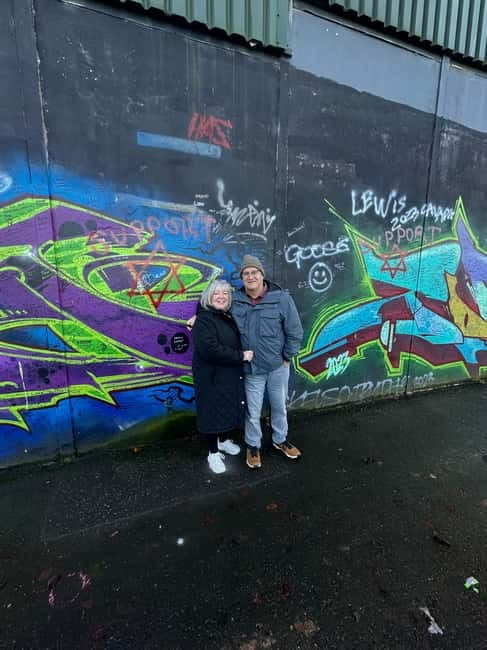
- The Peace Wall is still part of daily Belfast: You see a physical reminder that the two communities remain separated.
- Shankill Road shows the unionist viewpoint: British symbols, Union Jack flags, and murals shape the character of this district.
- Falls Road offers the nationalist viewpoint: Irish republican murals and tricolors tell a sharply different story nearby.
- Local guides make the history personal: David, Matthew, Matt, Jimmy, and Davy have been praised for clear explanations and, in some cases, first-hand memories.
- The private cab format keeps the tour focused: You can ask questions, stop for photos, and travel in a traditional taxi rather than a large coach.
- The $67 price buys convenience as well as history: Hotel pickup, transport, a private group, and a guide make this useful for a first visit to Belfast.
Why this Belfast cab tour matters
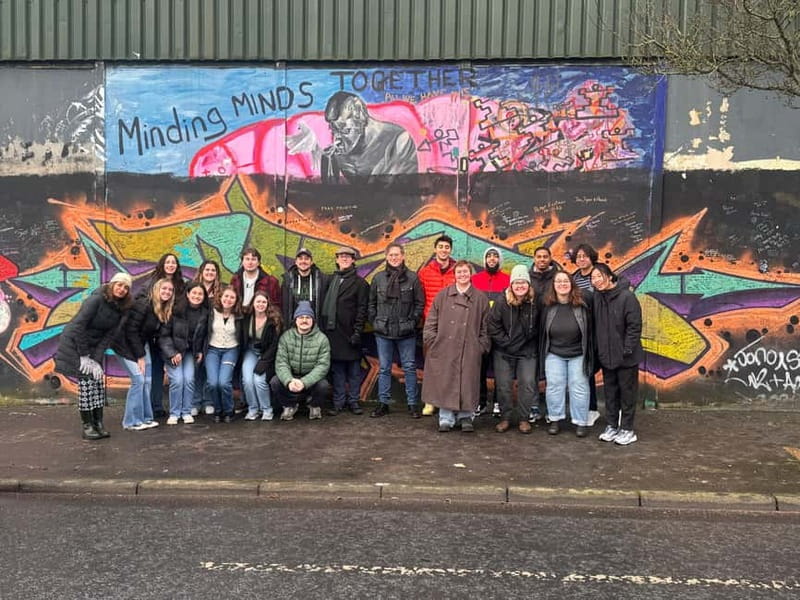
Belfast is not a city where recent history sits safely behind glass. Its political story is still visible on ordinary streets, in painted walls, flags, memorials, and the layout of neighborhoods. That is why I think a black cab tour is one of the most useful introductions you can make here.
The tour focuses on The Troubles, the conflict that shaped Belfast from the late 1960s through the 1990s and whose effects continue today. You are not simply driven past landmarks while someone reads dates from a script. The guide explains how nationalist and unionist communities developed separate identities, why the districts remain distinct, and how violence affected people living nearby.
The strongest part is the human scale. A guide who lived through the conflict can explain what a street meant to local families, not just what happened there politically. Several guides have been praised for sharing personal stories, answering difficult questions, and presenting both sides without trying to turn the tour into a political speech.
That balance matters. You will see symbols that may feel unfamiliar or confronting, and a one-sided account can leave you with a distorted picture. The best guides on this tour, including David and Matthew, are described as open, fair, and willing to explain competing views. You should still listen critically, because political memory is personal, but the format gives you room to ask how and why people see the past differently.
More History Tours in Belfast
- A History of Terror – Belfast City Centre Walking Tour
★ 5.0 · 2,883 reviews - Belfast: A History of Terror Walking Tour
★ 4.9 · 854 reviews - Private Political History & Murals Tour Belfast
★ 5.0 · 182 reviews
Starting with pickup in central Belfast
Pickup is included from your hotel or location within Belfast city centre. You are asked to wait in the lobby 10 minutes before the scheduled time, with the driver carrying a sign showing your last name. The driver will wait no longer than 10 minutes after pickup time, so this is one tour where being ready early is sensible.
If your accommodation is outside the city centre zone, an extra charge may apply. Check that point before booking, especially if you are staying beyond central Belfast. The tour can also drop you back at your hotel, although some guests have arranged a drop-off elsewhere in the city, such as the Titanic Museum.
The cab is a practical choice. Belfast’s political districts are close together on a map, but the visual and historical change from one area to the next is much easier to understand when someone points it out as you go. A small private group also means you can ask a question when it occurs to you instead of waiting for a microphone on a full coach.
The vehicle is described as a traditional cab, and one guest specifically praised its cleanliness and comfort. You should not book this for luxury transport. You book it because the cab takes you directly into the neighborhoods that form the subject of the tour.
Shankill Road and the unionist story
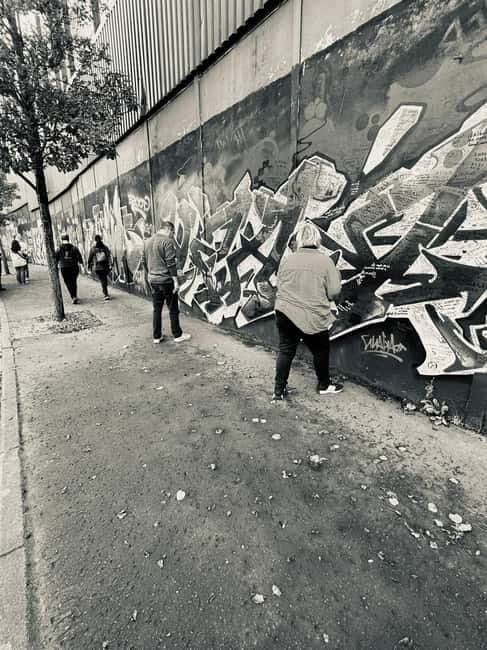
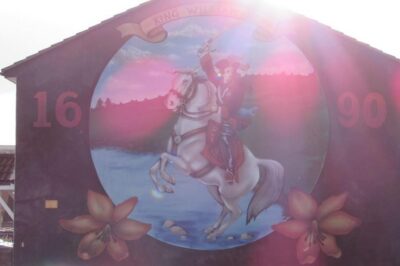
The first major district is the Shankill Road, the center of Belfast’s unionist community. The unionist tradition generally supports Northern Ireland remaining part of the United Kingdom, and that identity is clear in the street art and flags you see here.
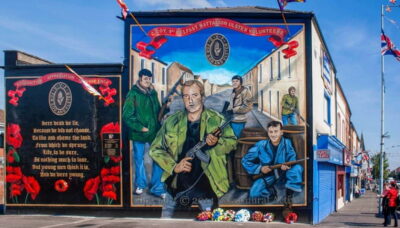
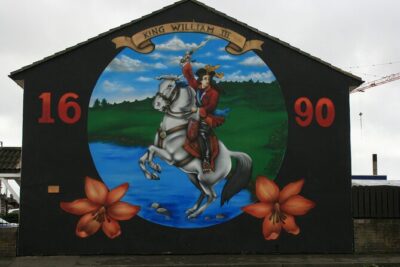
The murals include tributes to the British monarchy, along with Union Jack flags on homes and businesses. These are not neutral decorations. They express loyalty, memory, grief, and political belonging. A good guide helps you read the symbols instead of reducing them to colorful photo backgrounds.
The cab makes photo stops, giving you time to look and take pictures. Still, use your camera with care. This is a living neighborhood, not an open-air museum, and the murals carry meaning for local residents. Ask your guide where photography is appropriate and listen to the explanation before rushing to take a picture.
I like this stop because it corrects a common mistake. Visitors can arrive in Belfast expecting a single Irish identity, but the city contains strongly different traditions. Shankill Road makes the British and unionist side visible in a way that a general city tour often cannot.
The drawback is that half an hour passes quickly. You will see a selection of murals and hear the main political context, but you will not examine every artwork or follow every local story. The value comes from the connection between several sites, rather than one detailed mural study.
Falls Road and the nationalist viewpoint
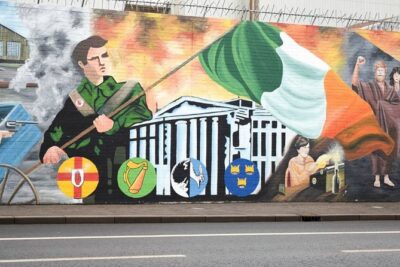
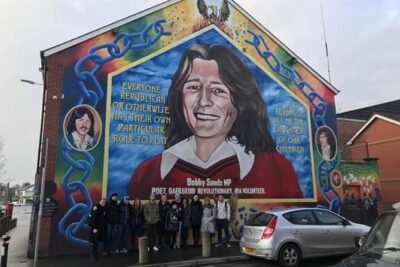
The Falls Road lies only a short distance from Shankill Road, but the change in public symbols is striking. Here, Irish republican murals and Irish tricolors mark the character of the nationalist community.
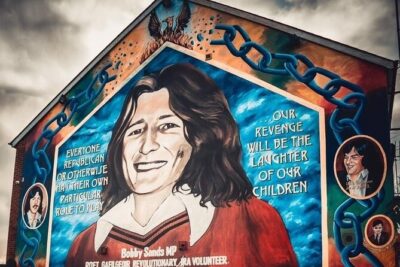
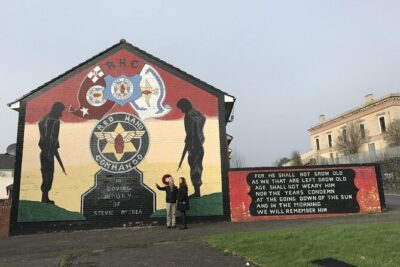
The nationalist tradition generally supports a united Ireland, and the murals reflect Irish identity, republican politics, remembrance, and opposition to British rule. The visual contrast with Shankill Road helps you understand why Belfast’s politics cannot be reduced to a simple argument between two labels.
Your guide explains the events of The Troubles and how ordinary people were affected on both sides. That phrase is important. The tour is not only about paramilitary groups or politicians. It also addresses the people who lived with checkpoints, fear, loss, disrupted routines, and divided neighborhoods.
The Falls Road stop is a good place to ask questions. Past participants have praised Matthew for patiently answering questions, while David has been described as both witty and frank. You might find that humor appears during the tour, but it does not erase the seriousness of the subject. Used well, it makes a difficult history easier to discuss.
Some of the strongest accounts of the tour mention personal stories from guides who lived through the conflict. That can make the past feel immediate, but it also means the experience may be more affecting than a standard sightseeing trip. I would not schedule this immediately before a lighthearted evening if you know political violence weighs heavily on you.
Other black taxi tours in Belfast:
- Belfast: Political Taxi Tour
★ 4.8 · 5,014 reviews - Cab Tours Belfast Famous Black Taxi Tours
★ 5.0 · 3,633 reviews - Private Black Taxi Belfast City Tour
★ 5.0 · 2,188 reviews - Belfast: Murals Taxi Tour
★ 4.9 · 2,047 reviews
Crumlin Road Gaol and the Peace Wall
The route passes Crumlin Road Gaol, a former prison that housed people connected with the paramilitary organizations central to The Troubles. The tour does not present the prison as a separate interior visit, so you should think of it as an important exterior landmark and part of the wider story.
Its importance is the link between political conflict and imprisonment. The guide uses the site to explain how the conflict reached into the justice system and affected people on all sides. You get context rather than a full prison tour, so anyone wanting to explore the gaol in detail would need a separate visit.
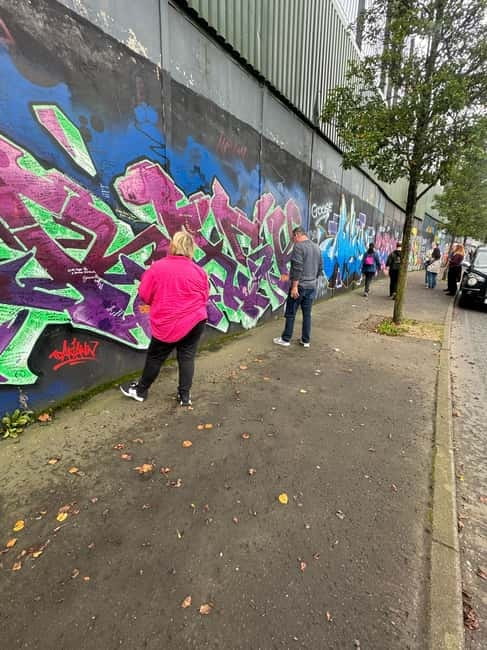
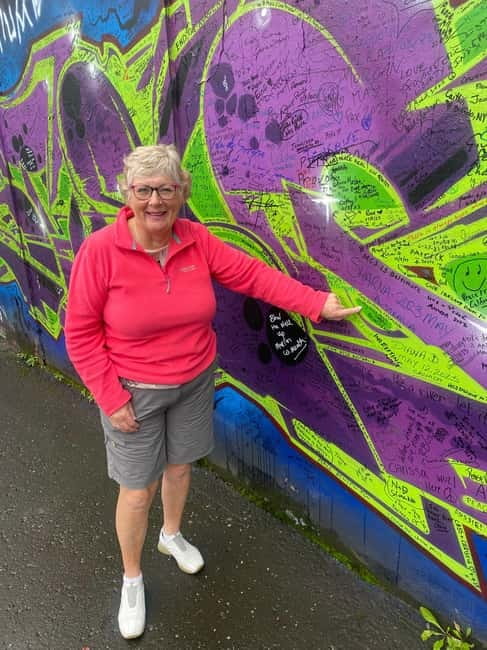
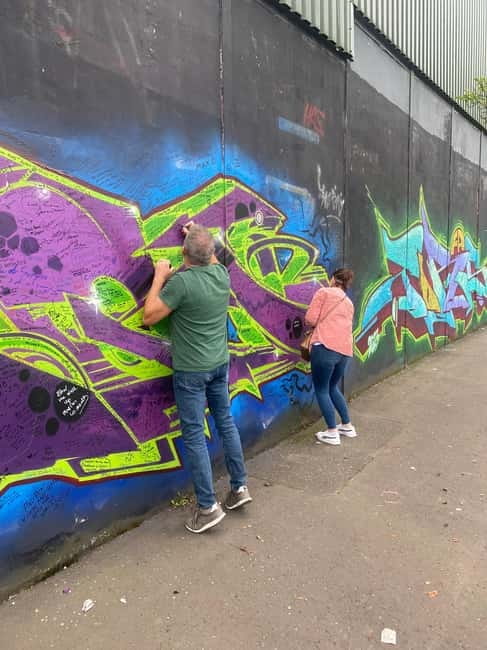
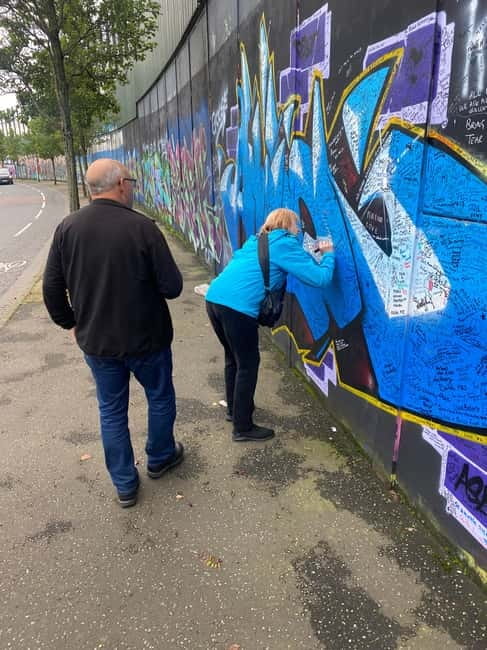
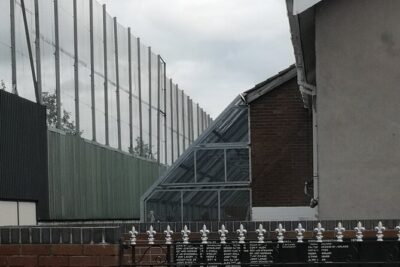
The Peace Wall is the emotional center of the outing. Built between 1969 and 1971, it was intended to separate the two communities and reduce violence. The name sounds hopeful, but the structure also shows how peace was achieved through continued physical division.
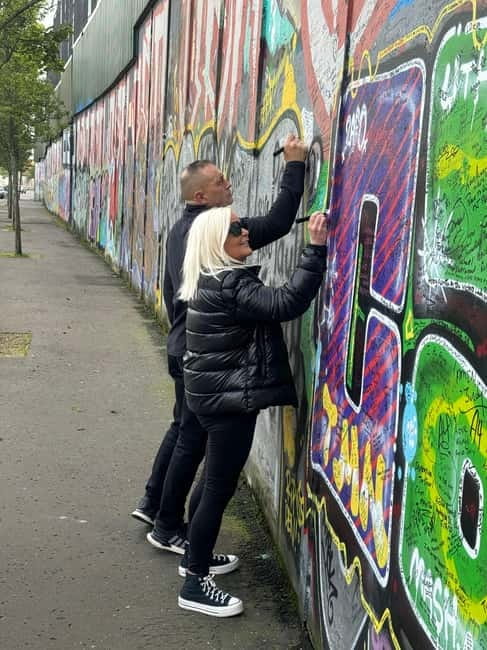
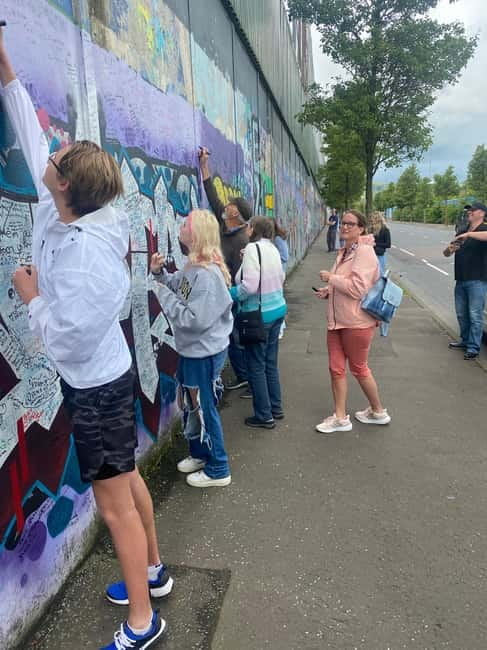
You stop here for photographs and a guided explanation. You may also have an opportunity to add a message to the wall, as one past guest did. That small act can feel personal, but remember what you are signing. Keep it respectful and avoid treating the wall as a novelty backdrop.
The wall is valuable because it forces a harder question: what does peace look like when communities still live apart? Belfast has changed greatly, but the continued presence of the wall shows that a political settlement does not instantly remove fear, memory, or separate identities.
A balanced guide makes the difference
This tour depends more on the guide than on the vehicle. The streets and murals are fixed, but the explanation can be thoughtful, shallow, partisan, or confusing. The strongest feedback centers on guides who speak clearly, welcome questions, and describe both communities with care.
David is repeatedly praised for being friendly, prompt, funny, and able to explain the conflict from personal experience. Matthew receives similar praise for his patience, candor, and command of the subject. Other guides named in the feedback include Matt, Jimmy, and Davy, all described as engaging and informative.
That consistency is encouraging, but you should not assume every guide will tell the story in exactly the same way. Personal experience shapes interpretation. A guide may emphasize family memories, neighborhood life, political events, or the practical effect of the conflict on residents.
I recommend asking questions that invite explanation rather than demanding a verdict. Ask how the communities remember a particular event, how the murals have changed, or what peace means locally. The private format gives you a better chance to have that kind of conversation.
The tour is also described as unbiased, but balance does not mean pretending every action or group was identical. A responsible account can explain competing identities while still recognizing violence and suffering. The most useful guides do not flatten the story into heroes and villains.
What the 90-minute schedule really gives you
The planned structure allows about 30 minutes at the Peace Walls, 30 minutes around Shankill Road, and 30 minutes on Falls Road. Travel time is included within the 1.5-hour experience, so these should be treated as approximate blocks, not guaranteed full half-hours of standing at each place.
That is enough time for a strong first orientation. You will see the key districts, several murals, the Peace Wall, and Crumlin Road Gaol, while hearing the basic causes, events, and consequences of The Troubles.
It is not enough time for every political detail. You will not leave with a complete account of Northern Ireland’s modern history, and the tour does not replace a museum visit or a longer historical walk. Its strength is efficiency. If you have only a day or two in Belfast, this gives you essential context before exploring the city on your own.
Several guides have apparently allowed the conversation to run beyond the planned time when possible. Treat that as a generous possibility, not a promise. Traffic, pickup timing, and the number of questions in your group can affect the schedule.
Bring a camera, but also bring attention. The best part of the tour is not simply collecting mural photos. It is learning what the images mean and why two nearby roads can present such different versions of identity.
Price, comfort, and practical value
At $67 per person, this is not the cheapest way to see Belfast’s murals. It is a strong value if you are traveling as a private group and want hotel pickup, direct transport, photo stops, and a live English-speaking guide in one package.
A standard city bus or self-guided walk may cost less, but it will not provide the same personal explanation or access to a local guide’s memories. A larger group tour may also be cheaper per person, yet the private cab gives you more control over questions and conversation.
The price makes the most sense for first-time visitors who want quick orientation without spending a full day. It is also useful for families or small groups with different levels of historical interest, because the guide can respond to your questions rather than delivering only a fixed speech.
There are limits. Food and drinks are not included, though a 90-minute tour does not require a meal break. The tour takes place rain or shine, so bring weather-appropriate clothing. Belfast weather can change quickly, and the photo stops may involve getting out of the cab.
The experience is listed as wheelchair accessible, but if you have specific mobility needs, confirm the vehicle and stop arrangements before booking. The provided information supports accessibility, but does not detail the exact cab setup.
Who should book this experience?
I would recommend it to anyone visiting Belfast who wants to understand the city rather than only photograph it. It suits history-minded visitors, first-time arrivals, small private groups, and people who prefer a local voice over a recorded commentary.
It is especially useful if you are unsure how to approach the subject. The Troubles can be hard to understand from a distance, and the tour gives you a clear route through the main symbols and places.
You may want a different experience if you prefer a long museum visit, a quiet architectural tour, or an entirely neutral presentation without personal stories. This is a human account of a painful conflict, and the guide’s personality forms a large part of the experience.
The tour is also not designed to settle political arguments. Go to learn how the city’s communities remember and express their identities. You will gain more from curiosity and respect than from trying to prove one side right.
Should you book the Belfast Peacewall cab tour?
Yes, if you want a focused and personal introduction to Belfast’s modern political history. The combination of Shankill Road, Falls Road, Crumlin Road Gaol, and the Peace Wall gives you a useful framework in only 90 minutes.
The best reason to book is the guide. David and Matthew have earned strong praise for clear, balanced explanations and personal stories, with Matt, Jimmy, and Davy also receiving warm comments. You cannot select the exact quality of every conversation in advance, but the repeated praise for the guiding team is a positive sign.
Book it early in your Belfast stay if possible. The tour can help you understand the symbols and neighborhoods you encounter later. At $67, it is worth the cost for the convenience and local perspective, provided you accept that the experience may be moving, challenging, and necessarily brief.
FAQ
How long is the Belfast Peacewall and Political History Black Taxi Cab Tour?
The tour lasts 1.5 hours, or 90 minutes.
What places does the tour visit?
The route includes the Peace Walls, Shankill Road, Falls Road, and a pass by Crumlin Road Gaol.
Is hotel pickup included?
Yes. Pickup and drop-off are included for hotels or locations within Belfast city centre.
What happens if my accommodation is outside central Belfast?
Pickup outside the city centre zone may involve an additional charge.
Is the tour private?
Yes. The experience is operated as a private group tour.
What language is the tour in?
The live guided tour is conducted in English.
Is the tour wheelchair accessible?
Yes, the activity is listed as wheelchair accessible.
Can I cancel for a full refund?
Yes. You can cancel up to 24 hours before the scheduled tour for a full refund.
What should I bring?
Bring a camera for the several photo stops, and dress for changing weather because the tour operates rain or shine.
More Murals & Peace Wall Tours in Belfast
- Belfast: Political Conflict 3-Hour Walking Tour
★ 4.6 · 2,215 reviews - Belfast’s Political Mural Taxi Tour
★ 5.0 · 1,180 reviews - Belfast Troubles Tour: Walls and Bridges
★ 5.0 · 853 reviews - Belfast: The Troubles Walls & Bridges Guided Walking Tour
★ 4.8 · 583 reviews
Newest reviews from Belfast
- VIP Skip-the Line Titanic Museum and Whiskey Tasting Tour★ 4.8 · 11 reviews
- Private Half Day Winter Magic in the Antrim Glens★ 5.0 · 2 reviews
- Giants Causeway Private Tour★ 5.0 · 3 reviews
- Titanic Eastside Bike Tour★ 5.0 · 9 reviews
- The Single Cask Whiskey Experience★ 5.0 · 6 reviews
- This is Belfast Walking Tours. Our history, our culture.★ 5.0 · 7 reviews
- St Patrick’s Centre & Burial Site + Hillsborough Castle & Gardens★ 5.0 · 2 reviews
- Small Group Giant’s Causeway Day Tour from Belfast★ 5.0 · 11 reviews
Black Taxi Tours, compared.
Browse the lists this tour appears in