
Reviewed · MURALS & PEACE WALL TOURS
Belfast Troubles Murals Street Art and Peace Wall Walking Tour
Belfast’s walls tell stories. This three-hour walk connects modern street art with the political murals of West Belfast, giving you a useful introduction to the Troubles and the city’s slow work toward peace. I like the way it visits both Loyalist and Republican areas, and I like that the small group, capped at eight people, can move respectfully through local neighborhoods.
The biggest consideration is the guide’s presentation style. Marti, also known as Marty, is deeply informed and speaks from local experience, but some people find his delivery too rapid, direct, or packed with facts. You should also expect a brisk walk of roughly 6 kilometers, often without a microphone, so comfortable shoes and close attention matter.
In This Review
- Key points to know before you book
- Why Belfast’s murals make such a strong introduction
- Starting in the Cathedral Quarter
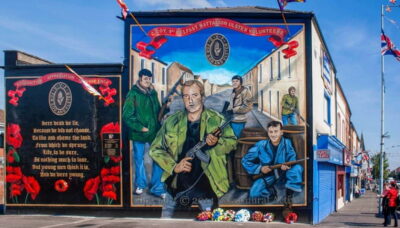
- Shankill Road and the Loyalist murals
- The International Mural Wall on Divis Street
- The Peace Wall and the meaning of separation
- The Bobby Sands mural in West Belfast
- A walk that covers ground, not just talking points
- Marti’s guiding style: strong content, mixed delivery
- Is $36.11 a fair price?
- Who should book this experience?
- Practical details for the day
- Should you book the Belfast murals and Peace Wall walk?
- FAQ
- How long does the Belfast murals walking tour last?
- Where does the tour begin?
- Where does the tour finish?
- What places are included on the route?
- Is the tour suitable for children?
- How far do you walk?
- What language is the tour offered in?
- What happens if I need to cancel?
Key points to know before you book
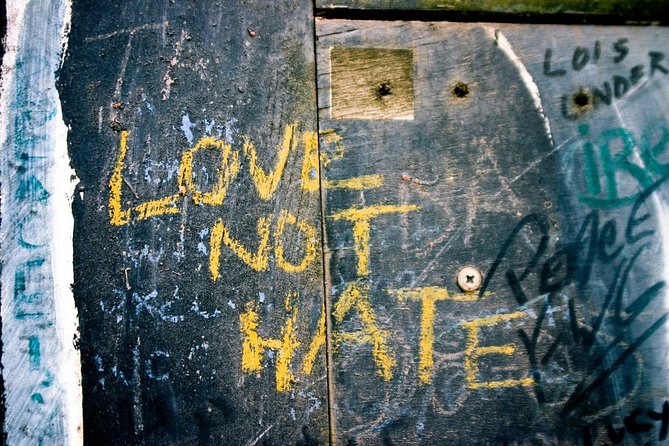
- The murals are the classroom: Political paintings, international street art, and community projects provide the visual thread for the walk.
- You see both sides of Belfast: The route includes Loyalist murals on Shankill Road and Republican sites around Divis Street and the Bobby Sands mural.
- The Peace Wall is still real: This is not just a historical monument. It remains a visible divider between communities.
- The tour is adult-only: The experience is not suitable for anyone under 18.
- Plan for a brisk 2.5 to 3 hours: Some previous participants walked more than 6 kilometers.
- The tone aims for balance and peace: The focus is not simply on old divisions, but also on healing, community projects, and Belfast’s future.
Why Belfast’s murals make such a strong introduction
Belfast can be difficult to understand from a short visit. The Troubles, the political divisions, and the relationship between British and Irish identities are not easy subjects to reduce to a few dates and names. Murals give you something concrete to look at while the guide explains the forces behind them.
That is the real value of this experience. Instead of sitting in a museum or hearing a general city lecture, you walk through the neighborhoods where the conflict was lived. The paintings show political loyalties, memorials, international causes, local pride, and changing attitudes.
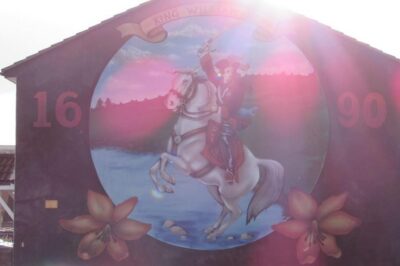
The route also makes clear that Belfast’s public art is not all the same. Some murals are openly political. Others are part of the re-imaging effort, in which communities choose art they want to show to people passing through. That contrast helps you see a city moving forward without pretending its past has disappeared.
Marti’s strongest quality is his command of the subject. He can explain the Troubles, earlier periods of Irish history, the local communities, and the present healing process. Several parts of the walk are presented as a connected story rather than a collection of unrelated photo stops.
At the same time, the amount of information can be a lot. This is an introduction, not a complete course in Northern Ireland’s past, yet the guide tries to cover a great deal in three hours. If you prefer a light tour with short explanations and plenty of free time, this may feel intense.
More Walking Tours in Belfast
- A History of Terror – Belfast City Centre Walking Tour
★ 5.0 · 2,883 reviews - Belfast: Political Conflict 3-Hour Walking Tour
★ 4.6 · 2,215 reviews - Belfast: A History of Terror Walking Tour
★ 4.9 · 854 reviews
Starting in the Cathedral Quarter
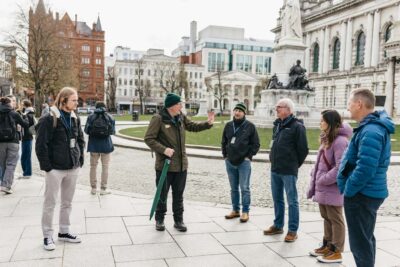
The walk begins on Exchange Street West in Belfast’s Cathedral Quarter. This is a convenient city-center starting point, and the first section looks at the modern street art that Belfast is increasingly known for.
The opening half hour helps you approach the subject gradually. You begin with contemporary art by local and international artists before moving into the more controversial political murals farther west. That order is useful because it shows Belfast as a current, creative city before confronting the harder images connected with the conflict.
You will have time to stop and look rather than simply pass each painting from a bus window. Walking gives you a better sense of how the art fits into ordinary streets and community spaces. It also allows the guide to point out changes in the area and explain how public art is being used in a different way today.
This portion can feel less emotionally heavy than the later stops. It is a good chance to settle into Marti’s style, ask questions, and get used to keeping pace. Since there is no microphone, staying near the guide is important.
Shankill Road and the Loyalist murals
The route then moves to Shankill Road, where you see Loyalist murals and local street art. The scheduled stop is brief, around 15 minutes, but the material carries considerable weight.
The murals here reflect a community identity tied to Britishness and unionism. Understanding that perspective is essential if you want more than a one-sided view of Belfast. A useful tour should not treat one neighborhood as the villain and another as the victim, and this walk makes a clear effort to present both communities.
Shankill Road is also where listening matters. These are living neighborhoods, not a film set built for sightseeing. The tour provider keeps groups small partly to show respect for the people who live in the areas on the route. Keep your voice low, avoid treating memorials as props, and take photographs with care.
The guide’s comments can be frank. That directness is part of the appeal for people who want local context, but it may occasionally feel awkward. One weakness noted in the experience is that Marti’s opinions and comments can be delivered more bluntly than some people expect. I would approach this section with an open mind and remember that a difficult subject rarely produces a perfectly comfortable walk.
The International Mural Wall on Divis Street
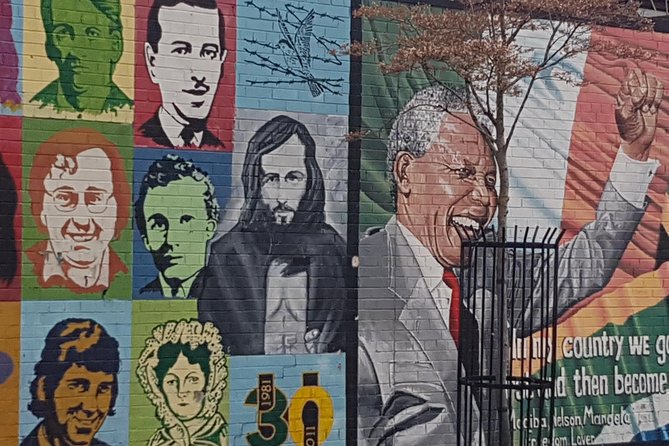
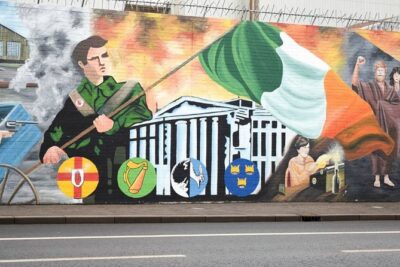
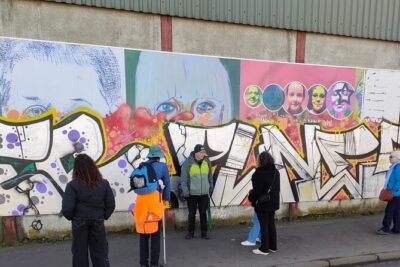
At Divis Street, the focus shifts to the International Mural Wall. Here, the paintings relate to causes and struggles from around the world, not only to Northern Ireland.
This is an important change of scale. The murals show how local political art can connect with wider movements and international concerns. You also get a break from viewing every wall through the narrow lens of the Troubles.
The stop is planned for about 15 minutes. That is enough to look closely and hear the main explanation, but not enough for an extended art lecture. If a particular mural interests you, make a mental note and return later on your own.
This is one reason I like the walk as an early Belfast activity. It gives you a visual map of subjects you may want to study later. The guide can provide a starting point, but you should not expect every mural, event, or community project to receive equal time.
Other tours of the murals and peace walls:
- Belfast: Political Taxi Tour
★ 4.8 · 5,014 reviews - Belfast: Murals Taxi Tour
★ 4.9 · 2,047 reviews - Belfast’s Political Mural Taxi Tour
★ 5.0 · 1,180 reviews - Belfast Troubles Tour: Walls and Bridges
★ 5.0 · 853 reviews
The Peace Wall and the meaning of separation
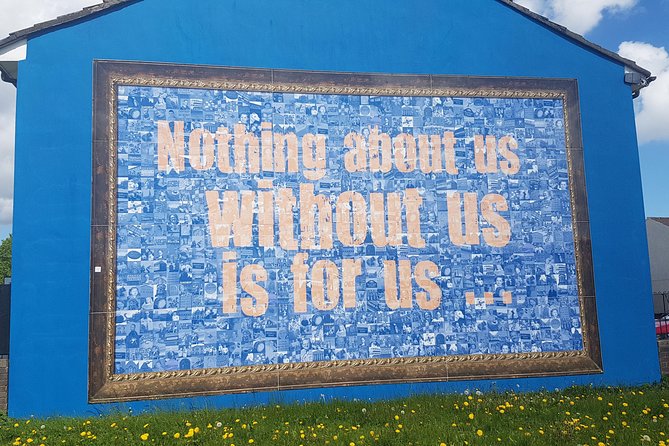
The Peace Wall is one of the most important stops. The name sounds reassuring, but the wall itself is a reminder that peace can involve separation as well as cooperation.
The structure divides communities that were once caught in violent conflict. Seeing it in person gives you a clearer understanding than a photograph can provide. It is a physical object with a daily presence, not simply a chapter in a history book.
The stop lasts about ten minutes, and there is no admission ticket. That short visit may feel too quick for anyone who wants a long discussion, but the wall is a powerful visual moment in the route. You can look at its scale, consider its purpose, and hear how Northern Ireland is working with local communities to create peace.
The tour does not present peace as a finished achievement. That is one of its better qualities. The emphasis is on the work still being done, including community-led art and the slow process of recovery across generations.
The Bobby Sands mural in West Belfast
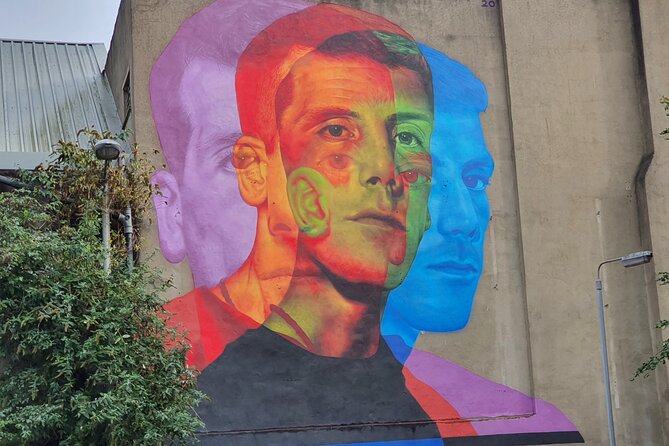
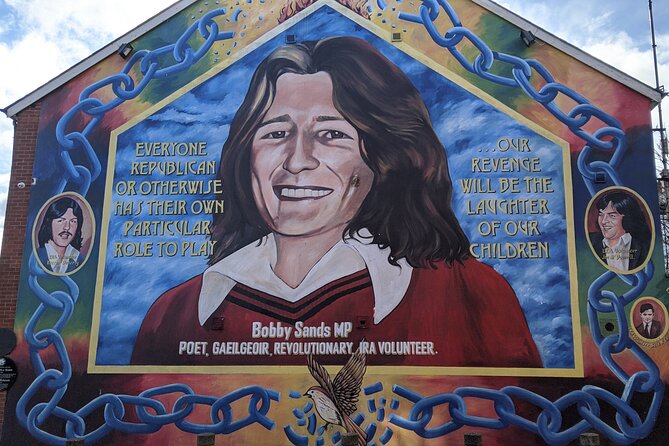
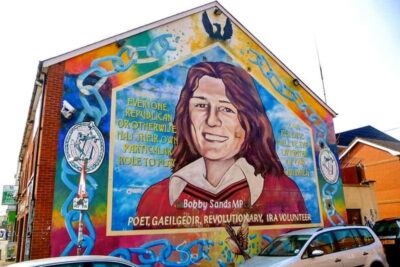
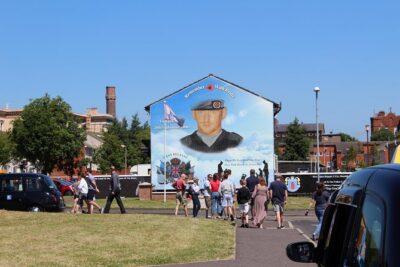
The Bobby Sands mural is described as the most photographed mural in the Republican part of West Belfast. The stop itself takes only about five minutes, but it is likely to be one of the most recognizable images on the walk.
Bobby Sands remains a highly charged figure, and the mural cannot be separated from Republican history and the wider conflict. The guide’s explanation gives you context for why the image matters and why it continues to attract attention.
This is not a stop where you should rush in, snap a picture, and move on without listening. The mural is a memorial and political symbol as much as it is a piece of public art. Marti’s local perspective can help explain its place in the area, though the subject may feel heavy for some people.
The route continues through West Belfast and then returns toward the city center. Along the way, you pass additional street art and political murals, so the listed stops do not represent everything you will see.
A walk that covers ground, not just talking points
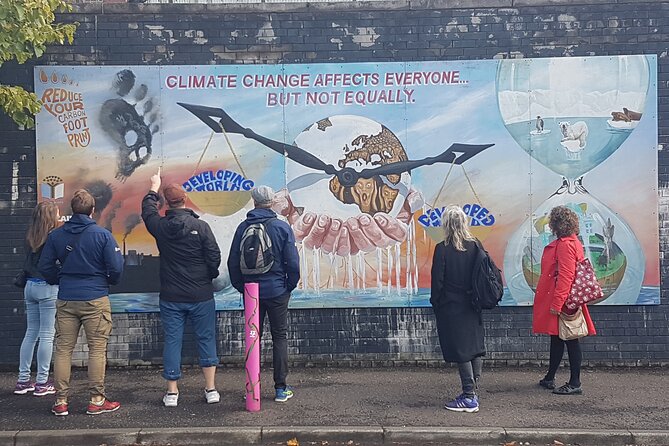
The advertised duration is about three hours, though the walk may run between two and a half and three hours. One participant recorded walking a little more than 6 kilometers, which gives you a better idea of the physical demand than the time estimate alone.
You do not need special hiking ability, but you should have a moderate level of fitness. The guide is reported to walk quickly, and you need to keep close enough to hear him. There may be pauses at murals, but this is still a moving tour rather than a relaxed stroll with long café breaks.
Belfast weather deserves attention. Rain is possible, and the city can feel colder than you expect. Bring a waterproof layer and wear shoes that can handle several hours on pavement. Sunglasses and sunscreen may also be useful in summer, although the weather can change quickly.
The tour operates in English. A clear accent helps, but the pace and lack of a microphone mean that anyone with hearing difficulty should stay near the front of the group. The maximum group size of eight is a real advantage here. It keeps the experience more personal and reduces the sense of turning residential streets into a large sightseeing parade.
Marti’s guiding style: strong content, mixed delivery
Marti is the central personality of the experience. He is a Belfast native with extensive knowledge of the city and the Troubles, and he often adds personal observations to the historical account.
His best work comes when he links a mural to the people and events behind it. He also gives attention to the present day, including community projects, the healing process, and the hope that younger generations will live with fewer divisions. That focus on ordinary people and future peace is one of the tour’s most praised qualities.
The style is not polished in the way of a large commercial sightseeing operation. Marti may ask questions such as what you know about a subject, and some people find that manner challenging or school-like. Others appreciate the chance to think aloud and take part in the explanation.
You should also expect a large amount of information in a short period. If you want a slow, highly interactive discussion, you may find the presentation dry or too fast. If you want a strong local voice and a serious account of Belfast’s past and present, you may appreciate the energy and depth.
The safest expectation is this: book it for the subject and the local perspective, not for a perfectly scripted performance. Ask questions clearly, stay close, and give yourself time afterward to sort through what you heard.
Is $36.11 a fair price?
At $36.11 per person, this is priced like a modest small-group city tour. You are paying for about three hours with a local guide, not for museum admission or a vehicle. The main attractions are public murals, streets, and the Peace Wall, so there are few extra costs built into the experience.
I consider the price reasonable if you value interpretation. You could walk to some of these places independently, but you would miss much of the background and might not know how the different neighborhoods relate to one another. The guide also takes you into areas you might not choose to visit alone.
Shopping and restaurant discounts are included, which may add some value if you plan to use them. The exact savings are not specified, so I would treat those offers as a bonus rather than a reason to book.
The small group is especially important. Eight people or fewer allows you to hear the guide, ask questions, and move through sensitive areas with less disruption. If the walk were much larger, the same route could feel less respectful and less personal.
Who should book this experience?
I would recommend it to adults who want to understand Belfast through public art, community identity, and the lived impact of the Troubles. It is particularly useful early in your stay, since it gives you context for the city’s neighborhoods and later visits to museums or historic sites.
It also suits people who prefer walking to riding in a taxi or bus. On foot, you notice the change from one area to another and get a better feel for the city beyond the central streets.
This is not the best choice for children, since it is an adult-only activity. It may also be a poor match if you dislike political subjects, want a gentle sightseeing tour, or have difficulty walking briskly for several hours.
I would be cautious if you need a guide who welcomes constant interruption or presents information in short, simple pieces. Marti’s approach can be intense. Still, the balance between Loyalist and Republican areas, plus the emphasis on healing, gives the tour a serious and useful purpose.
Practical details for the day
The meeting point is Exchange Street West, Belfast BT1. The walk finishes at Kelly’s Cellars on Bank Street, with the option to continue a short distance toward City Hall and 2 Royal Avenue, where a local community center is located.
The route is near public transportation, and confirmation arrives when you book. Free cancellation is available up to 24 hours before the start time. Cancellations made within 24 hours are not refunded, and changes during that period are not accepted.
Bring water, dress for rain and cold, and wear shoes you would choose for a long city walk. Keep your phone ready for photographs, but listen before taking pictures at memorials or in residential areas.
Should you book the Belfast murals and Peace Wall walk?
Book this tour if you want a serious, local introduction to Belfast’s political murals and the Troubles, with attention to both community viewpoints and the city’s attempts to heal. The art is memorable, the route reaches places you may not see on a standard city tour, and the small group makes the experience feel more considered.
Skip it if you want a leisurely stroll, a short history talk, or a guide with a quiet, carefully scripted style. For the right person, this is a meaningful way to meet Belfast. Go prepared for a fast pace, a lot of information, and a subject that deserves respect.
FAQ
How long does the Belfast murals walking tour last?
The walk lasts approximately three hours, with the route described as about two and a half to three hours.
Where does the tour begin?
The meeting point is Exchange Street West, Belfast BT1, UK.
Where does the tour finish?
The main finish is at Kelly’s Cellars at 32 Bank Street, Belfast BT1 1DA. You can also continue a short walk toward City Hall and 2 Royal Avenue.
What places are included on the route?
The route includes the Cathedral Quarter, Shankill Road, the International Mural Wall on Divis Street, the Peace Wall, the Bobby Sands mural, and additional street art and political murals along the way.
Is the tour suitable for children?
No. This is an adult-only activity and is not suitable for anyone under 18.
How far do you walk?
The exact distance can vary, but the walk may cover more than 6 kilometers in three hours. You should have a moderate level of physical fitness.
What language is the tour offered in?
The tour is offered in English.
What happens if I need to cancel?
You can cancel at least 24 hours before the start time for a full refund. Cancellations or changes made within 24 hours are not refunded or accepted.
More Street Art in Belfast
- Belfast Troubles : Murals, Street Art, and Peace Wall Tour
★ 4.7 · 99 reviews - Belfast Music and Street Art Small Group Guided Experience
★ 4.5 · 62 reviews - Belfast : Pub Music , Street Art Experience Walking Tour
★ 4.8 · 33 reviews
Newest reviews from Belfast
- VIP Skip-the Line Titanic Museum and Whiskey Tasting Tour★ 4.8 · 11 reviews
- Giants Causeway Private Tour★ 5.0 · 3 reviews
- Titanic Eastside Bike Tour★ 5.0 · 9 reviews
- Private Half Day Winter Magic in the Antrim Glens★ 5.0 · 2 reviews
- The Single Cask Whiskey Experience★ 5.0 · 6 reviews
- This is Belfast Walking Tours. Our history, our culture.★ 5.0 · 7 reviews
- St Patrick’s Centre & Burial Site + Hillsborough Castle & Gardens★ 5.0 · 2 reviews
- Shore Excursion from Belfast to Giants Causeway & Rope Bridge★ 5.0 · 2 reviews
Murals & Peace Wall Tours, compared.
The Troubles Walls & Bridges Guided Walking Tour
Read our review →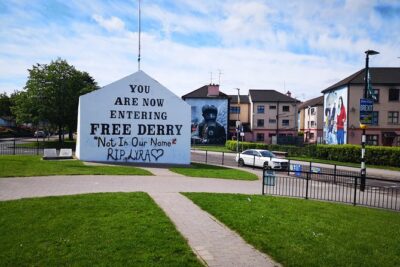
Browse the lists this tour appears in