
Reviewed · WALKING TOURS
1798 A Belfast Rebellion Walking Tour
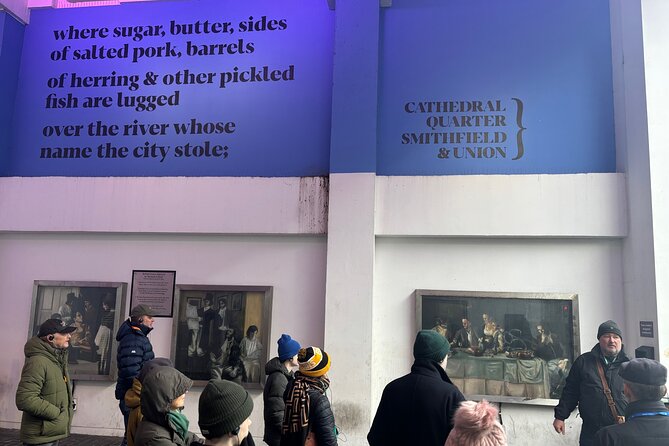
Revolutions leave footprints. This 2.5-hour Belfast walk follows the people, churches, meeting places, and streets tied to the United Irishmen Rebellion of 1798. I like its focus on ordinary Belfast life, especially the story of early Presbyterian settlers, and I like how guide Colin Shaw connects local events with the American War of Independence and French Revolution. The main drawback is simple: this is an outdoor walking tour, and Belfast weather may not be kind.
You begin and end at Belfast City Hall at 10:00 a.m., covering central Belfast at an unhurried pace. The tour costs $35.73 per person, which is fair if you want context rather than a quick photo stop. It is less useful if you prefer grand buildings, major museum interiors, or a broad survey of all Belfast history.
In This Review
- Key points to know before you book
- Why the 1798 Rebellion still matters in Belfast
- Starting at Belfast City Hall
- The Linen Hall and Thomas Russell
- St Mary’s and the impact of the penal laws
- Kelly’s Cellars, a real meeting place
- First Presbyterian Church and Belfast’s merchants
- Assembly Rooms and the hard choices of rebellion
- St George’s and the origin of Belfast’s name
- Joy’s Entry and the older streets of Belfast
- Returning to Mary Ann McCracken
- How the $35.73 price compares with the experience
- Who should take this Belfast walking tour?
- Should you book the 1798 Belfast Rebellion walk?
- FAQ
- Where does the tour begin?
- What time does the tour start?
- How long does the tour last?
- Where does the tour finish?
- What language is the tour offered in?
- How many people can join the tour?
- Is the tour suitable for people with limited mobility?
- What happens if I need to cancel?
Key points to know before you book
- Colin Shaw brings the people of 1798 to life, including Thomas Russell, Henry Joy McCracken, and Mary Ann McCracken.
- The route links Presbyterian, Catholic, and civic Belfast, giving you a fuller picture of a divided but connected city.
- Historic places remain part of daily Belfast, from Kelly’s Cellars pub to the Linen Hall and the old entries.
- The tour uses a Vox whisper set, so you can hear the guide clearly while walking in a group of up to 25.
- You cover about 2.5 hours on foot, with a moderate fitness level required and no admission fees listed.
- Free cancellation is available until 24 hours before the 10:00 a.m. start, which gives you useful flexibility.
Why the 1798 Rebellion still matters in Belfast
The 1798 Rebellion was not simply a story of one political group fighting the British government. In Belfast, the period involved Presbyterians, Catholics, merchants, writers, clergy, reformers, and people who believed that Ireland should have a fairer political system.
That mix is what makes this walk useful. You are not only hearing about battles or failed uprisings. You are learning how religion, trade, political ideas, and personal courage shaped Belfast at the end of the eighteenth century.
The guide places Belfast within a larger Atlantic story. The American War of Independence and the French Revolution helped spread ideas about liberty and political change. The walk shows how those ideas reached Ireland and influenced local figures connected with the United Irishmen.
I especially like this approach for first-time visitors. Belfast can seem easier to understand once you know which people shaped its early civic life and why religious communities did not fit neatly into simple political categories. The tour also helps explain why names on blue plaques matter. Afterward, you are more likely to see a plaque as a person with a difficult life rather than as a name on a wall.
More Walking Tours in Belfast
- A History of Terror – Belfast City Centre Walking Tour
★ 5.0 · 2,883 reviews - Belfast: Political Conflict 3-Hour Walking Tour
★ 4.6 · 2,215 reviews - Belfast: A History of Terror Walking Tour
★ 4.9 · 854 reviews
Starting at Belfast City Hall
The tour begins at Belfast City Hall in Donegall Square North. This is a practical meeting point, easy to identify and close to public transportation. The opening section lasts about 15 minutes and sets up the events leading to 1798.
That introduction matters because the rebellion makes little sense without its political background. You will hear how Belfast developed, how the city’s Presbyterian community gained economic influence, and why reformist ideas found an audience here.
Do not expect the first stop to be a long architectural tour of City Hall. The building is the starting marker and historical stage rather than the main subject. The value comes from getting the timeline straight before the walk moves into smaller, more personal places.
Because the group can include up to 25 people, the Vox whisper set is useful. You can keep up with the guide without needing to crowd around him at every stop. For a walking tour built around names, dates, and connections, clear sound makes a real difference.
The Linen Hall and Thomas Russell
The next stop is the Linen Hall, with about 10 minutes devoted to its story and to Thomas Russell, its most infamous librarian. Russell was also a United Irishman, so this stop shows how political ideas could circulate through respectable civic institutions.
The Linen Hall gives the tour a useful change of scale. You move from national events and citywide politics to one person’s role in Belfast life. Russell was not simply an abstract revolutionary name. His connection with the library makes the political story more tangible.
This is also a reminder that political movements are built by people who work, read, meet, write, and form relationships in ordinary settings. You will likely find this stop most rewarding if you enjoy social history, biographies, and the small details behind major events.
The time here is brief. If you want to explore the Linen Hall itself at length, plan a separate visit rather than expecting the walk to serve as a full library tour.
St Mary’s and the impact of the penal laws
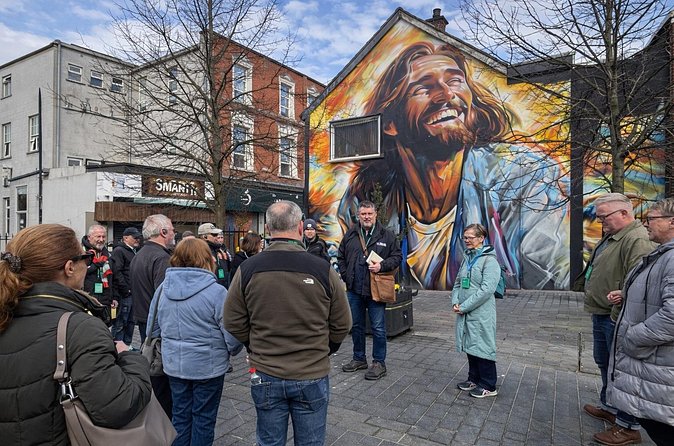
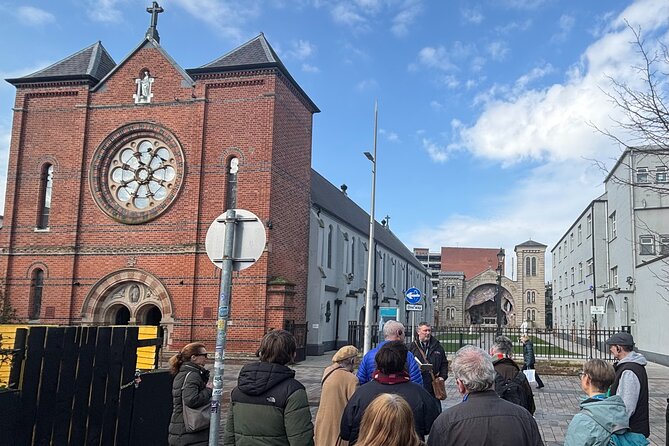
At St Mary’s Roman Catholic Church, the guide explains how the penal laws affected Catholics and how the chapel was established in the late eighteenth century. This is an important part of the route because it brings religious restrictions into the physical streets of Belfast.
The stop helps balance the story. Much of the tour’s focus rests on Belfast’s Presbyterian community, but the city’s Catholic experience was equally important to the period. By placing St Mary’s alongside Presbyterian churches and civic meeting rooms, the guide can show how different communities lived under unequal conditions.
You should expect an exterior-focused explanation unless the guide says otherwise. The stop lasts about 10 minutes, and admission is not charged. Comfortable shoes matter here, as they do throughout the walk, since the experience is about moving between locations rather than settling into one building.
More Belfast outings booked on the same trip:
- Belfast: The Titanic Experience with SS Nomadic Visit
★ 4.7 · 7,163 reviews - From Belfast: Giant’s Causeway and Game of Thrones Day Tour
★ 4.4 · 7,061 reviews - From Belfast: Giant’s Causeway Full-Day Guided Trip
★ 4.8 · 6,361 reviews - Belfast: Political Taxi Tour
★ 4.8 · 5,014 reviews
Kelly’s Cellars, a real meeting place
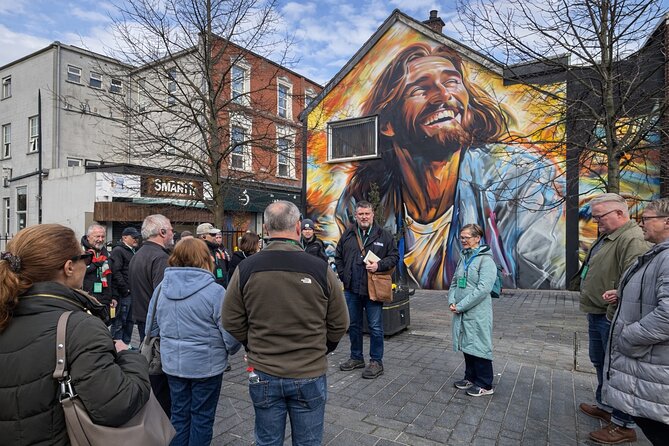
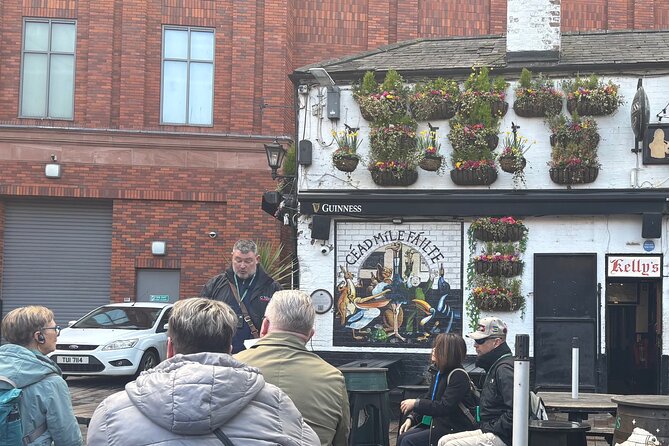
Kelly’s Cellars is one of the most atmospheric stops. It was used as a secret meeting place by the United Irishmen as they planned their rebellion, and it remains a historic pub.
This is where the subject can feel especially close to everyday life. A pub is not a battlefield or government office. It is a place where people gathered, talked, made plans, and took risks. The setting helps you picture how a movement might operate quietly inside a living city.
The stop is scheduled for about 10 minutes. That is enough for the guide to explain its connection with the United Irishmen, but not enough for a long pub visit. If you want a drink, you may need to return independently, and you should not assume that a beverage is included in the tour price.
One useful detail from the tour experience is a welcome coffee midway through the walk on at least some departures. Since coffee is not listed as an inclusion, treat it as a possible courtesy rather than a guaranteed part of every outing.
First Presbyterian Church and Belfast’s merchants
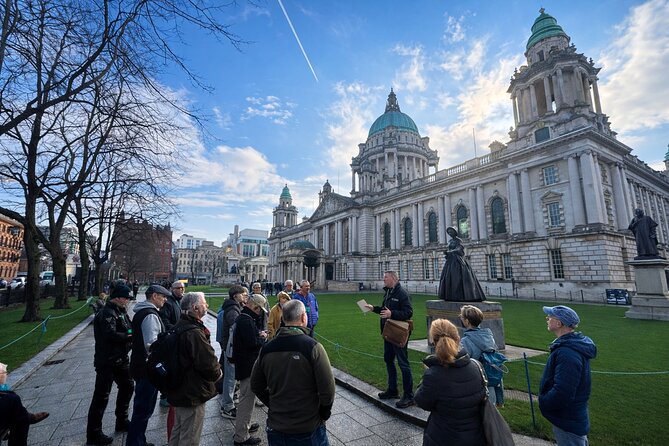
The First Presbyterian Church is central to the tour’s explanation of Belfast’s early Presbyterian settlers. Here, you learn how Presbyterians became wealthy merchants and hear about the most prominent members of the congregation.
This stop is valuable because it avoids reducing the Presbyterian community to one political label. These were merchants and civic figures as well as religious people. Their economic success gave them influence, while their political position could bring them into conflict with the established order.
The church also helps explain why Belfast was fertile ground for reformist thinking. The walk connects local prosperity with wider political questions, showing that economic success did not necessarily mean satisfaction with the political system.
As with St Mary’s, the scheduled time is short. You will get a focused talk rather than a detailed study of church architecture or a long indoor visit. The payoff is the connection between faith, commerce, and political action.
Assembly Rooms and the hard choices of rebellion
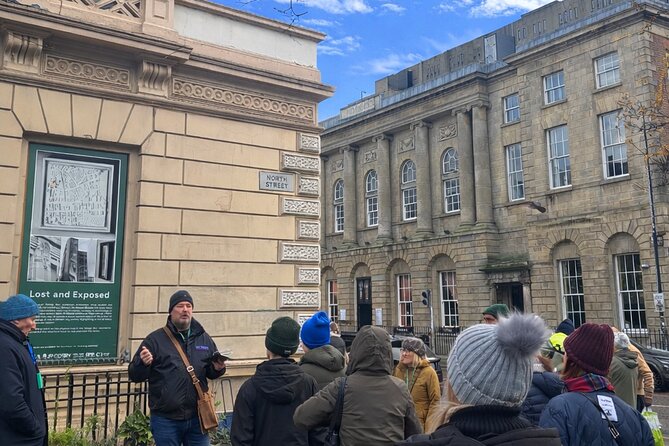
The Assembly Rooms offer some of the tour’s most striking contrasts. The guide discusses major meetings held there, including the court martial of Henry Joy McCracken and a failed proposal for a Belfast slave-ship company.
These subjects show Belfast in uncomfortable detail. The city could produce reformers who opposed political injustice while also containing people willing to profit from slavery. That contradiction makes the period more human and less tidy.
Henry Joy McCracken’s court martial brings the danger of rebellion into sharp focus. The failed slave-ship proposal adds an economic and moral dimension that many quick walking tours would skip. You are encouraged to consider not only who wanted freedom, but also who benefited from systems that denied freedom to others.
The Assembly Rooms stop lasts around 10 minutes. It is one of the places where a good guide’s storytelling matters most, since the building itself cannot explain the competing interests at work inside it.
St George’s and the origin of Belfast’s name
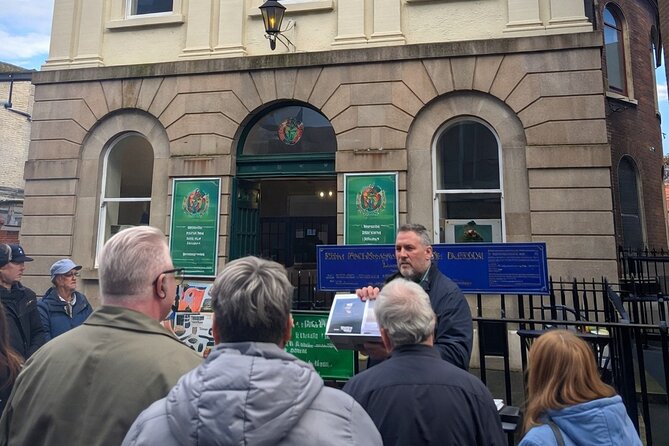
At the Parish Church of St George, you hear that the first church in Belfast stood on this site. The location also explains where Belfast gets its name.
This is a short stop, but it gives the route a deeper sense of place. Before Belfast became the city you see today, it was organized around an early church site and the waterways and settlement patterns that shaped its name.
The stop works well after the political intensity of the Assembly Rooms. It brings you back to the city’s earliest foundations and shows that the rebellion took place in a much older setting than its eighteenth-century political arguments might suggest.
The tour does not claim to cover every stage of Belfast’s growth. Instead, it uses this location to connect the 1798 story with the origins of the city itself.
Joy’s Entry and the older streets of Belfast
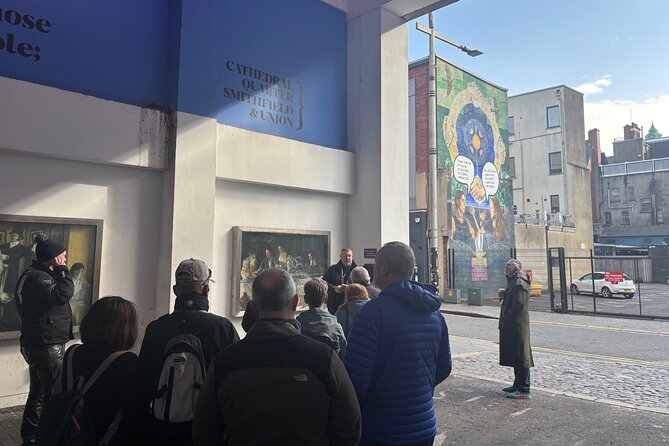
Joy’s Entry takes you into one of the oldest parts of Belfast. The guide explains the influence of the Joy family and how the historic entries have become an outdoor art gallery.
This is one of the more distinctive parts of the route. Belfast’s entries are narrower and more intimate than the city’s formal squares and civic buildings. They help you picture the older street pattern and the compact setting in which people lived and worked.
The Joy family’s influence adds another layer to the story of merchants, local power, and city development. You are not only hearing about rebels. You are also learning how families helped shape Belfast’s economy and identity.
The outdoor art is a modern feature, but it does not erase the older character of the entries. Instead, it gives the lanes a present-day use while keeping attention on their place in the city’s past. The stop lasts about 10 minutes.
Returning to Mary Ann McCracken
The walk finishes back at Belfast City Hall, at the statue of Mary Ann McCracken. This is a thoughtful ending because she connects the 1798 period with later work in abolition, education, and social reform.
Mary Ann McCracken was an abolitionist, educator, and United Irishwoman. Ending with her gives the tour a wider moral frame. The story does not stop with rebellion, imprisonment, or executions. It also asks what people did with their convictions over the course of a lifetime.
The final 15 minutes bring the route back to its starting point. That makes the tour easy to fit into a day of sightseeing. You are not left at an unfamiliar neighborhood, and you can continue around central Belfast after the walk.
How the $35.73 price compares with the experience
At $35.73 per person, this is not the cheapest way to spend a morning in Belfast, but the price is reasonable for a specialist guided walk. You are paying for a focused subject, a local guide, a structured route, and live explanations that connect several locations.
There are no admission charges listed for the stops, so the value comes from interpretation. If you walked this route alone, you could see many of the same streets and buildings, but you would miss the connections between Thomas Russell, Henry Joy McCracken, the Presbyterian merchants, the Catholic chapel, and Mary Ann McCracken.
The group limit of 25 keeps the tour from becoming enormous, though it is not a private walk. The Vox whisper set should help, especially near busy streets or when the group spreads out.
I would book this early if your Belfast schedule matters. The tour is often reserved around 10 days ahead, which suggests that last-minute places may not always be available. You receive confirmation at booking, and free cancellation is available until 24 hours before the start time.
Who should take this Belfast walking tour?
This tour suits you best if you:
- Want to understand Belfast through people and political ideas
- Enjoy guided walks with a strong historical focus
- Have limited time and want a central route
- Are curious about Presbyterian, Catholic, and civic life in eighteenth-century Belfast
- Prefer small stories and biographies to a broad list of attractions
- Want a useful introduction before exploring Belfast on your own
It may not suit you if you want a museum-heavy activity, a modern political tour, or a route with little standing and walking. The subject is serious, and the story includes rebellion, court martial proceedings, repression, and executions.
You should also dress for changeable weather. The physical requirement is listed as moderate, and the tour takes about two and a half hours. Comfortable shoes are a sensible choice.
Should you book the 1798 Belfast Rebellion walk?
Book it if you want the city to make more sense. The strongest feature is Colin Shaw’s energetic, well-informed storytelling, especially his ability to put faces and personal details behind names on Belfast’s blue plaques.
I would recommend it for first-time visitors who want a firm historical foundation, and for returning visitors who have already seen the main sights. The combination of churches, a pub, civic rooms, old entries, and City Hall gives you a view of Belfast that no single monument can provide.
Skip it if you want a relaxed sightseeing stroll with little explanation. This is a focused history walk, and its value depends on your willingness to listen, think, and follow the details. For the right audience, $35.73 buys much more than a route through central Belfast. It gives you a clearer sense of how ordinary people, religious communities, merchants, and rebels helped shape the city.
FAQ
Where does the tour begin?
The tour begins at Belfast City Hall, Donegall Square North, Belfast BT1 5GS, UK.
What time does the tour start?
The tour starts at 10:00 a.m.
How long does the tour last?
It lasts approximately 2 hours and 30 minutes.
Where does the tour finish?
The tour ends back at Belfast City Hall, the same place where it begins.
What language is the tour offered in?
The tour is offered in English.
How many people can join the tour?
The maximum group size is 25 people.
Is the tour suitable for people with limited mobility?
A moderate level of physical fitness is required. The supplied details do not provide further mobility information.
What happens if I need to cancel?
You can cancel up to 24 hours before the local start time for a full refund. Cancellations or changes made less than 24 hours before the start time are not accepted for a refund.
Newest reviews from Belfast
- VIP Skip-the Line Titanic Museum and Whiskey Tasting Tour★ 4.8 · 11 reviews
- Private Half Day Winter Magic in the Antrim Glens★ 5.0 · 2 reviews
- Giants Causeway Private Tour★ 5.0 · 3 reviews
- Titanic Eastside Bike Tour★ 5.0 · 9 reviews
- The Single Cask Whiskey Experience★ 5.0 · 6 reviews
- This is Belfast Walking Tours. Our history, our culture.★ 5.0 · 7 reviews
- St Patrick’s Centre & Burial Site + Hillsborough Castle & Gardens★ 5.0 · 2 reviews
- Small Group Giant’s Causeway Day Tour from Belfast★ 5.0 · 11 reviews
Walking Tours, compared.
A History of Terror – Belfast City Centre Walking Tour
Read our review →
The Troubles Walls & Bridges Guided Walking Tour
Read our review →
Belfast Political Tour-Conflicting Stories Walking Tour
Read our review →
Browse the lists this tour appears in