
Reviewed · MURALS & PEACE WALL TOURS
The Troubles Tour- Two Stories, One Journey
History has sharp edges here. This three-hour Belfast walk connects the Falls and Shankill roads through murals, memorial gardens, former conflict sites, and the Peace Wall. I like the local guides, including Barbara, who adds personal reflections from living through the Troubles. I also like the small-group limit of 25, which makes it easier to ask questions than on a large coach tour. The main drawback is that the tour leans heavily toward walking and standing, and some memorials can be painful or politically charged.
You cover about 3 miles, or 4 kilometers, and finish away from the starting point. That means you should wear good shoes and plan a little extra time for your taxi or walk back toward central Belfast. At $23.36, the tour offers solid value for a focused introduction, but it is best for you if you want difficult history told through the places where it happened, not a light sightseeing outing.
In This Review
- Key points to know before you book
- Why this Belfast walk feels different
- Starting at Divis and the first deaths of August 1969
- Murals on Divis Street, politics in paint
- The Garden of Remembrance and a difficult point of view
- Bobby Sands and the power of a famous mural
- Clonard Monastery and the road to talks
- Clonard Martyrs Memorial Garden and the accepted starting point
- Gates, the Peace Wall, and a divide that has not vanished
- Shankill Road, Loyalist memory, and the UVF mural
- The Shankill bomb site and the cost paid by civilians
- How good is the $23.36 value?
- Who will get the most from this experience?
- Should you book The Troubles Tour?
- FAQ
- Where does the tour start?
- Where does the tour finish?
- How long is the tour?
- How far do you walk?
- Is the tour offered in English?
- How many people can join the tour?
- Can I cancel for a full refund?
Key points to know before you book
- Two communities in three hours: The route moves from the Republican Falls area to the Loyalist Shankill Road, giving you both sides of the divide.
- Local voices matter: Two certified local guides lead the walk, and Barbara is specifically praised for her clear explanations and personal reflections.
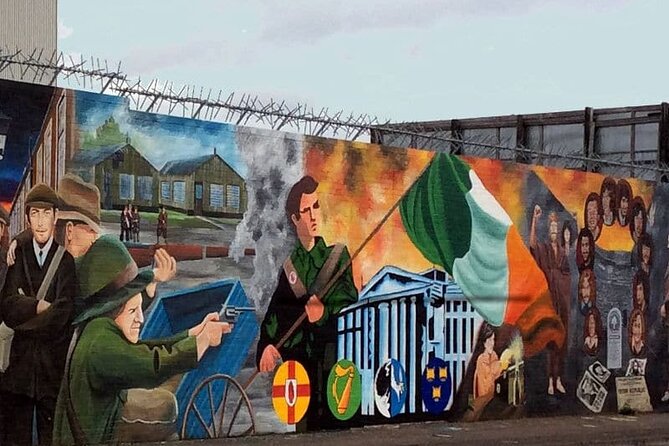
- The murals are the classroom: You see political art linked to Belfast, Northern Ireland, and international conflicts.
- The Peace Wall is still real: You can sign the 14-meter wall and leave a thought about peace, while gates between the Falls and Shankill can still close at night.
- Expect sensitive memorials: The Garden of Remembrance and Clonard Martyrs Memorial Garden honor Republicans, including IRA members, so the presentation may feel openly partisan at points.
- Wear practical shoes: This is roughly 4 kilometers on foot, with plenty of standing at outdoor sites.
Why this Belfast walk feels different
Many Belfast sightseeing tours explain the Troubles from a bus window. This one puts you on the streets of West Belfast, where the political story is still visible on walls, gates, gardens, and neighborhood buildings.
The route begins at 30 Divis Street and finishes at Conor’s Corner on Northumberland Street. That point is about eight minutes from the start on foot and roughly 15 minutes from Belfast City Hall. A taxi company is located nearby, which is useful if you do not want to walk back after three hours on your feet.
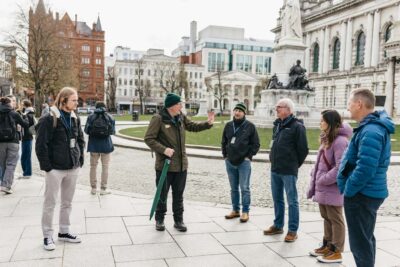
The experience is offered in English and uses a mobile ticket. Two local certified guides lead the group, with a maximum of 25 people. That is not an ultra-small private tour, but it is restrained enough for questions and conversation.
I would set aside the full three hours rather than treating the duration as a strict timetable. Each stop is short, often 5 to 15 minutes, but the value comes from the guide’s explanation between sites. You are not simply ticking off murals. You are being shown how the streets fit together.
Other tours of the murals and peace walls:
- Belfast: Political Taxi Tour
★ 4.8 · 5,014 reviews - Belfast: Political Conflict 3-Hour Walking Tour
★ 4.6 · 2,215 reviews - Belfast: Murals Taxi Tour
★ 4.9 · 2,047 reviews
Starting at Divis and the first deaths of August 1969
The first stop is Divis, once Belfast’s tallest building. A British Army observation post occupied the roof, giving the building both a physical and symbolic role in the conflict.
Divis is also linked to two of the first deaths on the night the Troubles broke out in August 1969. That makes it a strong place to begin. You are immediately dealing with the human cost of the conflict, not just dates and political slogans.
The stop lasts about 10 minutes and has no admission fee. It is short, so listen closely when the guide explains what happened here. This is not a museum visit with displays and labels. The street itself is part of the lesson.
Murals on Divis Street, politics in paint
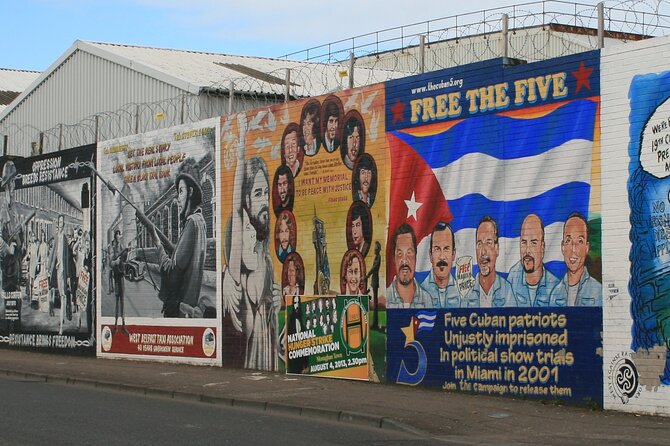
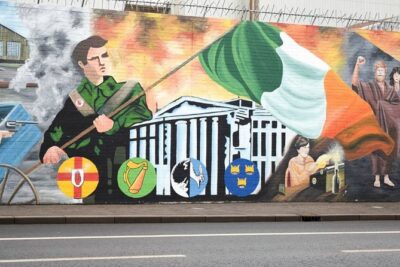
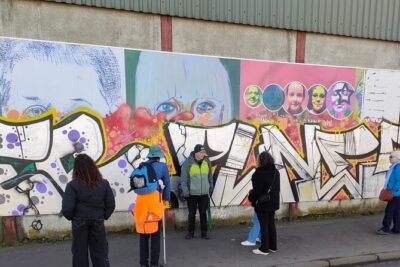
The International Mural Wall on Divis Street gives you a visual introduction to how Belfast uses public art. The murals cover local events as well as international conflicts, both past and present.
This is one of the easiest parts of the tour to enjoy because the art gives you something clear to look at while the guide supplies context. You can see how the walls connect local identity with causes and struggles far beyond Northern Ireland.
You have about 15 minutes here. Bring your phone, but do not let photography distract you from the explanation. The important point is not simply which murals look striking. It is why these subjects appear on a Belfast street and what they say about the people who live nearby.
The Garden of Remembrance and a difficult point of view
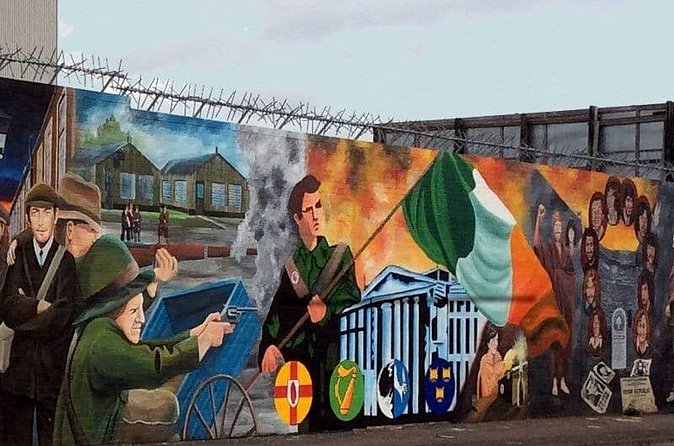
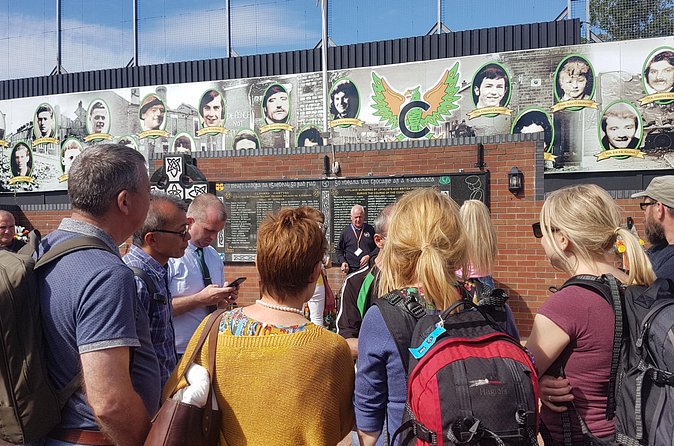
The Garden of Remembrance honors local Republicans who died in the conflict from the Lower Falls Road area. It is one of two memorial gardens on the route.
This is also where you need to understand the tour’s limits. The garden honors Republicans, including IRA members, and that can feel controversial. The memorial is not presented as a neutral list of all victims. It reflects the Republican community’s memory of the conflict.
I consider that a strength if you want to hear how one side remembers its dead. It may be less suitable if you expect a detached lecture that gives equal weight to every political interpretation at every stop.
The guide’s role matters here. A local guide can explain why the garden exists and how it is viewed in the neighborhood. Barbara is praised for offering both historical explanation and personal reflections, which can make this section more human. You should still listen with care and remember that personal experience is one viewpoint, not the whole story.
More Belfast outings booked on the same trip:
- Belfast: The Titanic Experience with SS Nomadic Visit
★ 4.7 · 7,163 reviews - From Belfast: Giant’s Causeway and Game of Thrones Day Tour
★ 4.4 · 7,061 reviews - From Belfast: Giant’s Causeway Full-Day Guided Trip
★ 4.8 · 6,361 reviews - Titanic Belfast Entrance Ticket: Titanic Visitor Experience Including SS Nomadic
★ 4.5 · 3,698 reviews
Bobby Sands and the power of a famous mural
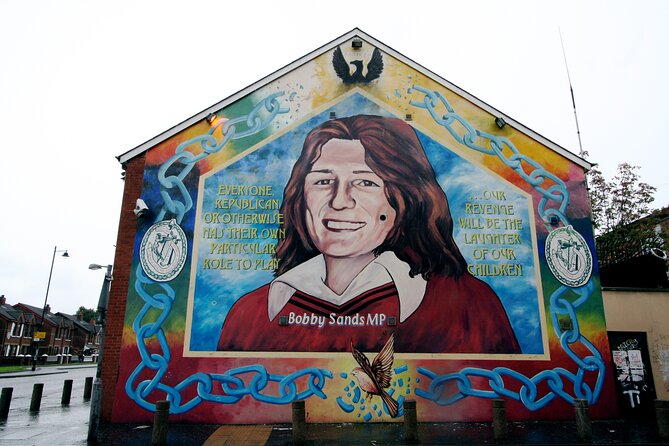
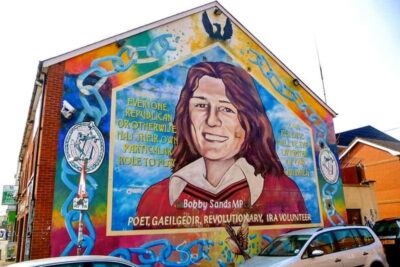
The Bobby Sands mural is among Belfast’s best-known political murals. Sands died on hunger strike in the Maze prison in 1981.
The stop lasts about 10 minutes. Even if you know the broad outline of the hunger strike, the mural carries more weight when you see it in the context of the surrounding streets and memorials.
This part of the route works well for people who want to understand how political figures become symbols. Bobby Sands is not treated as a distant historical name here. His image remains part of the public identity of the area.
You may find the stop emotionally strong, especially when it follows the Garden of Remembrance. The guide can help connect the mural to the wider Republican story, but you should expect the emphasis to remain on that community’s perspective.
Clonard Monastery and the road to talks
Clonard Monastery offers a different kind of historical pause. Father Alex Reid, the resident priest, played an important role in the early talks that eventually led to the Good Friday Agreement.
That makes the monastery a useful counterpoint to the murals and memorials. So far, the route has shown loss, identity, and political memory. Here, you hear about quiet contact and the effort to move from conflict toward negotiation.
You have about 10 minutes at the monastery. The stop is not presented as a long religious tour. Its importance is political and human: it recalls the people who began building communication before an agreement was signed.
I like this change of pace. A tour about the Troubles needs more than stories of violence. It also needs to show how peace talks began, often through people working away from public attention.
Clonard Martyrs Memorial Garden and the accepted starting point
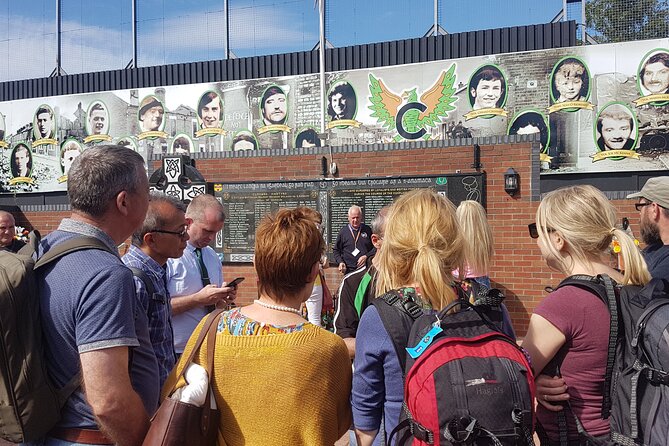
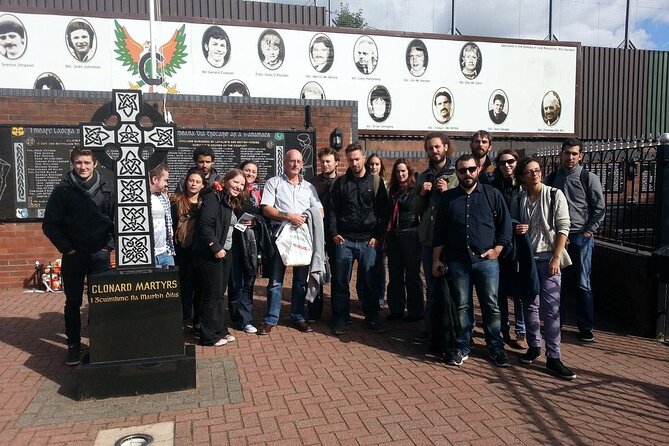
The second memorial garden is the Clonard Martyrs Memorial Garden. It is dedicated to Republicans from the Clonard area and is generally accepted as the place where the Troubles broke out in August 1969.
This stop adds another layer to the route’s opening. Divis introduces the first deaths. The Clonard garden places the outbreak within a local neighborhood and a community’s memory.
Again, the wording and setting matter. The garden is a Republican memorial, so you are seeing the past through a specific political lens. That is not a reason to avoid it. It is a reason to pay attention to who is being honored, who is absent, and how the guide explains the difference.
You spend about 10 minutes here. The many short stops can make the tour feel brisk, but they also prevent any one memorial from becoming overwhelming. If you want long time for quiet reflection, you may find the schedule a little tight.
Gates, the Peace Wall, and a divide that has not vanished
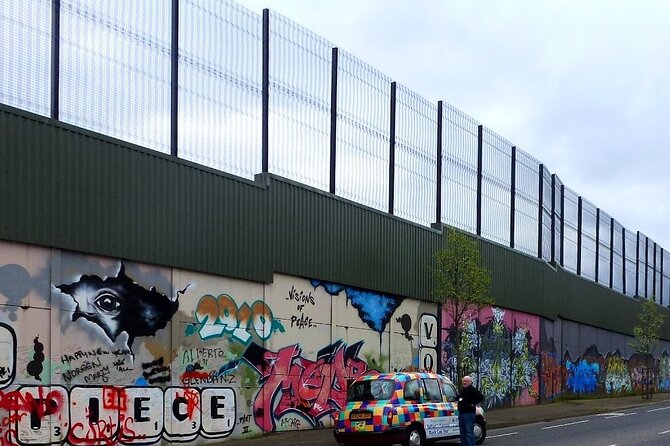
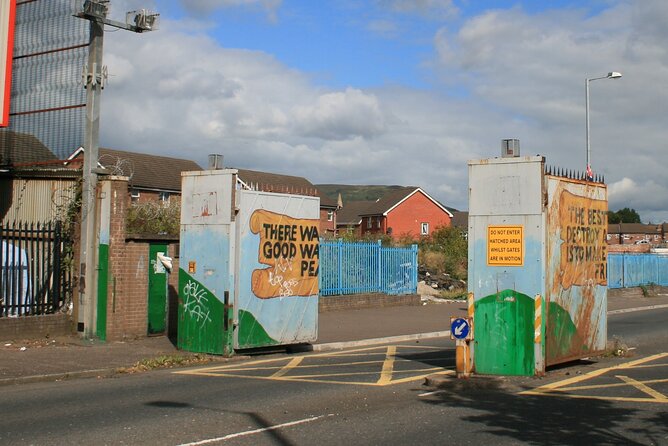
The route then reaches the gates between the Loyalist Shankill Road and the Republican Falls Road. These gates can still close nightly.
That detail is one of the clearest reminders that the conflict is not merely a finished chapter. A wall or gate can look like a historical object until you learn that it still affects daily movement.
At the Peace Wall, you can sign the 14-meter wall and leave your thoughts about peace. The stop is only about five minutes, but it is one of the tour’s most memorable moments.
The name Peace Wall sounds hopeful, yet the wall also divides the two communities. You get both meanings at once: it can reduce tension, but it also confirms that separation remains part of life in Belfast.
I would not expect the stop to offer a tidy answer. You are given a physical place to think about peace, not a final speech that resolves the issue. That restraint is appropriate.
Shankill Road, Loyalist memory, and the UVF mural
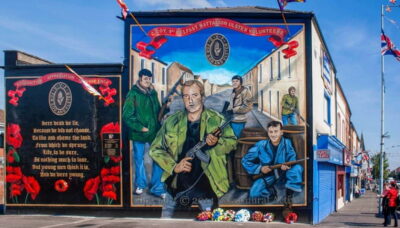
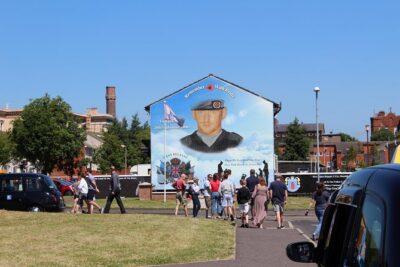
Crossing to Shankill Road changes the tone and political viewpoint. The tour visits a UVF mural remembering seven members of the organization who died during the conflict.
This is the point where the Two Stories, One Journey title becomes especially clear. The earlier stops focus mainly on Republican memory. The Shankill stops bring you into Loyalist memory, including a mural that honors people associated with the UVF.
You may find this unsettling, and that is part of the value. A serious tour should not ask you to admire every memorial. It should help you understand what the memorial means to the people who created it.
The stop lasts about five minutes. Because it is brief, use the time to ask the guide how the mural fits into the area’s history and identity. The tour is strongest when you treat the guide as a source of context, not as someone expected to settle every political question for you.
The Shankill bomb site and the cost paid by civilians
The final listed stop is the Shankill bomb site, where nine people lost their lives. This brings the tour back to individual victims and the damage inflicted on a neighborhood.
After seeing memorials to Republican and Loyalist members, this site reminds you that ordinary people also paid the price. The stop lasts about 10 minutes, giving the guide room to explain what happened and why the location remains important.
The ending is heavy, but it is fitting. The tour does not finish with a scenic view or an easy slogan. It finishes with the human consequences of political violence.
A reported experience also included a visit to the Republic Museum, described as an important stop for understanding the Nationalist movement. Since the listed route ends at Conor’s Corner, you should confirm the day’s exact finish if that museum visit is important to you.
How good is the $23.36 value?
At $23.36 per person, I consider this a good-value walking tour for anyone serious about Belfast’s recent past. The sites themselves are free, so you are paying for local interpretation, route planning, and access to a connected story rather than admission tickets.
That distinction matters. You could walk past several murals on your own, but you would not necessarily understand why Divis, the Falls, Clonard, the Peace Wall, and Shankill belong in one sequence.
The price also covers a tour led by two certified local guides, with a maximum group size of 25. You are not paying for transport or a museum package, so the value depends on how much you want explanation and conversation.
I would not choose it if you only have a short time in Belfast and want a broad city overview. I would choose it if the Troubles are a main reason for visiting and you want to stand in the neighborhoods connected to the story.
Who will get the most from this experience?
This tour suits you if you:
- Want a walking route through both Falls Road and Shankill Road
- Prefer local explanation to a recorded audio guide
- Are willing to hear openly Republican and Loyalist viewpoints
- Want to see murals, memorials, gates, and the Peace Wall in one morning or afternoon
- Can walk about 4 kilometers and stand at outdoor sites
- Have an interest in the Good Friday Agreement and the people who helped begin the talks
It may not suit you if you want a light Belfast attraction, dislike politically charged subjects, or need frequent seating. The route includes a lot of standing, and the subject matter includes death, imprisonment, hunger strikes, bombings, and memorials to armed groups.
Most people can take part, and service animals are allowed. The experience is near public transportation, but the finish is not at the start, so plan your return before you set off.
Should you book The Troubles Tour?
Book it if you want a direct, place-based introduction to Belfast’s conflict and can approach the subject with patience. The combination of the two communities, the Peace Wall, the murals, and the local guides gives you more than a collection of photo stops.
I especially recommend it for a first visit focused on Northern Ireland’s modern politics. Go ready to hear a strong Republican perspective in the first half and a Loyalist perspective on Shankill Road. The tour does not remove the discomfort from this history, and it should not.
Skip it if you want a neutral, academic treatment or a relaxed sightseeing walk. For everyone else, $23.36 buys three useful hours, a clear route through West Belfast, and a chance to ask the questions that a map or mural alone cannot answer.
FAQ
Where does the tour start?
The tour starts at 30 Divis Street, Belfast, BT12 4AL, UK.
Where does the tour finish?
The tour finishes at Conor’s Corner, 1 Northumberland Street, Belfast, BT13 2JR, UK.
How long is the tour?
The experience lasts approximately three hours.
How far do you walk?
The route covers about 3 miles, or 4 kilometers, on foot.
Is the tour offered in English?
Yes. The tour is offered in English.
How many people can join the tour?
The maximum group size is 25 people.
Can I cancel for a full refund?
Yes. You can cancel at least 24 hours before the local start time for a full refund. Cancellations or changes made less than 24 hours before the start are not accepted for a refund. If the minimum number of participants is not met and the tour is canceled, you will be offered another date or experience, or a full refund.
Newest reviews from Belfast
- VIP Skip-the Line Titanic Museum and Whiskey Tasting Tour★ 4.8 · 11 reviews
- Private Half Day Winter Magic in the Antrim Glens★ 5.0 · 2 reviews
- Giants Causeway Private Tour★ 5.0 · 3 reviews
- Titanic Eastside Bike Tour★ 5.0 · 9 reviews
- The Single Cask Whiskey Experience★ 5.0 · 6 reviews
- This is Belfast Walking Tours. Our history, our culture.★ 5.0 · 7 reviews
- St Patrick’s Centre & Burial Site + Hillsborough Castle & Gardens★ 5.0 · 2 reviews
- Shore Excursion from Belfast to Giants Causeway & Rope Bridge★ 5.0 · 2 reviews
Murals & Peace Wall Tours, compared.

The Troubles Walls & Bridges Guided Walking Tour
Read our review →
Browse the lists this tour appears in