
Reviewed · BLACK TAXI TOURS
Peace Wall Taxi Tour
Belfast’s past is still written on its walls. This private taxi tour makes the city’s divided history easier to understand, with guide Dan sharing personal memories of growing up during the Troubles and explaining both Irish Nationalist and British Unionist viewpoints. I like the flexible pickup and drop-off, and I like that you can ask questions without being part of a large group. The main consideration is that the quality and focus may depend on your driver, and one very negative account found the discussion strayed too far from Belfast.
This is a good choice if you want to see the major murals and Peace Wall without working out complicated routes. It also suits families, older visitors, and anyone who prefers a car-based tour with frequent stops. At about $55.56 per person, it offers fair value for a private experience, although people seeking a formal black-cab tour may want to compare the two carefully.
In This Review
- Key points to know before booking
- Why Belfast’s Peace Wall deserves your time
- Bobby Sands Mural: starting with the Nationalist story
- Shankill Road: hearing the Unionist viewpoint
- The Peace Wall: seeing both sides of the barrier
- Crumlin Road Gaol: a brief stop with darker stories
- A private taxi makes the route simple
- Is $55.56 good value?
- Dan’s personal style and the question of neutrality
- Who should book the Peace Wall Taxi Tour?
- Should you book it?
- FAQ
- Where does the Peace Wall Taxi Tour start?
- Can I be picked up at my hotel?
- Where does the tour finish?
- How long does the tour last?
- Is this a private tour?
- Is the tour suitable for children?
- What is the cancellation policy?
Key points to know before booking
- Dan’s first-hand account gives the tour a personal edge: You hear about Belfast life from someone who grew up during the Troubles, not just a memorized timeline.
- The tour visits both sides of the divide: Bobby Sands Mural and the Shankill Road help explain Nationalist and Unionist identities.
- You can shape the conversation: This is a private tour, so you can ask questions and make requests along the way.
- The Peace Wall is more than a photo stop: You visit both sides and hear how the barrier affects the communities around it.
- Pickup and drop-off are useful extras: Collection is available around Belfast, and the driver can leave you where you need to go within the city.
- Families are especially well served: Past visitors describe Dan as patient with children and willing to explain difficult subjects in accessible terms.
Why Belfast’s Peace Wall deserves your time
A visit to Belfast can feel confusing if you only see the city center. The Peace Wall, murals, gates, churches, roads, and political symbols make more sense once you understand that Belfast’s conflict was not simply an old argument between two neat groups.
The Troubles were a period of political and sectarian conflict in Northern Ireland. Irish Nationalists and Republicans generally wanted Northern Ireland to leave the United Kingdom and join a united Ireland. British Unionists and Loyalists generally wanted Northern Ireland to remain part of the United Kingdom.
That simple outline does not explain the personal cost, neighborhood loyalties, family memories, or daily fear. A taxi tour helps connect the politics to actual streets. You are not just looking at painted walls. You are seeing places where identity, security, religion, and politics shaped ordinary life.
I also appreciate the private format. Your group rides together, rather than being folded into a large crowd. That gives you room to ask direct questions, pause for photographs, or request a little more time at a particular stop.
The tour lasts about one to two hours. The listed stops add up to roughly 100 minutes, so your actual timing can vary with questions, traffic, photographs, and the pace of your group. Think of it as a focused introduction, not a full-day study of Northern Ireland.
Other black taxi tours in Belfast:
- Belfast: Political Taxi Tour
★ 4.8 · 5,014 reviews - Cab Tours Belfast Famous Black Taxi Tours
★ 5.0 · 3,633 reviews - Private Black Taxi Belfast City Tour
★ 5.0 · 2,188 reviews
Bobby Sands Mural: starting with the Nationalist story
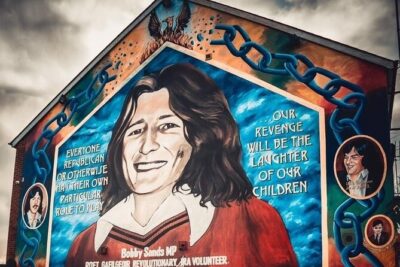
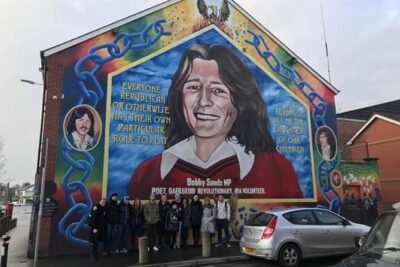
The first major stop is the Bobby Sands Mural, with about 30 minutes set aside. This introduces the Irish Nationalist side of the Troubles through one of Belfast’s best-known political images.
Bobby Sands was an Irish Republican prisoner who died during a hunger strike in 1981. His image and memory remain politically powerful, so this is not a casual mural stop. It opens questions about imprisonment, protest, political identity, and the way murals serve as public memory.
The value here is the explanation around the artwork. Without context, a visitor may see a striking mural and move on. With a guide, you can ask why the mural matters, how Nationalists view Sands, and how the image fits into the wider conflict.
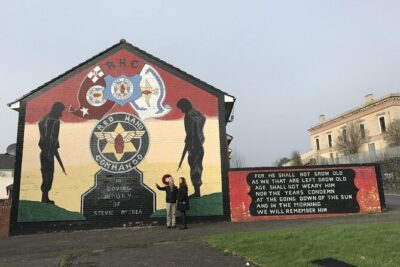
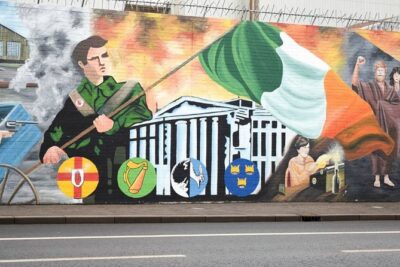
The stop is also a useful reminder that Belfast’s murals are not all decorative street art. Many are political statements tied to deaths, elections, prisoners, military groups, or community identity. Some are difficult to look at. That is part of the point.
Families can manage this stop, but parents should expect serious subjects. Dan has been praised for speaking with children aged seven, twelve, and fifteen in a clear and considerate way. Still, the tour discusses violence and loss, so it is worth preparing younger children before you arrive.
Shankill Road: hearing the Unionist viewpoint
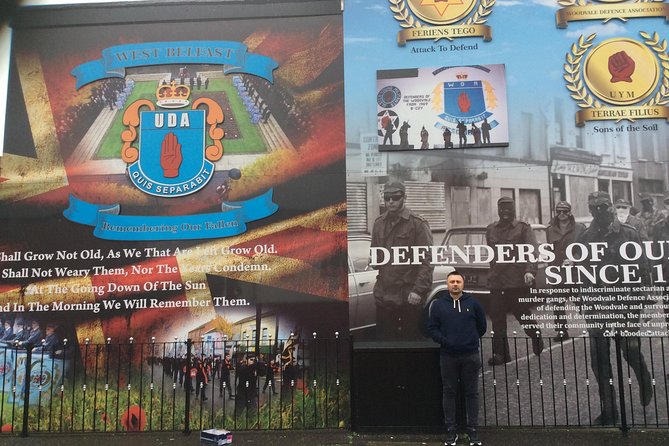
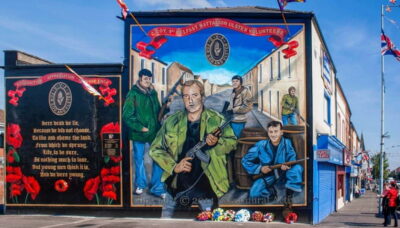
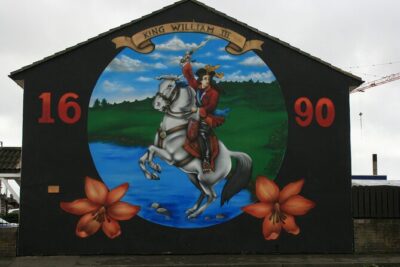
The tour then crosses to Shankill Road, where about 30 minutes are devoted to the British Unionist and Loyalist side of the conflict. This change of neighborhood is important because it lets you see how different communities used murals and public spaces to express their identity.
Shankill Road is associated with Britishness, the Union Jack, loyalty to the United Kingdom, and Loyalist political and paramilitary history. The symbols can feel confrontational if you do not know what they represent. A guide can explain the local meaning without leaving you to guess from the paintwork.
I value the attempt to present both sides in the same short tour. A rushed visit can turn Belfast into a simple story of heroes and villains. This tour aims for a more even account, showing how each community understood its own position and its fears about the other.
That does not mean every explanation will feel perfectly neutral to every person. Personal experience shapes how anyone tells a story, and the tour’s strength is also its possible limitation. Dan’s lived experience gives warmth and detail, but you should expect a personal interpretation rather than a university lecture.
This is a good point to ask questions about current life in Belfast. Past visitors describe the guide as open to questions about politics, daily life, and how peace has changed the city. Keep your questions respectful. The subject is still sensitive, and many families continue to carry memories of the conflict.
The Peace Wall: seeing both sides of the barrier
The central stop takes you to the Peace Wall itself. You see the wall from both sides and hear how it separates neighboring communities in Belfast.
The phrase peace wall can sound reassuring, but the structure is also a physical reminder that peace remains imperfect. It was built to reduce contact and violence between communities, yet it divides areas that sit close together. Depending on your visit and the specific gate, access arrangements can affect what you see, so the guide’s explanation is important.
One striking detail described during the experience is that some gates have closed and opened at different times, controlling movement between the districts. That makes the wall feel less like a historical monument and more like part of daily life.
You are also given time to take photographs. Children have been offered pens to write on the Peace Wall, a small gesture that can help them connect with the site. If you are visiting with children, this can turn a difficult history lesson into a thoughtful activity, though you should still explain that the wall represents real division rather than a simple tourist backdrop.
The strongest part of this stop is the chance to ask what peace feels like from someone who lived through the Troubles. Dan has spoken about growing up in Belfast and about living in a society where violence has eased but tension has not vanished. The idea that an imperfect peace is better than a perfect war captures the tone of the visit.
You may find the stop emotional. That is not a flaw, but it is worth knowing before you book. This is not a light sightseeing loop focused only on colorful murals. It asks you to think about what remains after a conflict ends.
Other tours of the murals and peace walls:
- Belfast: Political Conflict 3-Hour Walking Tour
★ 4.6 · 2,215 reviews - Belfast: Murals Taxi Tour
★ 4.9 · 2,047 reviews - Belfast’s Political Mural Taxi Tour
★ 5.0 · 1,180 reviews - Belfast Troubles Tour: Walls and Bridges
★ 5.0 · 853 reviews
Crumlin Road Gaol: a brief stop with darker stories
The final listed sight is Crumlin Road Gaol, which you pass for about 10 minutes. The guide shares stories about people who spent time there.
Because this is a drive-by stop rather than a full prison tour, keep your expectations in check. You may hear useful context about the jail and its place in Belfast’s history, but the experience does not include a complete guided visit inside the building.
The stop works as a closing piece because prisons were central to the Troubles. Imprisonment, political status, hunger strikes, and loyalty to different causes all shaped the conflict. After seeing the murals and the wall, the jail adds another setting where those political divisions became personal.
If you have extra time in Belfast, you may want to visit Crumlin Road Gaol separately. That is not included in this taxi experience, but the passing explanation can help you decide if the full attraction belongs on your schedule.
A private taxi makes the route simple
The main practical advantage is the vehicle. You are collected in Belfast, taken between the main locations, and dropped off somewhere in the city afterward. Pickup anywhere in Belfast and the surrounding area is available for an additional charge, so confirm the exact cost before booking if you are staying outside the city.
The central meeting point is in Belfast city center. The published end point is Belfast, with the driver able to drop you wherever you need in the city. If you need to go farther, you are advised to ask.
This flexibility can save time. You might begin near your hotel, finish by a restaurant, or arrange a drop-off near another Belfast sight. One family used the pickup and drop-off choices to fit more of the city into the same day.
The taxi also helps if rain arrives, which is hardly a rare possibility in Northern Ireland. Dan has been praised for arriving with umbrellas and for stopping so people could get out, take photographs, and talk about each location.
The tour operates from 8:00 a.m. to 8:00 p.m., Monday through Sunday, during the stated operating period. It is usually booked about 15 days ahead, so I would reserve in advance if your Belfast schedule is tight.
Is $55.56 good value?
At approximately $55.56 per person, the price is reasonable if you are traveling as a small private group and value direct conversation. You are paying for the driver-guide, the vehicle, the route, the time saved, and the ability to tailor the experience.
The calculation looks less attractive if you are traveling alone or simply want to photograph the murals quickly. Many of the sites are free to view, and the tour does not include an admission ticket to Crumlin Road Gaol.
For families, the value improves because the experience is private. You can ask the driver to explain a point again, adapt the tone for children, or pause for photographs without worrying about holding up a bus full of people.
Group discounts are available, though the exact saving is not provided. Ask for the current group rate before you pay. Service animals are allowed, and the tour is near public transportation, which helps if you are arranging your day around other Belfast stops.
The free cancellation policy gives you some protection. You can cancel at least 24 hours before the start time for a full refund. Cancellations or changes made inside that 24-hour window are not refunded or accepted.
Dan’s personal style and the question of neutrality
Dan is the named guide in many of the strongest accounts, and his style is a clear reason to choose this tour. He is described as warm, engaging, patient, candid, and willing to answer difficult questions. His first-hand memories make the streets feel connected to real life rather than distant political events.
He has also been praised for helping children feel included. One account describes him giving a young visitor an encouraging talk about starting secondary school. That sort of personal attention is unusual on a standard sightseeing route.
The guide’s warmth does not mean every subject will suit every person. One complaint said the tour spent too much time on the Palestinian situation and religion, rather than staying focused on the Troubles. The guide apologized and said he would take the comment on board.
That criticism matters because it points to a real choice. If you want a tightly scripted historical tour with a fixed academic framework, ask about the intended focus before booking. If you prefer an open conversation led by someone with personal memories, the informal approach may suit you better.
There is also a distinction between this taxi tour and a traditional black-cab tour. One disappointed customer felt a black-cab experience was more informative and engaging. The taxi used here may not offer the same vehicle style or established format.
I would not treat that as an automatic reason to avoid this tour. It is a reason to choose based on your priorities. Pick this experience for flexibility, personal stories, family care, and easy transport. Compare other Belfast tours if your top priority is a highly structured presentation delivered from a classic black cab.
Who should book the Peace Wall Taxi Tour?
I would recommend it to first-time Belfast visitors who want a clear introduction to the Troubles in a short period. It is especially useful early in your stay, since the context can make later walks around Belfast more meaningful.
Families are a strong match. The private setting, patient explanations, and flexible pacing are easier for children than a dense museum display or a long lecture. Parents should still decide if their children are ready for stories about violence, imprisonment, and political conflict.
Older visitors may also appreciate the door-to-door format. You get frequent opportunities to leave the taxi, but you are not required to walk long distances between neighborhoods.
It also suits visitors who want to ask direct questions. You can talk about the past, peace today, religion, political identity, and ordinary life in Belfast. The conversation is a feature, but it also means your experience may vary with the guide’s style and the direction of your questions.
I would look elsewhere if you want a broad Belfast city tour covering architecture, shopping, maritime history, or major attractions beyond the Troubles. This experience has a specific purpose: it explains the divided neighborhoods, their murals, the Peace Wall, and the people connected to them.
Should you book it?
Book the Peace Wall Taxi Tour if you want personal insight, flexible transport, and both sides of Belfast’s political story in about one to two hours. Dan’s ability to connect the past with family life and present-day peace is the strongest reason to choose it.
Before paying, confirm the pickup surcharge if you are outside central Belfast, ask about group pricing, and decide if an informal personal account is what you want. If you prefer a classic black-cab vehicle or a tightly controlled historical script, compare alternatives.
For most first-time visitors, the tour offers a thoughtful and practical way to approach a difficult part of Belfast. You leave with more than mural photographs. You leave with a better sense of why the walls were built, why they remain, and why peace can be real without being complete.
FAQ
Where does the Peace Wall Taxi Tour start?
The tour starts in Belfast city center, Belfast, United Kingdom.
Can I be picked up at my hotel?
Pickup is available anywhere in Belfast and the surrounding area, but an additional charge applies for pickup outside the standard arrangement.
Where does the tour finish?
The driver can drop you off wherever you need within Belfast. If you need to go farther, you should ask in advance.
How long does the tour last?
The tour lasts approximately one to two hours. The listed stops include about 30 minutes at the Bobby Sands Mural, 30 minutes on Shankill Road, 30 minutes at the Peace Wall, and 10 minutes passing Crumlin Road Gaol.
Is this a private tour?
Yes. Only your group participates in the activity.
Is the tour suitable for children?
Most visitors can participate, and several families have found the guide patient and engaging with children. The tour discusses the Troubles, violence, imprisonment, and political conflict, so parents should consider the subject matter before booking.
What is the cancellation policy?
You can cancel at least 24 hours before the experience begins for a full refund. Cancellations or changes made less than 24 hours before the start time are not accepted and are not refunded.
Newest reviews from Belfast
- VIP Skip-the Line Titanic Museum and Whiskey Tasting Tour★ 4.8 · 11 reviews
- Private Half Day Winter Magic in the Antrim Glens★ 5.0 · 2 reviews
- Giants Causeway Private Tour★ 5.0 · 3 reviews
- Titanic Eastside Bike Tour★ 5.0 · 9 reviews
- The Single Cask Whiskey Experience★ 5.0 · 6 reviews
- This is Belfast Walking Tours. Our history, our culture.★ 5.0 · 7 reviews
- St Patrick’s Centre & Burial Site + Hillsborough Castle & Gardens★ 5.0 · 2 reviews
- Small Group Giant’s Causeway Day Tour from Belfast★ 5.0 · 11 reviews
Black Taxi Tours, compared.


Browse the lists this tour appears in