
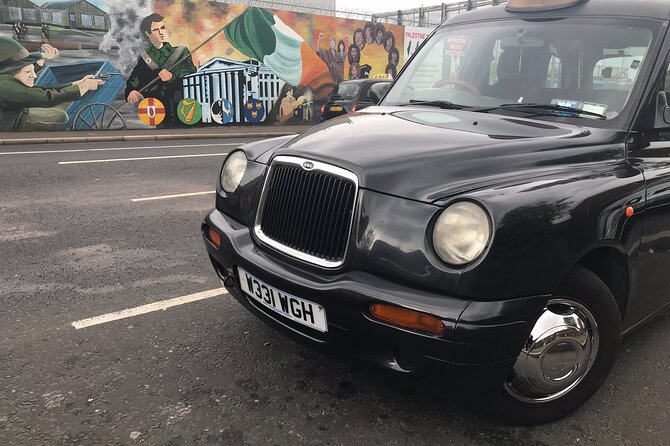
Reviewed · BLACK TAXI TOURS
World Famous Belfast City Centre Black Cab/Taxi Tour 2 Hours
Belfast’s walls still tell hard truths. This private black cab ride makes the city’s divided past easier to grasp, with local guides explaining murals, former conflict sites, and the lives behind the headlines. I like the small private setting, and I like the included hotel or port pickup, which saves you from finding your way through unfamiliar streets. The main caution is that the guide’s personal viewpoint can shape the tour, and one serious complaint involved an unexpected port charge.
You’ll see the Bobby Sands mural, Falls Road, Shankill Road, Clonard Monastery, and the peace walls in about two hours. Guides such as Ricky, Brendan, Patrick, Kevin, John, and Davy have earned warm praise for clear storytelling and personal insight, but the experience is emotional and political rather than light sightseeing.
In This Review
- Key points to know before booking
- Why a black cab is a good way to see Belfast
- Divis and the narrow streets of West Belfast
- Falls Road and the Bobby Sands mural
- The International Mural Wall on Divis Street
- The unnamed nineteenth-century jail stop
- Shankill Road and loyalist Belfast
- Clonard Monastery and the road to peace
- The peace walls and Belfast today
- What the guides do best, and where the experience varies
- Is $111.11 per person good value?
- Who will enjoy this Belfast cab tour?
- Should you book it?
- FAQ
- How long does the Belfast black cab tour last?
- Is this a private tour?
- Does the tour include hotel or port pickup?
- Which parts of Belfast does the tour visit?
- Is the tour suitable for children?
- What is the cancellation policy?
Key points to know before booking
- The tour puts you inside Belfast’s divided neighborhoods, including Falls Road, Shankill Road, and the peace walls.
- Local guides often add personal memories of the Troubles, making the history human and direct.
- A private black cab keeps the group small, with only your party and the guide.
- The Bobby Sands mural and International Mural Wall show how art became a political voice.
- Hotel, port, and some city drop-off arrangements are offered, but confirm any port fee before departure.
- An early start can help, since the roads and mural areas may be quieter.
Why a black cab is a good way to see Belfast
Belfast is compact, but its political history is not easy to read from a sightseeing bus. Neighborhood names, flags, murals, gates, walls, and memorials carry meanings that are not always obvious to an outsider. A black cab gives you a local guide in a setting where you can ask direct questions without speaking in front of a large group.
The private format matters. You are not being moved through a fixed script with dozens of other people. You can ask why a mural matters, how a peace wall functions, or what changed after the Good Friday Agreement. Several guides have been praised for allowing time for photographs and questions rather than rushing from one stop to the next.
This is not just a ride past street art. The purpose is to explain The Troubles, the period of conflict that shaped Belfast from the late 1960s through the 1990s and whose effects remain visible. You will hear about republican and loyalist communities, the role of the British Army, imprisonment, political murals, bonfires, segregation, and the peace process.
The strongest guides bring lived experience. Davy grew up near the areas affected by the conflict. Ricky has been praised for personal stories and a friendly manner. Patrick, Brendan, Kevin, John, Sean, Jerry, and others have each been singled out for clear explanations, humor, patience, or a thoughtful approach. Your guide will vary, so the tone is not identical on every departure.
That variation is worth understanding before you book. Some guides present a strongly Irish republican perspective, while others make a clear effort to explain both communities. The tour is designed to cover four versions of the story, but the balance depends on the person behind the wheel. I would treat that as part of the experience, not a flaw, provided you listen critically and ask questions.
More City Tours in Belfast
- A History of Terror – Belfast City Centre Walking Tour
★ 5.0 · 2,883 reviews - Private Black Taxi Belfast City Tour
★ 5.0 · 2,188 reviews - City Sightseeing Belfast Hop-On Hop-Off Bus Tour
★ 4.5 · 2,012 reviews
Divis and the narrow streets of West Belfast
The tour begins around Divis, at the foot of the Republican Falls Road. The Divis flats became a British Army base in 1969, with troops occupying the top two floors for more than 25 years. That detail gives you an immediate sense of how closely military presence and ordinary family life existed side by side.
You also pass through a narrow street associated with scenes from the film The Name of the Father. It is a small detail, but it helps connect the physical setting to the way Belfast appeared in films and news reports. The street itself is not a grand attraction. Its value comes from the explanation of what happened in this part of the city and why the area became so strongly identified with republican Belfast.
Allow about 15 minutes here. Admission is not required, and you generally view the area from the cab with opportunities to get out where appropriate. The exact amount of time you spend outside may depend on traffic, the guide, and the questions your group asks.
Falls Road and the Bobby Sands mural
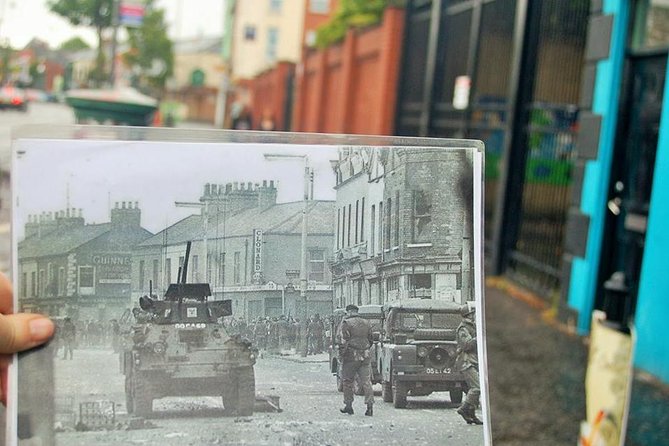
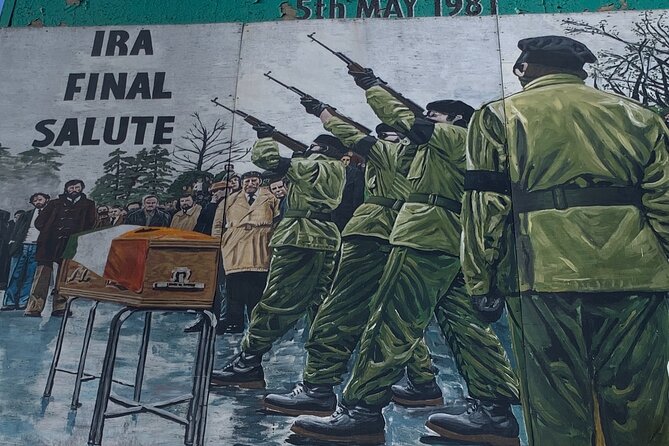
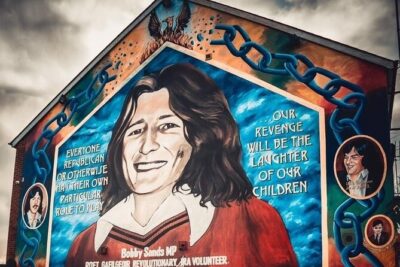
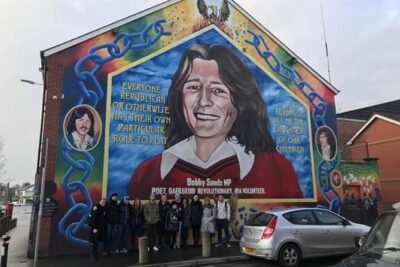
Falls Road is one of the central stops, and the Bobby Sands mural gives the tour one of its most recognizable images. Bobby Sands was a republican prisoner who died during the 1981 hunger strike. You will hear how his image became tied to republican memory and how murals helped local people present their own account of events.
The road stretches for several miles, so this stop is about more than one wall. The guide explains the long connection between Falls Road and the Provisional IRA, along with the wider story of Irish nationalism and the Catholic community in Belfast. The tour also places the conflict within a much longer account of Irish and British relations, rather than treating the Troubles as an isolated episode.
This section can feel intense. Personal stories and references to killings, imprisonment, hunger strikes, and family loss may be difficult to hear. If you prefer a gentle overview, this may feel too direct. If you want a serious explanation of how the conflict affected people who lived through it, this is one of the most useful parts of the ride.
Give yourself about 30 minutes here. You can expect plenty to look at, but the main value is the commentary. The murals are visual evidence, while the guide helps you understand who created them, which community they speak for, and why the imagery remains politically charged.
The International Mural Wall on Divis Street
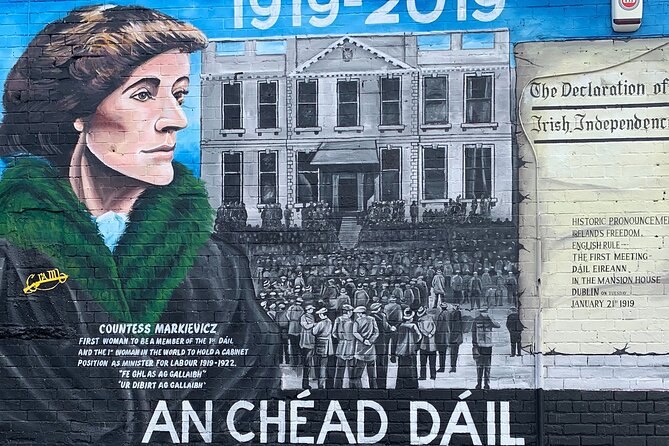
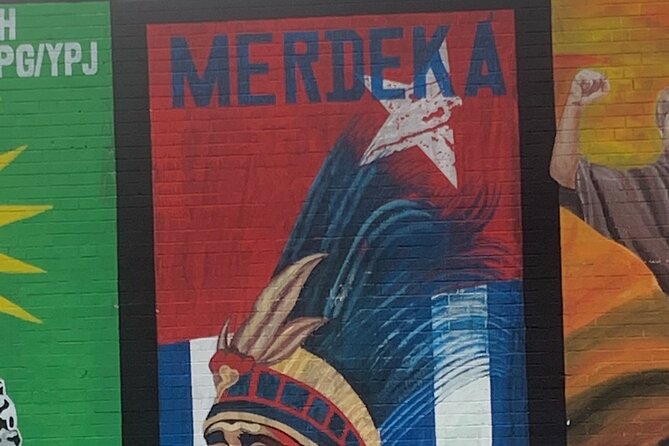
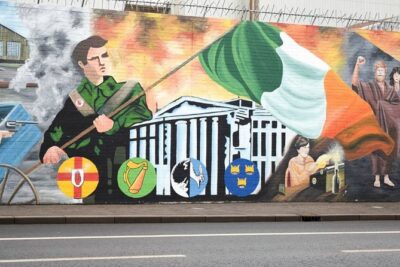
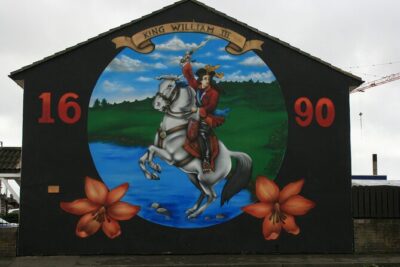
The International Mural Wall on Divis Street adds a broader political frame. The wall includes more than 40 murals, with subjects connected to Palestine, Cuba, Kurdish causes, and other international movements. The images change, so what you see is not fixed from one visit to the next.
This is an important distinction from the memorial murals on Falls Road. Some paintings focus on local deaths, prisoners, hunger strikes, or community identity. The International Mural Wall links Belfast republicanism with struggles beyond Northern Ireland. Your guide explains those connections and helps you read the political messages rather than simply photographing colorful artwork.
The stop lasts around 15 minutes. That is enough for a look and a short explanation, but not enough to study every mural in detail. If street art interests you, ask questions early and use the stop efficiently. An early departure may also make photographs easier, since the area can be quieter.
Other black taxi tours in Belfast:
- Belfast: Political Taxi Tour
★ 4.8 · 5,014 reviews - Cab Tours Belfast Famous Black Taxi Tours
★ 5.0 · 3,633 reviews - Belfast: Murals Taxi Tour
★ 4.9 · 2,047 reviews - Belfast’s Political Mural Taxi Tour
★ 5.0 · 1,180 reviews
The unnamed nineteenth-century jail stop
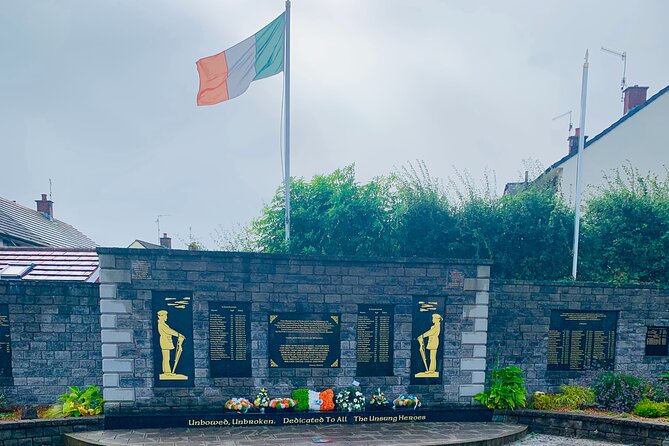
The route includes a jail built in the 1800s that also operated as a hanging gaol. It held members of the IRA, UVF, UFF, and INLA until it closed in the 1990s. The prisoners were released as part of the changes connected with the Good Friday Agreement.
This stop adds a necessary piece to the story. Murals show how communities remember the conflict, but a jail shows how the state and paramilitary groups dealt with those accused or convicted of violence. The guide can explain how imprisonment affected republican and loyalist communities, and why the release of prisoners became such a difficult part of the peace process.
The supplied details do not give a formal admission visit or a clear interior tour. Plan to hear about the site from the cab rather than assume you will spend time inside. That is worth confirming if the jail is a major reason for your booking.
Shankill Road and loyalist Belfast
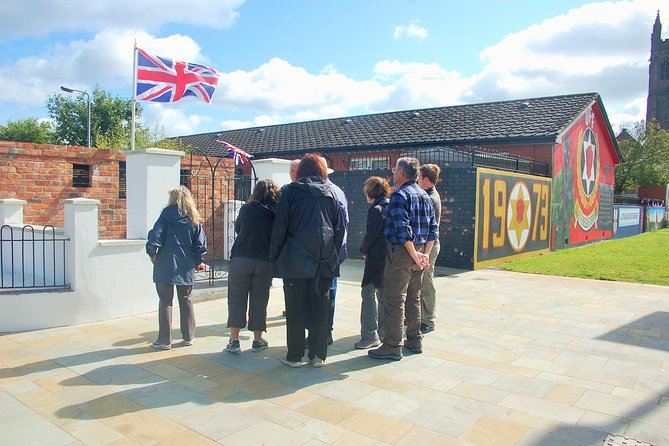
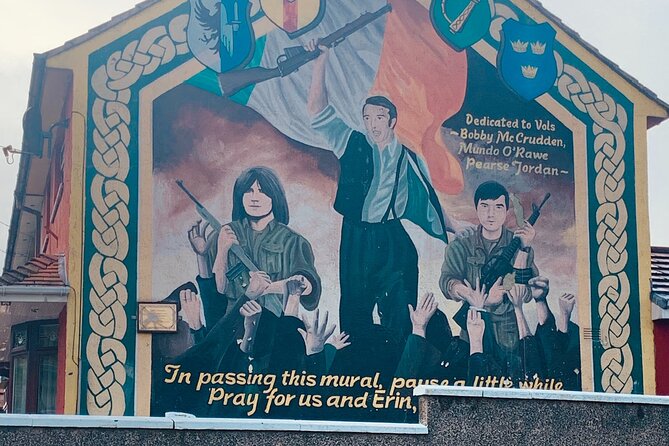
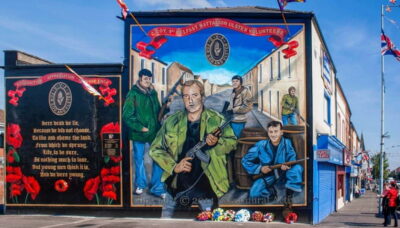
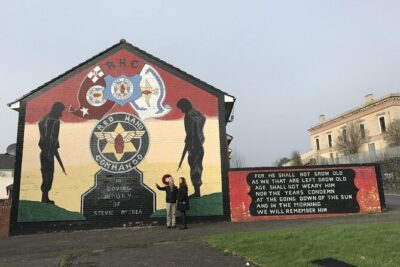
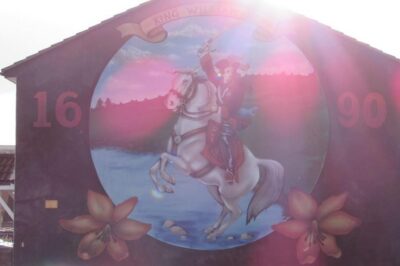
Crossing to Shankill Road changes the political viewpoint. This is the heart of loyalist Belfast, associated with the UDA and UVF. Murals here reflect Protestant and British identity, the defense of the union with the United Kingdom, and the fear of attack from the IRA.
The guide also discusses the Twelfth of July bonfires, an important part of loyalist tradition. These events are not simply tourist decoration. They relate to history, religious identity, political control, and competing memories of British and Irish rule. A good explanation helps you understand why the same city can treat a symbol as proud heritage in one neighborhood and as a threat in another.
I value this part because it prevents the tour from becoming a one-sided walk through republican history. However, the quality of the balance depends on your guide. One guide may explain the loyalist community with care and detail, while another may spend more time on personal opinion. Ask for the background behind the images and traditions, not just the names of paramilitary groups.
You have about 20 minutes on Shankill Road. That is enough for several murals and a focused explanation. It is not a full social history of loyalist Belfast, so keep your expectations realistic.
Clonard Monastery and the road to peace
Clonard Monastery provides a calmer setting and a link to the peace process. The Gothic monastery was created by Italian craftsmen and local workers. Its most important connection for this tour is political: Father Alex Reid hosted secret peace talks involving Gerry Adams and John Hume.
That story shows how progress often happened away from official public meetings. The monastery was not merely a religious building in the background. It became connected with quiet efforts to bring opposing sides into contact, a process that helped lead toward the Good Friday Agreement.
The stop lasts around 10 minutes. You may not have time for an extended architectural visit, but the building gives the guide a useful place to explain negotiations, trust, and the difficult compromises behind peace. The monastery also breaks up the more confrontational tone of the murals and former security sites.
The peace walls and Belfast today
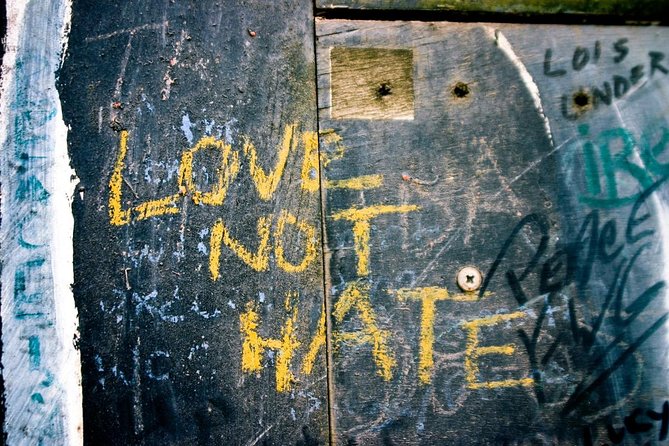
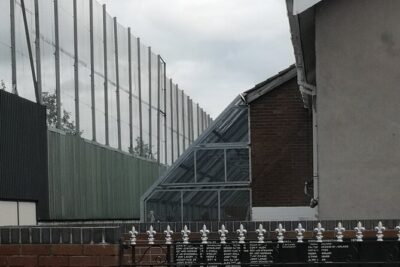
The peace walls are the tour’s clearest reminder that the conflict is not only history. Built from 1969 onward to keep loyalist and republican communities apart, the walls stretch through parts of Belfast and continue to shape movement between neighborhoods.
You may see messages for peace written by public figures, including President Clinton, Tiger Woods, and Morgan Freeman. These signatures are visually memorable, but the wall’s real importance is practical. It represents separation that has lasted long after the formal end of the Troubles.
This is a place to ask what peace means on the ground. The Good Friday Agreement brought a political settlement and helped produce prisoner releases, but it did not erase every division. The tour presents Belfast as a changing city, while showing that some barriers remain.
The stop lasts about 15 minutes. You can take photographs, but remember that this is tied to painful memories for local residents. Listen first, photograph respectfully, and avoid treating the wall as a simple backdrop.
What the guides do best, and where the experience varies
The most praised part of this tour is the guide. John R. has been appreciated for presenting a balanced account rooted in his own experience. Brendan has been praised for patience, warmth, and a willingness to answer questions. Kevin has helped first-time visitors understand the city’s complicated past through an approachable, personal style.
Several guides add details that a standard museum display cannot. Davy speaks from growing up near the conflict. Ricky has been described as personable and full of striking personal stories. Sean has been praised for stopping often enough to allow photographs, while Jerry turned the two hours into a memorable history lesson for one couple.
Still, you should not assume every guide will deliver the same performance. One dissatisfied customer felt the driver spent too much time giving opinions and did not visit enough of the promised sites. Another said a port charge became a major distraction during the tour. These complaints are not the general pattern, but they point to two sensible precautions: confirm the route and confirm the pickup cost before you set off.
The rating is 4.7 from 177 reviews, with 93 percent recommending the experience. That is a strong record, but it does not remove the need to stay engaged. You will get more from the tour if you ask for the loyalist and republican explanations, request clarification when a claim sounds one-sided, and keep in mind that personal memory is valuable but not the only form of history.
Is $111.11 per person good value?
At $111.11 per person, this is not a cheap way to spend two hours. It becomes better value when you are traveling as a small group and want a private guide, door-to-door transport, air conditioning, and the freedom to ask questions. The price includes private transport, a professional guide, WiFi on board, and pickup and drop-off at a hotel or port.
For one or two people, the cost may feel high compared with a group walking tour. The tradeoff is comfort and privacy. You can remain in the cab between stops, avoid navigation, and shape the conversation around your own level of interest.
The port arrangement needs special care. The stated inclusions say port pickup and drop-off are provided, but one customer reported being asked for an additional £50 port charge. Another person used a drop-off at the Titanic Museum, which made the tour especially convenient. Ask the operator to confirm in writing that your exact port pickup and return are included, and ask about any local port fee.
The tour is often booked about 76 days ahead, so it is sensible to reserve early if your Belfast schedule is fixed. Free cancellation is available up to 24 hours before the start time. Poor weather or failure to reach the minimum number of participants can lead to a changed date or full refund.
Who will enjoy this Belfast cab tour?
I would choose this experience if you want context rather than a quick photo stop. It suits history fans, people who remember news coverage of the Troubles, and anyone who wants a local explanation of why Belfast still has divided neighborhoods and political murals.
It also works well for a first visit. Hotel pickup removes a layer of planning, and the route connects several places that are not easy to interpret on your own. Families can participate, but children must be accompanied by an adult, and the subject matter may be too heavy for young children.
You should think twice if you want a neutral, academic lecture with no personal stories. The power of the tour comes from guides who lived through the era or grew up close to it. That can make the experience moving and authentic, but it can also bring strong opinions.
Most people can take part, service animals are allowed, and the tour is offered in English. Since it lasts about two hours, it is a manageable addition to a busy Belfast day.
Should you book it?
Yes, if you want a compact, personal introduction to Belfast’s political past. The route covers the essential symbols: Divis, Falls Road, the Bobby Sands mural, the International Mural Wall, Shankill Road, Clonard Monastery, and the peace walls. The best guides turn those places into a human story rather than a list of street names.
Before paying, confirm your pickup point, any port fee, and the stops you expect to see. If you do that, the private format and strong guide record make this a worthwhile use of two hours, especially early in your Belfast visit.
FAQ
How long does the Belfast black cab tour last?
The tour lasts approximately two hours.
Is this a private tour?
Yes. Only your group participates, and transport is provided in a private vehicle.
Does the tour include hotel or port pickup?
Hotel and port pickup and drop-off are listed as included. If you are using a port, confirm the arrangement and ask specifically about any possible port charge before the tour.
Which parts of Belfast does the tour visit?
The route includes Divis, Falls Road and the Bobby Sands mural, the International Mural Wall on Divis Street, Shankill Road, Clonard Monastery, the peace walls, and a nineteenth-century jail site.
Is the tour suitable for children?
Children must be accompanied by an adult. The tour covers violence, imprisonment, political conflict, and loss, so you should decide if that subject matter suits your child.
What is the cancellation policy?
You can cancel at least 24 hours before the start time for a full refund. Cancellations or changes made less than 24 hours before the start time are not accepted for a refund. Poor weather or failure to meet the minimum number of participants may result in another date or a full refund.
More 2-Hour Experiences in Belfast
- 2 Hour Private Belfast Taxi Cab Tour of Troubles & Peace walls
★ 5.0 · 240 reviews - 2 hours Belfast Original Drivers The Troubles Black Taxi Tour
★ 5.0 · 227 reviews - Original Private Belfast Troubles and Peace Cab/Taxi Tour 2 Hours
★ 5.0 · 90 reviews - Original Drivers Belfast Taxi/Cab Tour 2 hour private adventure
★ 5.0 · 74 reviews
Newest reviews from Belfast
- VIP Skip-the Line Titanic Museum and Whiskey Tasting Tour★ 4.8 · 11 reviews
- Giants Causeway Private Tour★ 5.0 · 3 reviews
- Titanic Eastside Bike Tour★ 5.0 · 9 reviews
- Private Half Day Winter Magic in the Antrim Glens★ 5.0 · 2 reviews
- The Single Cask Whiskey Experience★ 5.0 · 6 reviews
- This is Belfast Walking Tours. Our history, our culture.★ 5.0 · 7 reviews
- St Patrick’s Centre & Burial Site + Hillsborough Castle & Gardens★ 5.0 · 2 reviews
- Shore Excursion from Belfast to Giants Causeway & Rope Bridge★ 5.0 · 2 reviews
Black Taxi Tours, compared.
Browse the lists this tour appears in