Reviewed · MURALS & PEACE WALL TOURS
Derry City: The Troubles Bogside Walking Tour.
History here is painted on the walls.
Derry City’s Troubles Bogside Walking Tour takes you through the places at the heart of the Civil Rights movement, Bloody Sunday, the Battle of the Bogside, and the road to the Irish Peace Process. I like the first-person guiding, especially when local guides such as Noel and John explain what it was like to live through these events. I also like the compact route, which covers major sites without asking you to walk far.
The main consideration is emotional weight. Bloody Sunday and the wider Troubles are presented plainly, with personal stories of injury, loss, and injustice. One practical wrinkle is that free tours may also be advertised outside the Museum of Free Derry, so the $30 price can feel unclear when you arrive. Still, the detail and lived experience make this a strong choice for anyone who wants more than a quick look at the murals.
In This Review
- Key points to know before you book
- Starting outside the Museum of Free Derry
- Reading the Bogside murals as a timeline
- Standing at the Bloody Sunday site
- Understanding the Civil Rights story and Battle of the Bogside
- The Free Derry Wall and the meaning of the name
- The Irish hunger strikes and the road to peace
- How the guiding shapes the experience
- Is $30 good value for 90 minutes?
- Practical details for planning your visit
- Who should book the Bogside walk?
- Should you book it?
- FAQ
- Where does the Troubles Bogside Walking Tour begin?
- Where does the tour finish?
- How long does the tour last?
- What language is the tour conducted in?
- Is the tour wheelchair accessible?
- Does the tour visit the Bloody Sunday site?
- Is the Museum of Free Derry included?
Key points to know before you book
- The tour begins and ends outside the Museum of Free Derry, making it easy to combine both experiences.
- Bloody Sunday is the central story, with the route visiting the place where the massacre happened.
- The Bogside murals are life-size history lessons, each linked to a specific event or part of the Troubles.
- Guides lived through the conflict, and some, including Noel and John, have deeply personal connections to Bloody Sunday.
- The walk lasts about 90 minutes and is wheelchair accessible, with little distance covered according to several detailed accounts.
- The English-language tour costs $30 per person, with free cancellation up to 24 hours before the start.
Starting outside the Museum of Free Derry
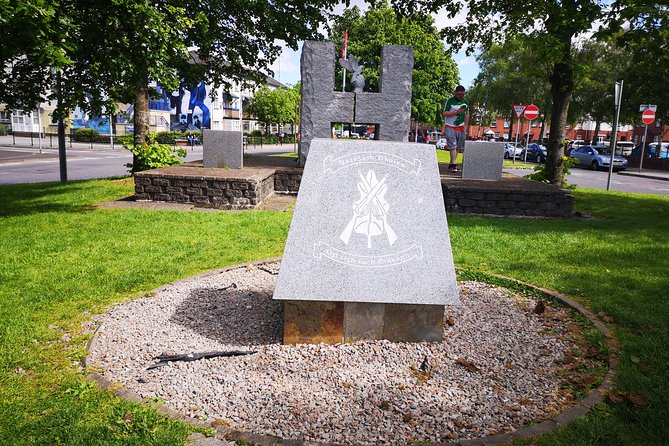
Your meeting point is outside the Museum of Free Derry in the Bogside. This is a fitting place to begin because the museum gives the walking route a clear setting before you even move into the streets.
The tour begins and ends here, so you can visit the museum before or after the walk. The museum is not listed as part of the walking tour itself, so plan on treating it as a separate stop. Allowing about an hour afterward is a sensible idea if you want to see the indoor exhibits as well.
I like this arrangement because the museum and the streets do different jobs. The museum can give you documents, objects, and a tighter chronological account. The walk then places those events in the actual neighborhood, where the murals and streets connect the story to real places.
The meeting point is also useful for anyone arriving in Derry with limited time. You do not need transport between the meeting point and the main stops. The route stays in the Bogside, and the walk covers a fairly short distance.
More City Tours in Derry~Londonderry
- Private Guided Walking Tour in Derry City
★ 5.0 · 635 reviews - Derry City: The troubles Bogside walking tour
★ 5.0 · 503 reviews - Derry: McCrossan’s Public Walking Tour of the Historic City
★ 4.8 · 329 reviews
Reading the Bogside murals as a timeline
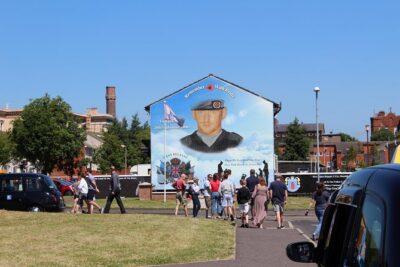
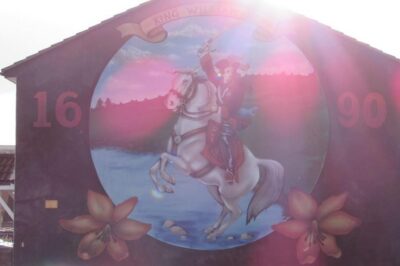
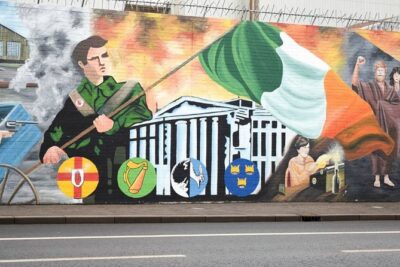
The murals are not simply colorful backdrops for photographs. They are the visual record of a community shaped by civil rights protests, confrontation, imprisonment, hunger strikes, and political change.
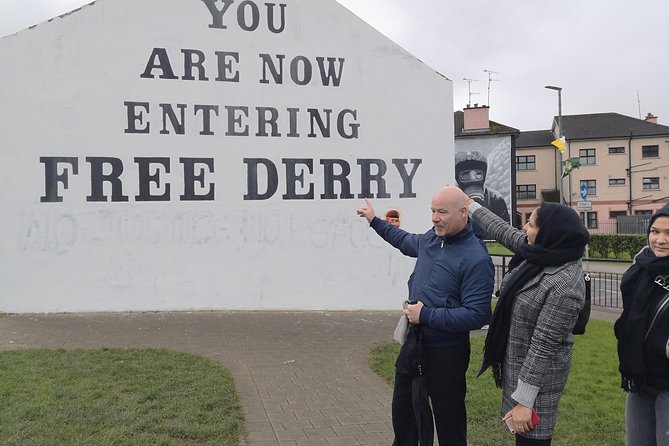
Your guide takes you from mural to mural and explains the event behind each life-size image. That extra context matters. Without a guide, you might recognize a face, symbol, or date but miss how it fits into the wider story.
The murals help break a difficult subject into sections. One image may introduce the Civil Rights period. Another may point toward the Battle of the Bogside. Others connect with the hunger strikes or the struggle that eventually led to the peace process.
I find this part especially useful for first-time visitors because it gives the neighborhood a visual order. You are not just hearing a long list of names and dates. You are moving through a public record created in the very community being discussed.
The route also makes clear that the Troubles were not an ancient conflict. The events are recent, and the people explaining them lived through them. That closeness can be surprising if your understanding comes mainly from books or television.
Bring a camera for the Free Derry Wall and the murals, but give the guide your attention first. The photographs are easy to take. The personal explanation is the part you cannot reproduce later.
Standing at the Bloody Sunday site
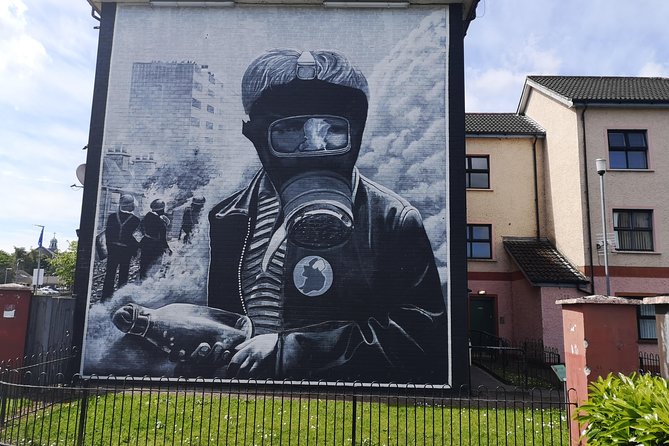
The most serious stop is the site of the Bloody Sunday massacre. On January 30, 1972, British soldiers shot civil rights marchers in Derry. The tour explains what led to the march, what happened that day, and the long campaign by families for acknowledgement and justice.
This is where the tour becomes more than a general introduction to the Troubles. Guides have spoken about being present during Bloody Sunday, and some have direct family connections to those who were killed. John has explained that his brother William was among the victims. Noel has also been described as an eyewitness who grew up in the Bogside.
That kind of account changes the pace of the visit. You are not simply being given a polished civic-history talk. You are hearing how an event affected a family and a neighborhood. The tone is often calm and measured, but the subject is painful.
Several guides have been praised for telling the story with compassion rather than anger. That does not mean the account is detached. It means the focus stays on what happened, who was affected, and how the community dealt with the aftermath.
You should expect this stop to be moving. It may be uncomfortable, particularly for anyone unfamiliar with the details of Bloody Sunday. The guide allows questions, and the personal approach can make the history clearer, but it also makes the story harder to keep at a safe distance.
Understanding the Civil Rights story and Battle of the Bogside
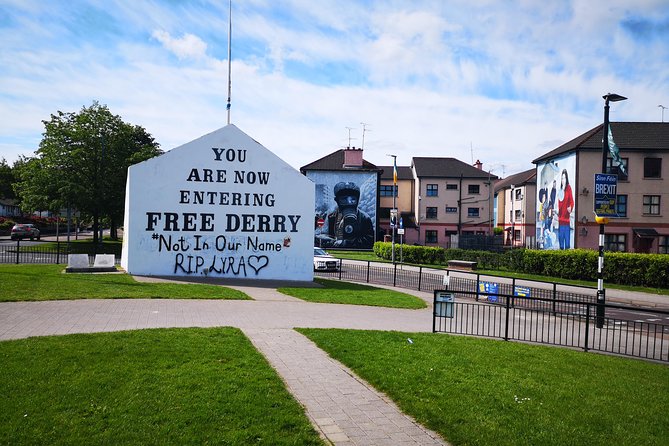
Bloody Sunday did not appear out of nowhere. The tour sets it within the earlier Civil Rights campaign and the tensions that had been building in Northern Ireland.
You learn about discrimination, protest, policing, and the growing conflict in Derry. The Battle of the Bogside is another major part of the route. This confrontation helped mark the beginning of the Troubles, and the guide explains how local events connected with the wider crisis.
The value here is the sequence. You hear about the conditions that led to protest, the response to those protests, and the way violence spread. That is more useful than treating the Troubles as a single block of history beginning and ending with Bloody Sunday.
Mick Kinsella has been praised for explaining the Battle of the Bogside clearly. Other guides bring their own memories and family connections. The exact guide may vary, so the emphasis can shift slightly, but the main subjects remain the same.
I would not book this walk expecting a neutral, academic lecture in the style of a university seminar. It is a community-based account, told by people with a strong connection to the place and events. That personal position is part of its value, but you should listen with an awareness that history can be remembered and presented from more than one viewpoint.
At the same time, the available descriptions of the tour point to a balanced approach. Guides explain the wider background, answer questions, and focus criticism on decisions and systems rather than simply directing hostility toward people living on the ground. That is important in a subject where easy slogans can replace real understanding.
More Walking Tours in Derry~Londonderry
- Walking Bogside History Tour in Guildhall
★ 5.0 · 280 reviews - Derry: Bloody Sunday and Bogside Murals Walking Tour
★ 5.0 · 227 reviews - Derry City: The Bloody Sunday Story – Walking Tour
★ 5.0 · 186 reviews - Derry City: The Bloody Sunday Story Walking Tour
★ 4.9 · 64 reviews
The Free Derry Wall and the meaning of the name
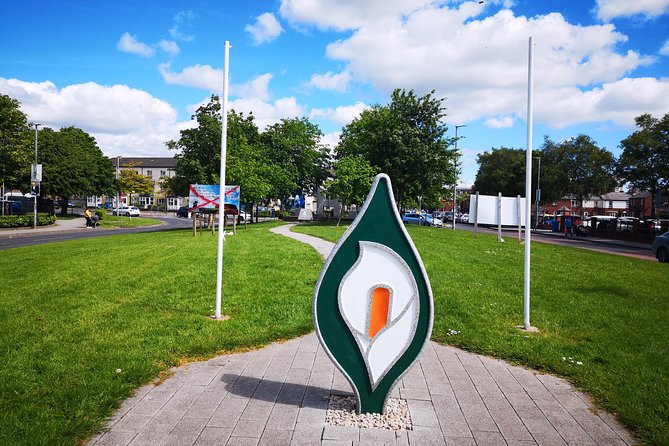
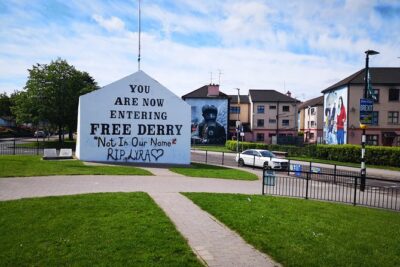
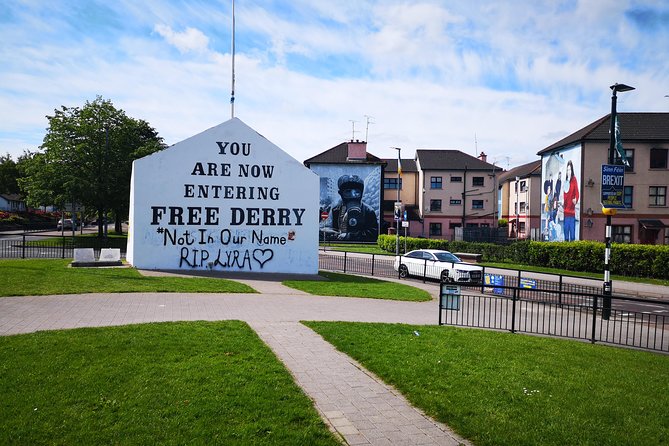
The Free Derry Wall is the tour’s most recognizable photo stop. The large painted message has become a symbol of the Bogside and its resistance during the Troubles.
Your guide explains why the wall mattered and how it relates to the community’s struggle. A photograph here is expected, but the stop works best when you understand the political and social meaning behind it.
This is one of the less emotionally intense moments of the walk, though it still carries weight. The wall is a place of public memory, not just a famous sign. Your guide can help you see why it became known around the world.
Because the walk begins and ends nearby, you can return to the museum after taking your photo. I would avoid rushing away immediately. The wall, murals, and surrounding Bogside streets make more sense when you have heard the story in order.
The Irish hunger strikes and the road to peace
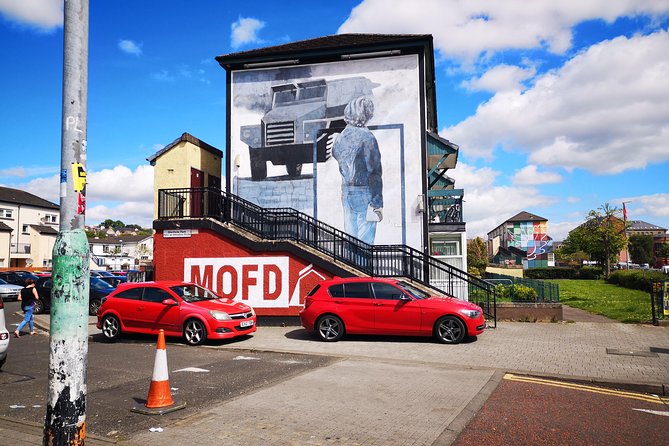
The tour also covers the Irish hunger strikes and the later Irish Peace Process. These subjects broaden the experience beyond the early years of the Troubles.
The hunger strikes show how political prisoners and supporters used protest, sacrifice, and public pressure. The peace process then moves the story toward the 1998 agreement and the difficult work of ending a conflict that had lasted about 35 years.
This final section keeps the tour from becoming a simple account of violence and loss. You also hear about political change, negotiation, and the hope that followed the agreement. Guides have spoken about wanting a better future for their children and grandchildren, which gives the closing part a human note.
Do not expect the walk to claim that every issue has been settled. Some families still seek justice and official accountability. The tour presents peace as a major achievement, but not as a neat ending that erased all pain.
That honesty is one reason the experience feels current. The Troubles belong to the recent past, yet their effects remain part of public life in Derry.
How the guiding shapes the experience
The guide is the heart of this tour. Noel is frequently praised for his clear, unhurried delivery, humor, and personal account of life during the Troubles. John has made a strong impression with his connection to Bloody Sunday and his family’s loss. Dave has also been praised for sharing his story with compassion, while Mick Kinsella has received particular credit for explaining the Battle of the Bogside.
You may not receive the same guide on every departure, but the format depends on local experience. The guides are English-speaking and invite questions, so this is a good tour for people who want conversation rather than a recorded narration.
Several accounts describe guides as willing to answer detailed questions after the formal walk. That can be especially useful if you already know the basic timeline and want to understand how events affected ordinary families.
The humor mentioned in connection with Noel should not be misunderstood. It does not turn the subject into entertainment. A little warmth can help a group stay focused during a difficult 90 minutes.
Group size is not specified, so I would not book assuming a private walk or guaranteed one-to-one time. Some accounts describe a comfortable group and clear speaking, but the exact feel will depend on the departure.
Is $30 good value for 90 minutes?
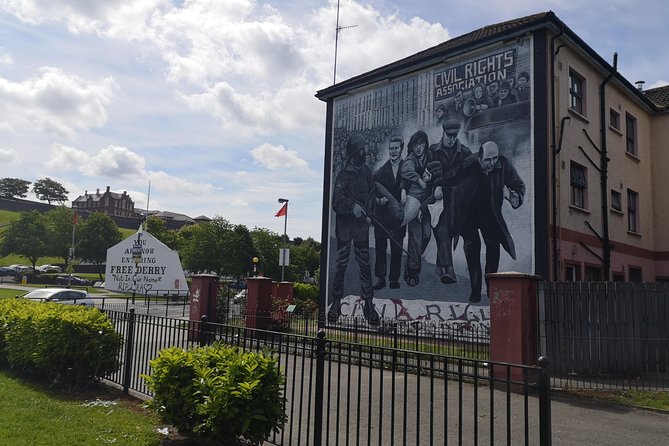
At $30 per person, this is not the cheapest way to see the Bogside. You can walk around the area independently, photograph the murals, and read about Derry elsewhere.
The difference is the interpretation. You are paying for a local guide who can connect the sites, explain the timeline, answer questions, and provide memories that are not visible on a wall. For someone interested in Irish history or modern conflict, I think that makes the price reasonable.
The strongest value comes from the personal accounts. A museum can show objects from the period, but a guide who lived through the Troubles can explain how those events felt inside the community. That cannot be replaced by a plaque.
There is one point to clarify before booking. A free walking tour may be advertised outside the Museum of Free Derry, and one person arrived without having tickets checked. If you are comparing options at the door, ask exactly what the paid tour includes and how it differs from the free offering.
The paid experience makes the most sense if you want a structured route and a guide with direct personal experience. If you only want to see the murals and Free Derry Wall, a self-guided visit may be enough.
Practical details for planning your visit
The tour lasts about 1.5 hours and begins and ends outside the Museum of Free Derry. It is conducted in English, and the route is listed as wheelchair accessible.
The walk itself is not long. Several detailed accounts describe covering little ground while receiving a large amount of explanation. That makes it a good option if you have mobility concerns, though you should still check the conditions for your specific departure if you need detailed access information.
The subject matter is more important than the physical effort. You will spend time listening at several locations, so comfortable shoes are useful, but this is not a strenuous city hike.
The tour offers free cancellation up to 24 hours before the start, and you can reserve now and pay later. Starting times vary, so check availability before building the rest of your Derry day around it.
I would schedule the museum either before the walk, if you want background first, or afterward, if you prefer to encounter the neighborhood with fewer preconceptions. The tour operator specifically points visitors toward the museum at the end, and that order can work well because the walk leaves you with questions the exhibits may help answer.
Who should book the Bogside walk?
I recommend this tour to you if you want to understand Derry through its people and places, not just its postcard views. It suits anyone interested in civil rights, modern Irish history, political conflict, peacebuilding, or the human cost of government decisions.
It is also a strong choice for visitors who have read about the Troubles but still find the timeline confusing. The murals and stops give the story a physical shape, while the guide fills in the links.
Families with older teenagers may find it worthwhile, provided everyone is ready for serious material. The tour is not designed as light sightseeing, and the Bloody Sunday section can be upsetting.
You may prefer another activity if you want a cheerful stroll, a broad city tour, or a quick introduction with no difficult subject matter. This experience is focused on the Bogside and its painful recent past.
Should you book it?
Book it if you want the human story behind Derry’s murals. The route is short, the cost is reasonable for a personal account, and the guides bring direct experience of the Troubles to places that can otherwise seem like outdoor exhibits.
I would pair it with the Museum of Free Derry and leave time afterward to think about what you have heard. Ask about the paid tour if free walks are being promoted outside the museum, and be prepared for an emotional 90 minutes.
For an authentic introduction to the Bogside, this is one of Derry’s most worthwhile choices. Its strength is not the distance covered. It is the voice explaining what happened, where it happened, and why the memory still matters.
FAQ
Where does the Troubles Bogside Walking Tour begin?
The meeting point is outside the Museum of Free Derry in the Bogside.
Where does the tour finish?
The walking tour begins and ends outside the Museum of Free Derry.
How long does the tour last?
The tour lasts approximately 1.5 hours.
What language is the tour conducted in?
The tour is conducted in English with a live English-speaking guide.
Is the tour wheelchair accessible?
Yes, the activity is listed as wheelchair accessible.
Does the tour visit the Bloody Sunday site?
Yes. The route visits the place where the Bloody Sunday massacre took place and explains the events surrounding it.
Is the Museum of Free Derry included?
The tour begins and ends at the museum, and you can visit the Museum of Free Derry after the walk. The walking tour information does not state that museum admission is included in the $30 price.
More Walled City Tours
- Discover the City Walls – Small Group Public or Private Tour
★ 5.0 · 160 reviews - Discover the City Walls – Small Public Group or Private Tour
★ 4.9 · 39 reviews - Derrie Danders: Highlights of the Walled City a Self-Guided Audio Tour
★ 5.0 · 30 reviews - From Belfast: Giants Causeway and the Walled City of Derry
★ 4.7 · 8 reviews
More Murals & Peace Wall Tours in Derry~Londonderry
- Bogside Political Tour
★ 4.9 · 8 reviews - Belfast: Political Taxi Tour
★ 4.8 · 5,014 reviews - Belfast: Political Conflict 3-Hour Walking Tour
★ 4.6 · 2,215 reviews - Belfast: Murals Taxi Tour
★ 4.9 · 2,047 reviews
Newest reviews from Derry~Londonderry
- Derrie Danders: Wander around the Waterside on a self-guided GPS audio tour★ 4.5 · 3 reviews
- Derrie Danders: Unveiling Derry’s Dark & Haunted Past Audio Tour★ 4.5 · 3 reviews
- Derrie Danders: A Self-Guided Audio Tour of the Riverside and South City★ 5.0 · 3 reviews
- Giant’s Causeway & Game of Thrones (luxury Private Tour)★ 5.0 · 15 reviews
- Londonderry Private Walking Tour With A Professional Guide★ 5.0 · 2 reviews
- Full-day private tour from Game of Thrones Odyssey★ 5.0 · 2 reviews
- Full Day Private Luxury Tour of Causeway Coast (Giants Causeway)★ 5.0 · 5 reviews
- Derry/Londonderry – Darker History Walking Tours★ 5.0 · 2 reviews
Murals & Peace Wall Tours, compared.
The Troubles Walls & Bridges Guided Walking Tour
Read our review →