
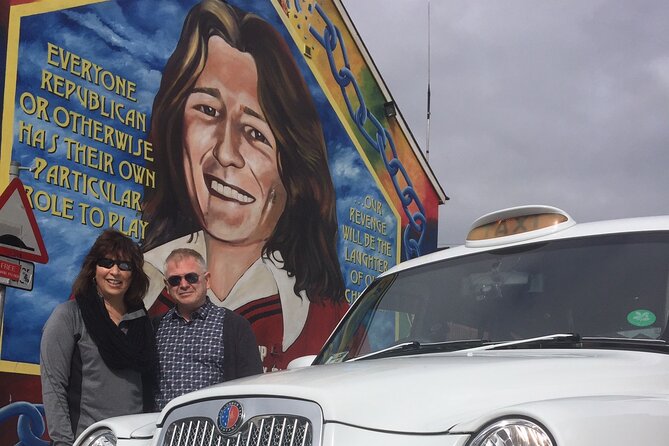
Reviewed · BLACK TAXI TOURS
Express Terror and Peace 90 min Private Belfast Cab /Taxi Tour
Belfast’s walls still speak plainly. I like the way this private black cab tour links murals, prisons, churches, and streets to the political events behind them, and I like that you cover far more ground than on foot. The chance to see the Bobby Sands mural, Bombay Street, Divis, and the Peace Wall in one trip gives you a clear introduction to Belfast’s recent past.
The main consideration is the price: $178.26 per person is a serious outlay, especially if you are traveling alone or as a couple. The advertised duration also needs checking, since the title says 90 minutes while the tour details describe about two hours. Still, the small private format and the depth of the guide’s commentary can make this worthwhile for anyone who wants context rather than a quick photo stop.
In This Review
- Key points to know before booking
- Why a black cab works well in Belfast
- Divis Flats and the beginning of the Troubles
- The International Mural Wall on Divis Street
- Bombay Street and the memory of displacement
- Falls Road Library and the Bobby Sands mural
- Clonard Monastery and the quiet side of peace talks
- Peace Wall: a symbol that is still physically present
- Crumlin Road Gaol and the old courthouse
- Shankill Road and loyalist Belfast
- Shankill murals and the second half of the story
- Guide quality and what the reviews tell me
- Price, timing, and pickup details
- Who will get the most from this tour
- Should you book the Belfast private cab tour?
- FAQ
- How long does the Belfast private cab tour last?
- Is the tour private?
- Where can pickup take place?
- Is cruise port pickup included?
- Is airport or train station pickup included?
- What language is the tour offered in?
Key points to know before booking
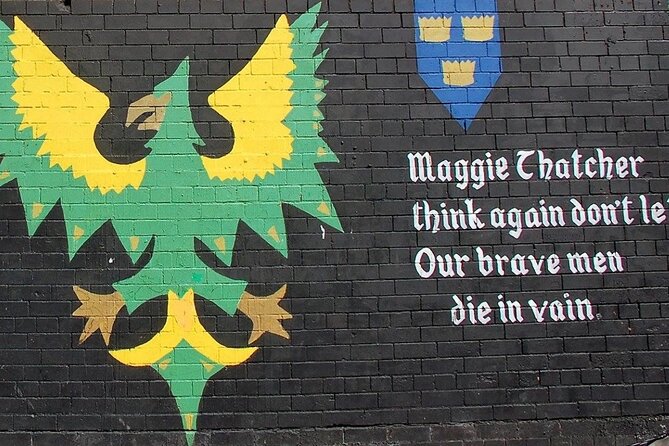
- Private pickup within 1 kilometer of Belfast City Hall: Your group rides alone, with collection available in central Belfast.
- The tour connects both sides of the divide: You visit Republican areas around Falls Road and loyalist areas around Shankill Road.
- Bobby Sands mural included: The stop at Falls Road Library gives important context about the 1981 hunger strike.
- More than 60 murals at Divis Street: The International Mural Wall includes subjects such as Nelson Mandela, Ukraine, and Palestine.
- A guide-led look at peace talks: Clonard Monastery is linked with secret discussions between Gerry Adams and John Hume.
- Allow for a moving, serious experience: This is a history and politics tour, not a light sightseeing ride.
Why a black cab works well in Belfast
Belfast’s political story is written across several neighborhoods, not packed into one museum. A walking tour can show you one district in detail, but a taxi lets you cross between Falls Road, Divis, Clonard, Crumlin Road, and Shankill Road without losing time or energy.
I like that the vehicle is used as a moving classroom. You are not simply driven past murals. The guide explains why they are there, who they honor, and how symbols differ from one street to the next. That matters in Belfast, where a wall can function as a memorial, a political statement, a warning, or a message aimed at the wider world.
The private setup also changes the tone. You can ask direct questions without worrying about holding up a large group. A strong guide may spend more time on the 1981 hunger strike, the peace process, or the meaning of a particular mural if that is what interests you.
This is not a polished sightseeing loop that avoids difficult subjects. You will hear about shootings, displacement, prison life, paramilitary groups, hunger strikes, and the continuing presence of peace walls. I would choose it early in a Belfast visit, since it gives you background for places you may later see on your own.
Other black taxi tours in Belfast:
- Belfast: Political Taxi Tour
★ 4.8 · 5,014 reviews - Cab Tours Belfast Famous Black Taxi Tours
★ 5.0 · 3,633 reviews - Private Black Taxi Belfast City Tour
★ 5.0 · 2,188 reviews
Divis Flats and the beginning of the Troubles
The first stop is Divis, at the start of the Falls Road area. The Divis Flats became closely tied to the upheaval of the late 1960s, including the riots of 1966 that helped set the stage for the period known as the Troubles.
The British Army occupied the flats until 2007, a detail that shows how long the security presence lasted. Your guide can help you see Divis as more than a collection of buildings. It was a place where ordinary housing, military control, and political conflict met in a very visible way.
You have about 10 minutes here, with no admission charge. That is enough for an orientation and photographs, but not a long architectural visit. The value comes from the explanation, so listen closely rather than treating this as a quick backdrop.
The International Mural Wall on Divis Street
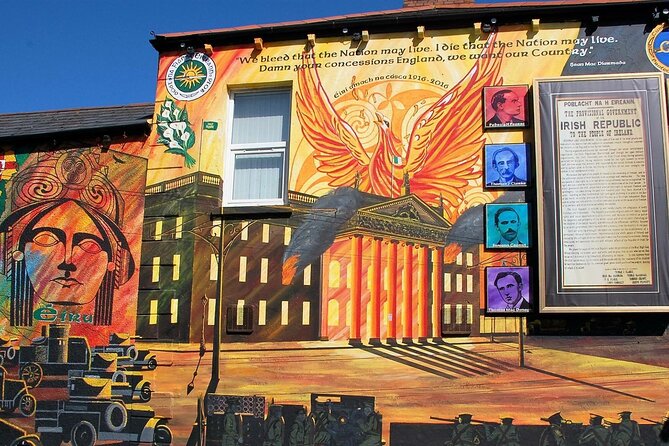
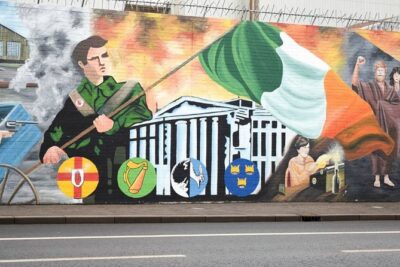
The International Mural Wall is one of the most visually striking parts of the route. It carries more than 60 murals, and the subjects change as world events change. Nelson Mandela, Ukraine, and Palestine are among the themes connected with the wall.
This is useful because it widens the story beyond Northern Ireland. The murals show how local political art can connect with international struggles. They also make clear that there are competing versions of justice, identity, freedom, and oppression.
I would give this stop your full attention. It can be tempting to photograph every panel, but the guide’s comments help you understand why the wall has two sides to many stories. The murals are not neutral decoration, and the point is not simply to decide which one looks best.
The planned stop is about 15 minutes. That works for a focused introduction, though you may wish for more time if murals are a major interest. Since the work changes, the exact visual experience can differ from one visit to the next.
Bombay Street and the memory of displacement
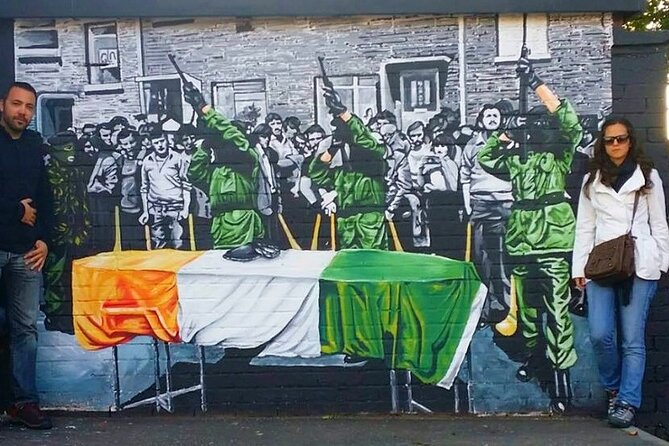
Bombay Street is a key stop because it is connected with the violent upheaval of 1969. Thousands of people were displaced or forced from their homes, and houses were burned in the unrest involving police and loyalists.
The area is also described as the birthplace of the Provisional Irish Republican Army. That makes it a politically charged place, and the guide’s job is especially important here. You need the sequence of events and the local perspective, not just a label attached to a street.
The 15-minute visit should give you time to take in the setting and ask questions. I would listen for the distinction between the events that drove people from their homes and the later political and military responses. Simplified explanations can make Belfast seem easier to understand than it really is.
This stop may be difficult for anyone expecting a casual city tour. The subject is displacement and violence involving real communities. That seriousness is also the reason it belongs on a tour that aims to explain Belfast honestly.
More Belfast outings booked on the same trip:
- Belfast: The Titanic Experience with SS Nomadic Visit
★ 4.7 · 7,163 reviews - From Belfast: Giant’s Causeway and Game of Thrones Day Tour
★ 4.4 · 7,061 reviews - From Belfast: Giant’s Causeway Full-Day Guided Trip
★ 4.8 · 6,361 reviews - Titanic Belfast Entrance Ticket: Titanic Visitor Experience Including SS Nomadic
★ 4.5 · 3,698 reviews
Falls Road Library and the Bobby Sands mural
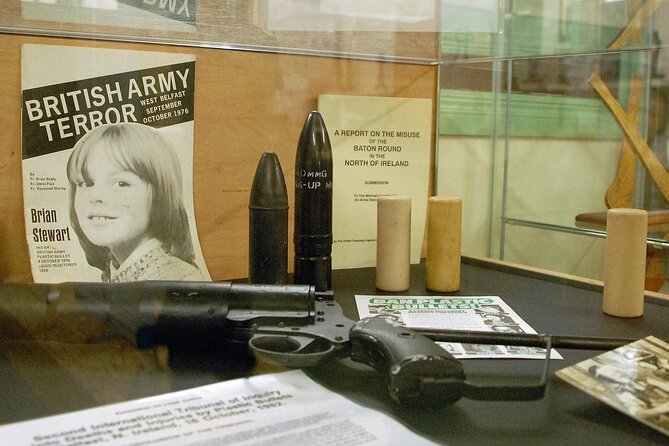
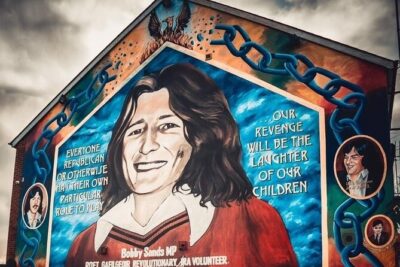
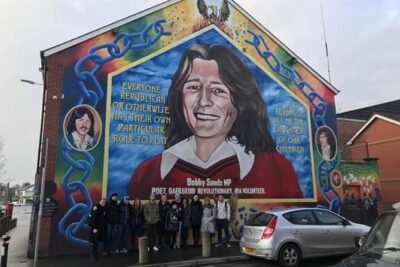
The Bobby Sands mural facing Falls Road Library is probably the best-known image on the route. Sands was an IRA volunteer and Member of Parliament who died during the 1981 hunger strike.
The library building itself adds another layer. It once served as a Royal Irish Constabulary and Black and Tans station, according to the tour information. Your guide will explain the hunger strike and the political setting around it, helping you understand why Sands became such a powerful Republican symbol.
I like this stop because it brings a huge political argument down to one building and one face. You can look at the mural, then hear how prison protest, electoral politics, nationalism, and British policy collided in 1981.
Plan on about 15 minutes. The stop is free, and the main experience is listening and looking. The mural is famous, but the surrounding explanation is what gives the visit weight. If you only take a photograph and leave, you will miss the point.
Clonard Monastery and the quiet side of peace talks
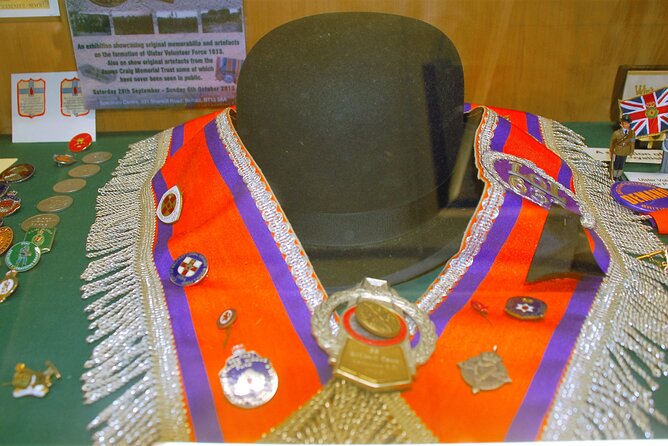
Clonard Monastery offers a different mood from the murals and security walls. It hosted secret peace discussions between Gerry Adams and John Hume, and it was later discovered that MI5 had bugged the monastery.
The building also has a local story that makes it memorable. It was built more than 100 years ago by local people and Italian workers, and the altar is said to be made with local women’s wedding rings. That detail brings the focus back from high politics to community effort and personal sacrifice.
You have about 15 minutes here. The monastery helps explain that peace did not come only through official meetings in grand government buildings. Quiet contacts, trusted intermediaries, and private conversations also mattered.
I would pay attention to the change in atmosphere. After the hard political imagery of Falls Road, Clonard gives you room to think about negotiation and the people who helped make contact possible. It is a valuable counterpoint to the more confrontational parts of the route.
Peace Wall: a symbol that is still physically present
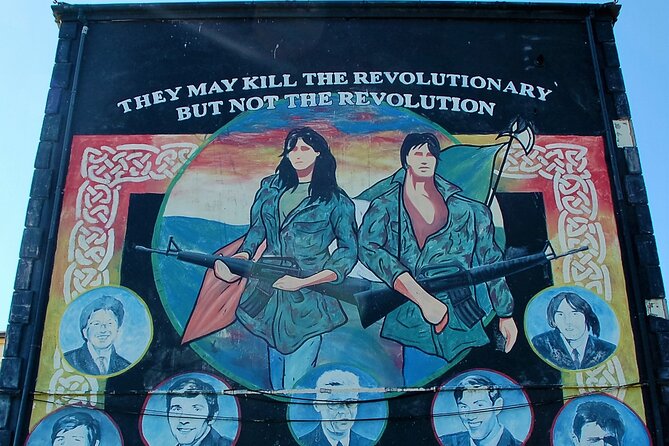
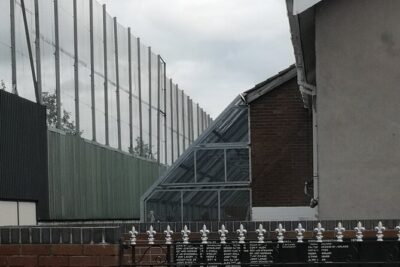
The Peace Wall is one of Belfast’s most important and uneasy sights. The first major walls were put up by the British Army in 1969, and similar barriers still remain in parts of the city.
Visitors can write messages for peace alongside comments from presidents, stars, and other public figures. That public writing gives the wall a hopeful side, but the barrier itself remains a reminder that separation has not vanished simply because the most intense violence has ended.
You get about 15 minutes here. Use the time to ask how the wall fits into daily life and the wider peace process. The physical structure is easy to photograph, but its meaning is harder. It can represent safety to one person and division to another.
This is one reason I prefer a guided visit. A photograph alone cannot tell you why the wall was built, how it functioned, or why it remains in place. The guide’s tone matters here, since a thoughtful explanation can avoid turning a painful subject into a simple tourist display.
Crumlin Road Gaol and the old courthouse
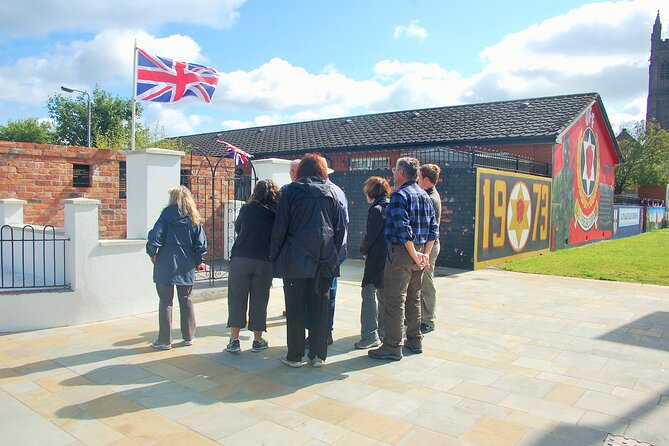
The route also takes in Crumlin Road Gaol and the courthouse. The jail was built in the 1800s and remained a hanging prison until the 1960s.
Its Troubles-era associations include successful IRA escapes and attacks involving rocket-propelled grenades. You see how Belfast’s conflict affected prisons, courts, and the state’s security system, not just residential streets.
The information provided does not give a precise stop time for this point, so treat it as a viewing and explanation from the cab unless your guide says otherwise. If you want to tour the interior of the gaol, check separately, since this experience does not include an admission ticket.
That distinction is important. This tour gives you a broad political route, while a dedicated prison visit would focus on the building itself. You may enjoy both, but they serve different purposes.
Shankill Road and loyalist Belfast
The move to Shankill Road brings you to a loyalist area with its own symbols, stories, and political memory. The road is divided into lower and upper sections and is described as one of Belfast’s oldest, with origins reaching back to 445 AD.
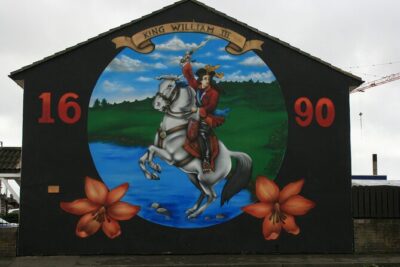
Your guide will cover William of Orange, the development of loyalism, and the roles of the UVF and UFF. The route then brings the story into the present day. If your visit is near July, you may see one of the area’s large bonfires, which are tied to loyalist identity and the annual marching season.
I value this part of the tour because it prevents a one-sided reading of Belfast. After hearing Republican accounts around Falls Road, you see how loyalist communities express British identity and remember their own history.
The planned time is about 15 minutes. Keep your camera ready, but keep your manners sharper. Murals and memorials in residential areas are not just scenery. Listen to the guide before photographing, and remember that you are moving through places where people live.
Shankill murals and the second half of the story
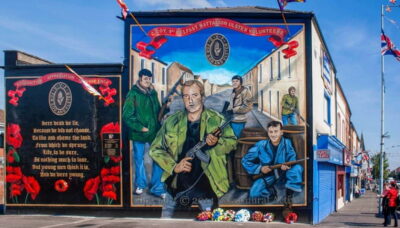
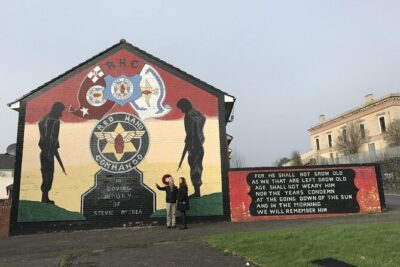
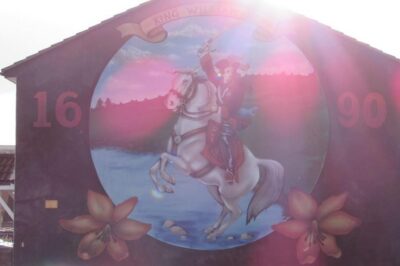
A further stop around Shankill gives you a chance to photograph loyalist murals that depict British history and loyalism. These works often use different colors, symbols, flags, and figures from those seen on the Falls Road side.
Seeing both districts in one private ride is the tour’s central strength. You are not asked to accept one community’s story as the entire story. Instead, you can compare the images, heroes, grievances, and ideas of belonging presented on each side.
The route does not turn every political question into an easy answer. That is a positive. A good guide can explain what a mural means to the people who commissioned or maintain it while still pointing out how another community may read the same history differently.
The stop is listed at about 15 minutes, with no entrance fee. The amount of time is enough for a useful introduction, though it will not allow a long walk through every side street. The taxi format keeps the route efficient.
Guide quality and what the reviews tell me
The strongest praise centers on the guides, especially Jim. One account describes him as a perfect guide who took time to explain everything and more. Another describes the guide as an accomplished historian who gave nearly two hours of background and a nuanced account of Northern Ireland’s current political situation.
That tells me you should expect the guide to shape the experience. The route is important, but the commentary is the real product. Ask questions, especially if you want more detail about the peace talks, the hunger strike, mural symbolism, or the distinction between Republican and loyalist identities.
The feedback also points to the emotional side of the tour. One assessment calls it a moving and insightful look at the Troubles, with the guide compared to a living history book. I would treat that as a fair warning as well as praise. The content can stay with you after the cab returns to the city center.
Because the experience is private, your group can set the pace within the available time. That is useful for families with older children, couples with particular interests, or anyone who prefers conversation over a scripted speech. Children must be accompanied by an adult, and the subject matter may be too heavy for young children.
Price, timing, and pickup details
The listed cost is $178.26 per person. That is not a budget ride, so the value depends on how many people are in your group and how seriously you want to study Belfast’s political past. Since the taxi is private, you are paying for a dedicated vehicle and guide rather than a shared outing.
The experience is described as approximately two hours, although the title refers to 90 minutes. I would confirm the expected duration before paying, especially if you have a train, flight, cruise transfer, or dinner reservation.
Free pickup is offered within a 1-kilometer radius of Belfast City Hall. The meeting point can be the front gates of City Hall. Cruise ship passengers can take the shuttle bus to Visit Belfast, across from City Hall, and then arrange collection there.
Pickup from an airport, train station, or cruise port is not included. A surcharge is payable on the day in cash, and cruise ship pickup is not offered because the port is several miles outside central Belfast. This is worth planning carefully, since a port transfer is not the same thing as a central hotel pickup.
The tour is offered in English, confirmation arrives at booking, and a mobile ticket is available. It ends back at the meeting point. Free cancellation is available up to 24 hours before the start time, but cancellations or changes inside that window are not refunded or accepted.
Who will get the most from this tour
I would choose this experience if you want a fast but serious introduction to Belfast’s divided communities. It suits first-time visitors, history-minded couples, small families with older children, and anyone who wants to ask questions in a private setting.
It is also a good fit if you have limited time. A walking route covering these districts would take longer and require more energy. The cab lets you reach the major sites while keeping the focus on explanation.
I would hesitate if you want a cheerful city overview, modern architecture, or a long look inside historic buildings. Most stops are outside, admission is not included, and the subject is often painful. You also need to be comfortable hearing different political viewpoints without expecting a single neat answer.
Should you book the Belfast private cab tour?
Book it if you want Belfast’s murals and peace walls explained in their political setting, especially if you value a private guide and have about two hours. The Bobby Sands mural, Bombay Street, Clonard Monastery, Crumlin Road, and both Falls Road and Shankill give you a strong spread of places.
The price is high, and the duration should be confirmed because the advertised title and details differ. Even so, the consistently strong praise for the guides, including Jim, suggests that the commentary can make this more than a drive-by photo tour.
I would book this early in your stay, use the pickup near City Hall, and arrive ready to listen. If you want a balanced introduction to the Troubles, with enough room for direct questions, this private cab tour is a sound choice.
FAQ
How long does the Belfast private cab tour last?
The experience is described as approximately two hours, while the title refers to 90 minutes. Confirm the expected duration when booking.
Is the tour private?
Yes. Only your group participates in the private activity.
Where can pickup take place?
Free pickup is available within a 1-kilometer radius of Belfast City Hall. Collection can also take place at the front gates of City Hall.
Is cruise port pickup included?
No. Cruise ship pickup is not offered because the port is several miles outside Belfast city center. The cruise shuttle bus can take you to Visit Belfast, across from City Hall.
Is airport or train station pickup included?
No. Pickup from airports and train stations requires a surcharge paid in cash on the day.
What language is the tour offered in?
The tour is offered in English.
Newest reviews from Belfast
- VIP Skip-the Line Titanic Museum and Whiskey Tasting Tour★ 4.8 · 11 reviews
- Private Half Day Winter Magic in the Antrim Glens★ 5.0 · 2 reviews
- Giants Causeway Private Tour★ 5.0 · 3 reviews
- Titanic Eastside Bike Tour★ 5.0 · 9 reviews
- The Single Cask Whiskey Experience★ 5.0 · 6 reviews
- This is Belfast Walking Tours. Our history, our culture.★ 5.0 · 7 reviews
- St Patrick’s Centre & Burial Site + Hillsborough Castle & Gardens★ 5.0 · 2 reviews
- Small Group Giant’s Causeway Day Tour from Belfast★ 5.0 · 11 reviews
Black Taxi Tours, compared.
Browse the lists this tour appears in