
Reviewed · BLACK TAXI TOURS
Award Winning Exclusive 2 Hr Private Belfast Black Taxi Cab Tour
Feel Belfast’s past from the back seat. This private black cab tour brings you through Belfast’s divided neighborhoods, where murals, walls, prisons, and streets explain the city more clearly than a quick museum visit. I like the first-hand local perspective, and I like the freedom to stop for photos without waiting for a busload of strangers. The main drawback is that two hours is tight for such a serious and layered subject.
This is especially useful early in your Belfast stay, when you still need to understand how the city fits together. Guides such as Ricky, Brendan, Jimmy, Kevin, Gerard, Paddy, Mal, and Jarlath have been praised for clear storytelling and personal insight. I would confirm your pickup carefully, since a small number of bookings have gone badly because the driver and passenger had different dates or no contact.
In This Review
- Key points to know before booking
- Why a black cab is the right way to see Belfast
- Crumlin Road Gaol and the weight of prison history
- Shankill Road and loyalist Belfast
- Clonard Monastery and the quiet work of peace
- Writing on the Peace Wall
- Divis Flats and the Falls Road entrance
- Bobby Sands mural and republican memory
- International Mural Wall on Divis Street
- Guides, personal stories, and tone
- Timing, pickup, and the two-hour limit
- Who will get the most from this tour
- Should you book the Belfast black cab tour?
- FAQ
- How long is the Belfast black cab tour?
- Is the tour private?
- Is hotel pickup included?
- Can I be picked up at Belfast’s port?
- Where can I meet the tour if I do not use hotel pickup?
- Is the tour offered in English?
- Can I take photographs and write on the Peace Wall?
- What is the cancellation policy?
Key points to know before booking
- Personal accounts shape the tour: Several guides are in their 50s and lived through The Troubles, giving the visit a local voice rather than a purely textbook account.
- The route crosses both communities: You visit the loyalist Shankill Road and the republican Falls Road, with murals and political symbols on both sides.
- The Peace Wall is hands-on: You can add your name and a message of peace to one of Belfast’s famous walls.
- Hotel and port pickup can save time: Central Belfast pickup is free within one mile of Belfast City Hall, while other pickups carry a cash surcharge.
- The tour is genuinely private: Only your party rides in the vehicle, so you can ask direct questions and set the pace at photo stops.
- The subject is not light entertainment: Expect painful stories, political disagreement, prison history, and personal memories of violence.
Why a black cab is the right way to see Belfast
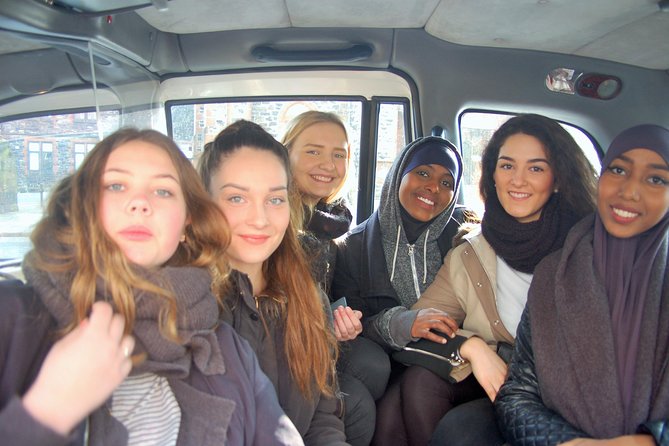
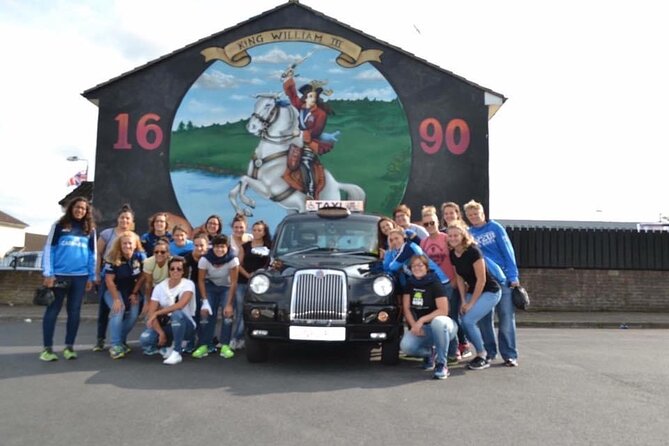
A black cab gives this tour its character. You are not looking at Belfast from behind a large coach window. You move through streets that still carry strong political meaning, then stop close to murals, walls, and landmarks.
The small vehicle also matters for conversation. You can ask about a symbol on a wall, pause over a difficult story, or request another explanation without trying to catch a guide speaking to 40 people. On a standard group tour, the pace is set by the whole bus. Here, your group can spend more time at a mural or move on when you have had enough.
The private format is also helpful for families and small groups with different levels of interest. Children must be accompanied by an adult, but most people can take part, and service animals are allowed.
The tour is priced at $104.16 per person. That is not cheap for two hours, but the value improves as your group grows, since you are paying for a private vehicle, driver-guide, hotel or port transport, and a tailored conversation. For one person, the cost is harder to justify. For a couple or a small group, it can compare well with several separate sightseeing activities.
Other black taxi tours in Belfast:
- Belfast: Political Taxi Tour
★ 4.8 · 5,014 reviews - Cab Tours Belfast Famous Black Taxi Tours
★ 5.0 · 3,633 reviews - Private Black Taxi Belfast City Tour
★ 5.0 · 2,188 reviews
Crumlin Road Gaol and the weight of prison history
The route includes Crumlin Road Gaol, a 19th-century prison known for holding IRA, UVF, UFF, and INLA prisoners during more than 30 years of conflict. It was also a hanging jail, and its history includes attempted escapes and a loyalist RPG rocket attack during the 1990s.
This stop gives you an important frame for the rest of the tour. The Troubles were not only fought on street corners. They also shaped prisons, courts, families, and daily life. The prison helps show how political conflict became part of the legal and security system.
The itinerary does not list an admission ticket for Crumlin Road Gaol, so you should not assume that an interior visit is included. The route may focus on the building and its story from the outside. Ask your guide or booking contact exactly what you will see there, especially if entering the prison is important to you.
Shankill Road and loyalist Belfast
The Shankill Road is the main loyalist stop, and the tour allows about 30 minutes here. The area is associated with loyalist identity and the beginnings of the UVF and UDA. The road itself is described as dating back to 455 AD, giving your guide a chance to connect modern political division with a much longer British and Irish story.
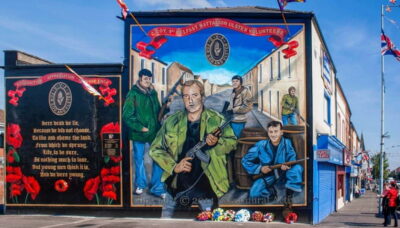
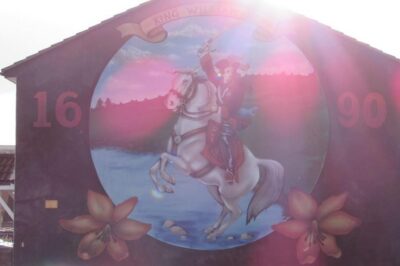
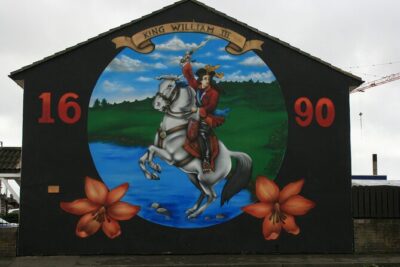
You can get out and photograph murals and bonfires. These images are not just decoration. They express Protestant and British identity, commemorate people and events, and mark community boundaries.
This is a good place to ask your guide to explain what you are seeing instead of trying to decode every mural on your own. Symbols can carry several meanings depending on the neighborhood, date, and political group involved.
The drawback is that some travelers may find the material confronting. A bonfire mural or paramilitary emblem can feel very different when you understand the violence connected to it. The best approach is to listen carefully and avoid treating the area as a theatrical backdrop.
Clonard Monastery and the quiet work of peace
Clonard Monastery receives roughly 10 minutes. It was built more than 100 years ago by Italian and local craftsmen, but its importance here is political as much as architectural.
Father Alex Reid used the monastery for secret talks involving Gerry Adams and John Hume, discussions that helped move the peace process forward. That makes this a useful pause between the more openly partisan sites on the Shankill and Falls roads.
You may not have much time to study the building in detail, and admission is not included. Its value comes mainly from the story attached to the place. Your guide can show how peace talks often began quietly, away from cameras and public ceremonies.
More Belfast outings booked on the same trip:
- Belfast: The Titanic Experience with SS Nomadic Visit
★ 4.7 · 7,163 reviews - From Belfast: Giant’s Causeway and Game of Thrones Day Tour
★ 4.4 · 7,061 reviews - From Belfast: Giant’s Causeway Full-Day Guided Trip
★ 4.8 · 6,361 reviews - Titanic Belfast Entrance Ticket: Titanic Visitor Experience Including SS Nomadic
★ 4.5 · 3,698 reviews
Writing on the Peace Wall
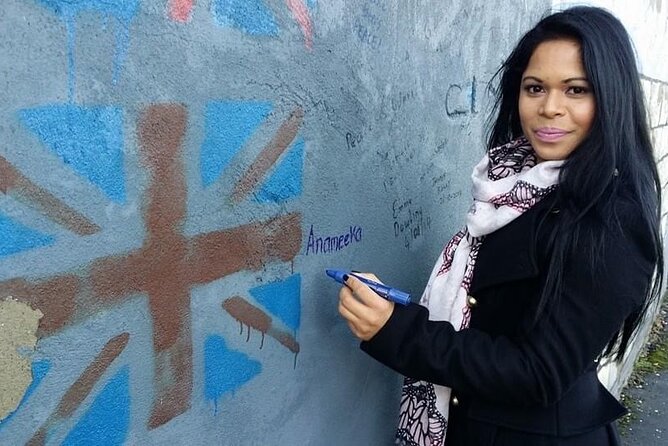
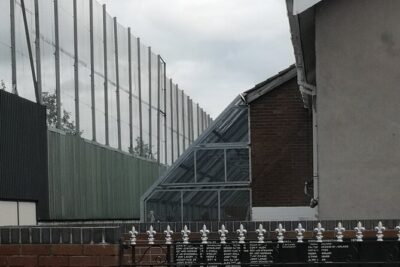
The Peace Wall is one of the tour’s most memorable stops, with about 20 minutes to look around and leave your name or a message of peace. The walls were first built in 1969 after large numbers of people were displaced and violence spread through Belfast.
The wall is both a visitor sight and a reminder that the conflict was close to ordinary homes. It was built to keep communities apart, yet it later became a place where people from around the world wrote messages calling for peace. Names associated with the wall include President Clinton, Morgan Freeman, and Lady Gaga.
I like this stop because it gives you something simple to do while thinking about a complicated past. You are not merely photographing a famous structure. You are adding your own small mark to a place shaped by fear, separation, and later hopes for peace.
Do not expect the wall to feel cheerful simply because it carries positive messages. The point is the tension between its purpose and its appearance. It is a barrier that became a public record of reconciliation.
Divis Flats and the Falls Road entrance
The Divis flats sit at the beginning of the Falls Road. The top two floors were used as a British Army base for more than 25 years. The guide uses this stop to explain up to 800 years of British and Irish history, then connect that long story to the modern conflict.
Ten minutes is not long, so this is mainly a moving history lesson with a short look at the site. The flats help you understand how military presence was woven into the built environment. A building could be housing for local people and a security post at the same time.
This is where the route begins to shift from loyalist Belfast toward the republican community. That contrast is central to the tour. You are not studying one side in isolation. You are moving across a physical boundary and hearing how each community understood the same decades differently.
Bobby Sands mural and republican memory
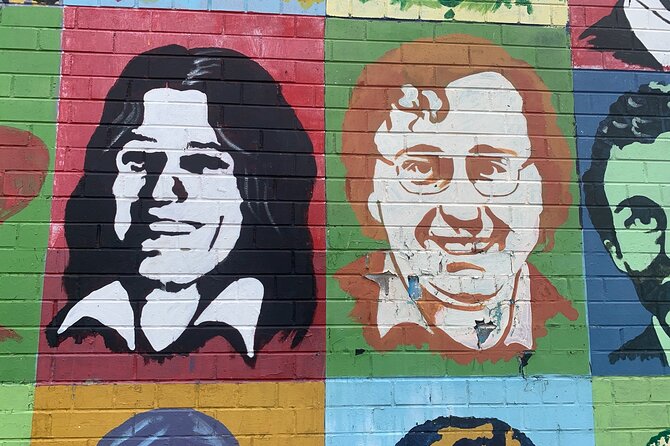
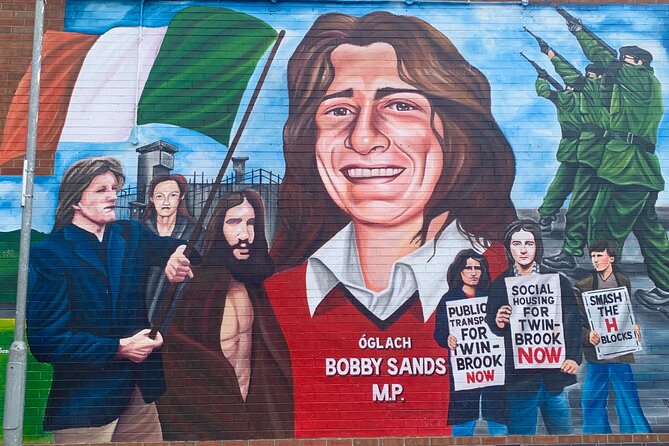
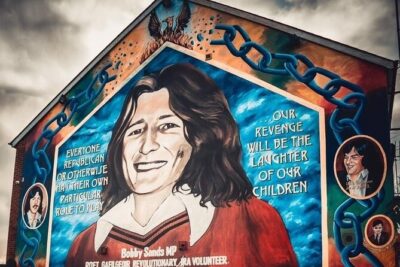
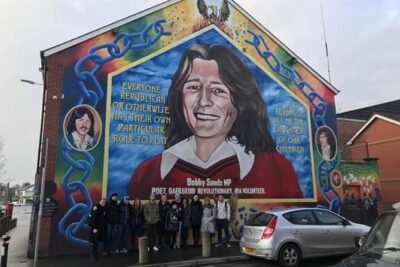
The Bobby Sands mural is given about 30 minutes, making it one of the longer stops. The Falls Road is associated with the Provisional IRA, which fought the British Army on these streets. The tour connects the mural to the conflict and to the local people who hand-painted many of Belfast’s political images.
Bobby Sands remains a powerful figure in republican memory. The mural is not a neutral historical marker, so your guide’s explanation matters. A good guide should make clear why the image is important to one community while also placing it within the wider record of violence and political struggle.
This is a strong photo stop, but it should not be treated as a quick picture opportunity. Use the time to ask how murals changed, who painted them, and how local people view them today. Ricky is repeatedly praised for combining historical knowledge with memories of growing up during The Troubles. Brendan and Jimmy are also noted for thoughtful, personal explanations.
The tour description says more than 300,000 soldiers served in Northern Ireland during the conflict. That figure is presented as part of the guide’s context, but the exact meaning of the number may depend on how service is counted. If precise statistics matter to you, ask for clarification rather than treating every figure as settled fact.
International Mural Wall on Divis Street
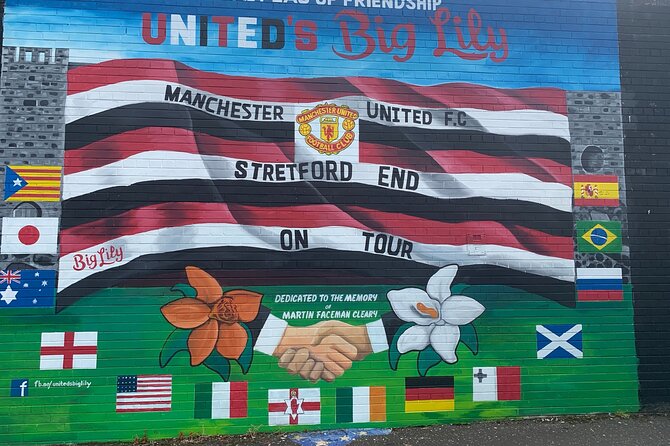
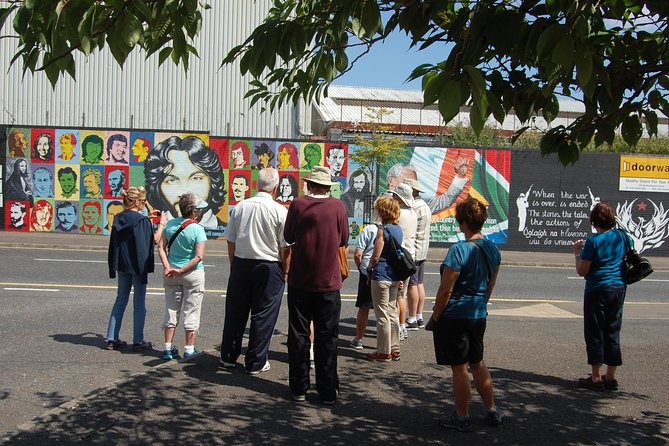
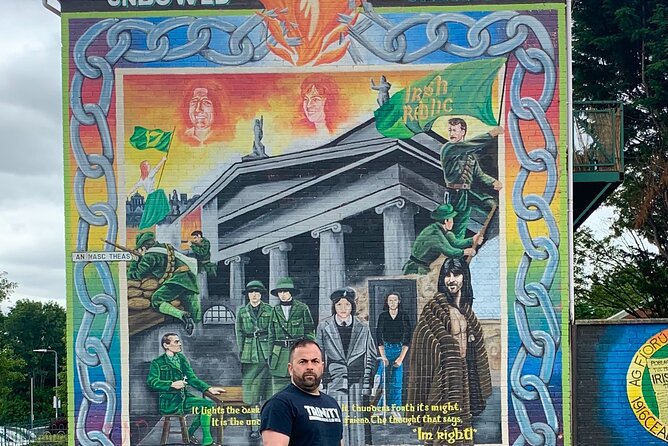
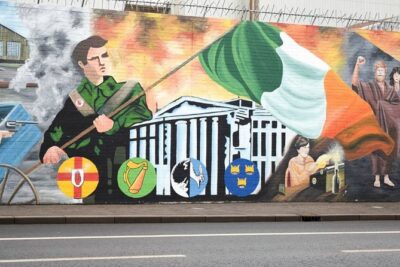
The final listed stop is the International Mural Wall on Divis Street, with about 10 minutes. More than 40 murals have appeared there, with images and messages supporting causes such as Palestine, Cuba, and Kurdish political movements.
The wall shows that Belfast’s murals are not only about local events. They also connect republican identity with international struggles. Murals change over time, so the exact images you see cannot be guaranteed.
This stop also brings up an important issue: how conflict is remembered, presented, and sometimes ignored by the media. The tour description refers to media coverage of the treatment of nationalist people during The Troubles. Your guide may present a strongly nationalist view, so listen for the difference between a community’s memory, a political argument, and an agreed historical fact.
That is not a reason to avoid the tour. It is a reason to ask questions and keep your own judgment. The most useful guides, including those praised for offering a broad view of The Troubles, can explain why different people remember the same events in different ways.
Guides, personal stories, and tone
The guide can make or break this experience. The strongest accounts describe guides who were passionate, patient, and able to connect dates and events with lived experience.
Ricky is praised for storytelling and for explaining the past through personal memories. Brendan is described as attentive and willing to answer questions. Jimmy is noted for his passion for peace and for pausing so people could reflect. Kevin is praised for making difficult material easier to follow, with a good sense of humor used carefully.
Gerard, Paddy, Mal, and Jarlath are also named positively. You may not be able to choose a particular guide, but you can request one when booking if the operator allows it. The descriptions suggest a range of personalities, yet the common strength is direct local experience.
You should prepare yourself for a guide who has a clear perspective. First-hand experience adds something a standard history lecture cannot, but it can also make the presentation more personal and political. I recommend reading a short neutral account of The Troubles before you arrive. You will recognize names and events, then use your time to ask better questions.
Timing, pickup, and the two-hour limit
The advertised duration is about two hours. The listed stops add up to roughly 110 minutes before allowing for Crumlin Road Gaol, driving, traffic, and the time needed to get in and out of the cab.
That makes the schedule efficient, but not spacious. You will see many important places, yet you should not expect long interior visits or a full treatment of every political issue. The tour works best as an introduction and orientation, not as the only history activity you do in Belfast.
Hotel pickup and drop-off are included within one mile of Belfast City Hall. You can also meet outside Belfast City Hall by the flag post. Pickup beyond that central area carries a surcharge payable in cash on the day, so provide your accommodation details when booking and ask about the exact cost.
Port pickup and drop-off are also included. This is useful for cruise passengers, but you should allow enough time around your ship’s schedule. The operator confirms bookings at the time of reservation, and mobile tickets make the voucher easy to carry.
Two poor experiences involved no driver arriving and no prompt contact, including one case where the booking was recorded for the wrong date. These incidents appear uncommon beside the 4.9 rating from 106 ratings and the 97 percent recommendation rate, but they are worth taking seriously. Recheck the date, pickup point, and phone contact before the morning of your tour.
Who will get the most from this tour
I would choose this tour if you want to understand Belfast through places where history happened, not just through general sightseeing. It suits couples, families with older children, small groups, cruise passengers, and anyone who values private transport.
It is also a good choice if you have limited time. The cab covers ground efficiently and gives you a useful map of the Shankill, Falls Road, Divis, Crumlin Road, and Peace Wall areas.
I would be cautious if you want a completely neutral presentation, long museum visits, or a lighthearted city tour. The subject is painful, and some explanations may reflect the guide’s own community background. That is part of the experience, but you should arrive ready to listen rather than expect a polished, politically blank version of Belfast.
Free cancellation is available up to 24 hours before the start time. Changes or cancellations inside that window are not accepted for a refund. Poor weather or failure to meet the minimum number of participants can lead to a new date or a full refund.
Should you book the Belfast black cab tour?
Yes, if your main goal is to understand Belfast’s recent conflict and see the communities where that history remains visible. The private format, hotel or port pickup, photo stops, and personal guide stories make the $104.16 per-person price reasonable for a couple or small group.
Book it early in your stay so the city makes more sense afterward. Give yourself time to absorb the Peace Wall, listen carefully on the Shankill and Falls roads, and ask for context when a mural feels one-sided. If you want the best possible experience, confirm the date and pickup details, request a guide known for a broad perspective, and treat the tour as a serious history lesson with wheels.
FAQ
How long is the Belfast black cab tour?
The tour lasts approximately two hours.
Is the tour private?
Yes. Only your group takes part in the private activity.
Is hotel pickup included?
Hotel pickup and drop-off are included within one mile of Belfast City Hall. Other pickups may require a cash surcharge.
Can I be picked up at Belfast’s port?
Yes. Port pickup and drop-off are included.
Where can I meet the tour if I do not use hotel pickup?
You can meet outside Belfast City Hall by the flag post.
Is the tour offered in English?
Yes. The tour is offered in English.
Can I take photographs and write on the Peace Wall?
Yes. The itinerary allows time to get out for photos, and you can write your name and a peace message on one of the Peace Walls.
What is the cancellation policy?
You can cancel up to 24 hours before the start time for a full refund. Cancellations or changes made less than 24 hours before the start time are not accepted for a refund. Poor weather or failure to meet the minimum number of participants may result in a different date or a full refund.
Newest reviews from Belfast
- VIP Skip-the Line Titanic Museum and Whiskey Tasting Tour★ 4.8 · 11 reviews
- Private Half Day Winter Magic in the Antrim Glens★ 5.0 · 2 reviews
- Giants Causeway Private Tour★ 5.0 · 3 reviews
- Titanic Eastside Bike Tour★ 5.0 · 9 reviews
- The Single Cask Whiskey Experience★ 5.0 · 6 reviews
- This is Belfast Walking Tours. Our history, our culture.★ 5.0 · 7 reviews
- St Patrick’s Centre & Burial Site + Hillsborough Castle & Gardens★ 5.0 · 2 reviews
- Small Group Giant’s Causeway Day Tour from Belfast★ 5.0 · 11 reviews
Black Taxi Tours, compared.
Browse the lists this tour appears in