Reviewed · BELFAST TOURS
Private Belfast Explore Like a Local
Belfast tells its story in walls and murals. This private driving tour links the city’s grand Victorian sights with the Falls and Shankill districts, giving you a fast, personal introduction to Belfast’s divided past and modern identity. I especially like the private guide and hotel pickup, which save time and let you ask direct questions. I also like the focus on political murals and peace walls, places that explain Belfast more clearly than a standard sightseeing loop.
The main caution is the price: $638.11 per person is a serious outlay for a tour lasting roughly three hours. The route also packs in more than 20 stops, so several are brief photo opportunities or drive-bys rather than full visits. You are paying for private transport, local interpretation, and convenience, not long admissions at museums or historic houses.
The tour can be especially useful early in your Belfast stay. Guides such as Barry and Joe have been praised for explaining the Troubles through personal experience and for welcoming difficult questions. Still, the subject is political and personal, so ask your guide to explain both republican and loyalist viewpoints rather than accepting any single interpretation as the whole story.
In This Review
- Key points to know before booking
- Why a private car helps in Belfast
- Botanic Gardens and Queen’s Quarter
- From Rise to Divis Tower
- The Peace Wall and Belfast’s divided streets
- St Peter’s Cathedral and republican memorials
- Shankill Road and the International Mural Wall
- Belfast Castle and the view over the city
- The Albert Clock, Big Fish, and Belfast’s maritime story
- Finishing at the Crown Liquor Saloon
- What the $638.11 price really buys
- Who will get the most from this tour?
- Should you book Private Belfast Explore Like a Local?
- FAQ
- How long does the private Belfast tour last?
- Is hotel pickup included?
- Is this a private tour?
- Are admissions included?
- Is the tour offered in English?
- Can I cancel for a full refund?
Key points to know before booking
- Private hotel or cruise-ship pickup: Central Belfast accommodation pickup and drop-off are included, but airport transfers are not.
- A history-heavy route: The Falls Road, Shankill Road, Divis Tower, peace walls, Bobby Sands mural, and Clonard memorials form the heart of the tour.
- Many short stops: Botanic Gardens gets about 30 minutes, while several landmarks receive only 5 to 15 minutes.
- Comfortable sightseeing by car: You avoid figuring out Belfast’s divided neighborhoods and let the driver handle navigation.
- Admissions vary: Botanic Gardens, Queen’s University, the Crown Liquor Saloon, and several outdoor sights are included, but Belfast Castle, SS Nomadic, and Titanic Belfast are photo stops without admission.
- A potentially sensitive viewpoint: One account praised the guide’s personal insight but felt the commentary leaned strongly toward the IRA, so balanced discussion matters.
Why a private car helps in Belfast
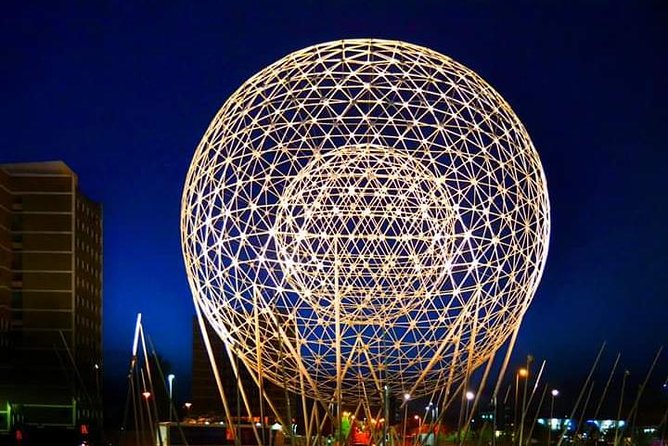
Belfast is compact, but its main sights are spread across several parts of the city. Queen’s Quarter lies south of the center, West Belfast carries much of the political history, and the Titanic Quarter sits east by the shipyards and docks. A private vehicle lets you cover all three without spending your short visit changing buses or working out the route.
You also get a guide focused on your group. That matters here. The story of Belfast is not just a list of dates. It includes identity, religion, class, neighborhood loyalties, policing, paramilitary groups, and memories that remain close to the surface. A private guide can slow down when a question deserves care, or move on if your group wants more time for photographs.
The tour is advertised at about two hours and 40 minutes to three hours, yet the listed stops add up to much more time if each one is visited fully. Read the route as a guided overview, not a leisurely walk through every site. You will see a large amount of the city, but many stops are short viewing points from the vehicle.
That tradeoff suits you if you want orientation and context. It is less suitable if you want to tour Titanic Belfast, study every mural, or spend an hour inside Belfast Castle.
More Belfast outings booked on the same trip:
- Belfast: The Titanic Experience with SS Nomadic Visit
★ 4.7 · 7,163 reviews - From Belfast: Giant’s Causeway and Game of Thrones Day Tour
★ 4.4 · 7,061 reviews - From Belfast: Giant’s Causeway Full-Day Guided Trip
★ 4.8 · 6,361 reviews
Botanic Gardens and Queen’s Quarter
The tour begins with Belfast’s more polished academic side at Botanic Gardens. Covering 28 acres in south Belfast, the park dates from 1828 and remains a popular place for residents, students, and visitors. Its Victorian character gives you a useful opening contrast to the working-class districts visited later.
The Palm House is the star. Completed in 1840, it is one of the world’s early curved cast-iron and glass conservatories. The Tropical Ravine adds another piece of the garden’s plant history. You have about 30 minutes here, with admission included, so this is one of the few stops where you can expect time to get out and look around.
The nearby Ulster Museum is at the garden entrance, and Queen’s University gives the area its name and academic feel. The university began as Queen’s College, Belfast, opening in 1849 with 23 professors and 195 students. The Lanyon Building, designed by Charles Lanyon, is the architectural highlight.
You get about 15 minutes at Queen’s University. That is enough for a look at the exterior and a quick explanation, but not enough for a proper campus visit. Think of this pair of stops as a visual introduction to Belfast’s civic and educational life.
From Rise to Divis Tower
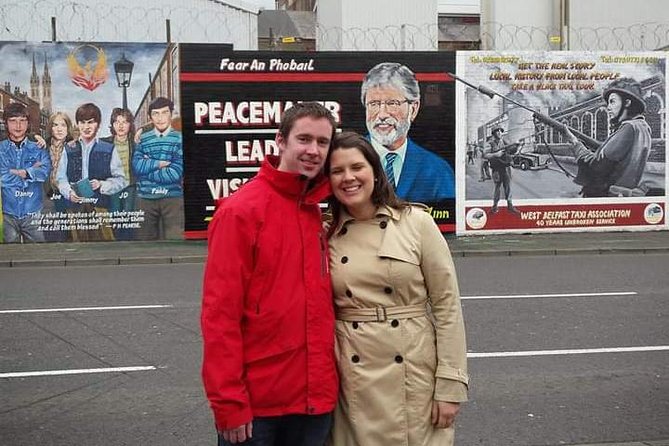
The Rise sculpture makes a sharp change in tone. This huge steel sphere, about 37.5 meters high and 30 meters wide, sits at the Broadway roundabout where the Westlink and M1 meet. Locals have given it less formal nicknames, including The Balls on the Falls and The Westicles.
You get around 10 minutes, likely enough for photographs and a short explanation. The sculpture is important less for a long visit than for its position. It marks a major gateway into West Belfast and is visible across much of the city.
Divis Tower brings the route into the physical setting of the Troubles. Built in 1966 as part of a larger housing complex, the 20-story tower once contained 850 flats and housed about 2,400 people. Its position near the Falls Road and Shankill Road made it a flashpoint during the conflict.
The tower once carried a British Army observation post on its top floors. At the height of the Troubles, soldiers reportedly reached it by helicopter. The post was removed in 2005 after the IRA ended its armed campaign, and the upper floors later returned to residential use.
The history here is painful. Patrick Rooney, aged nine, was killed in the tower during the riots of August 1969. Emmanuel McClarnon, an INLA sniper, was killed by an Army sniper in 1981. You get only about 15 minutes at Divis, so the guide’s explanation is the real value. Listen carefully, and ask for dates or clarification if the account moves quickly.
The Peace Wall and Belfast’s divided streets
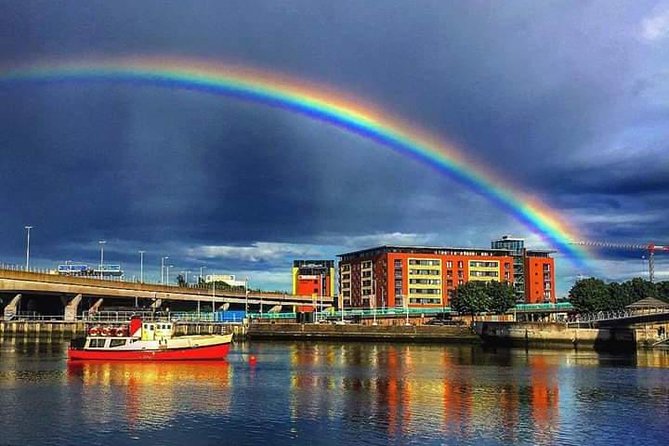
The Peace Wall is the emotional center of the route. Here, the word peace can feel stark rather than comforting. Barriers up to eight meters high separate predominantly nationalist and republican areas from predominantly unionist and loyalist areas. Gates may allow passage during the day but close at night.
These walls began appearing after the 1969 riots and were intended as temporary structures. Many remain, and some became longer, higher, and more permanent after the 1998 Good Friday Agreement. The barriers reduced immediate street violence, but they also show that physical separation has outlasted the formal end of the conflict.
The tour includes a chance to sign the wall and leave a message of peace and hope. That is a small gesture, but it gives you a direct connection to a place that can otherwise feel like a backdrop for photographs. Be respectful. This is still part of a living community, not an open-air museum.
You visit the peace wall for about 30 minutes, then have another 30-minute peace-line stop listed later in the route. The exact arrangement may vary, but the aim is clear: to show the barrier from the surrounding neighborhoods and explain why Belfast remains divided in practical ways.
The Falls Road is the main route through republican West Belfast. The neighboring Shankill Road is predominantly loyalist and unionist. Murals on both sides use symbols, names, flags, and historical references to express identity. You will get more from them if you ask what is being commemorated, who created the mural, and how local residents view it today.
More Private Tours in Belfast:
- Private Black Taxi Belfast City Tour
★ 5.0 · 2,188 reviews - Belfast: Private Black Taxi Cab Political Murals Tour
★ 4.9 · 425 reviews - 2 Hour Private Belfast Taxi Cab Tour of Troubles & Peace walls
★ 5.0 · 240 reviews - Private Political History & Murals Tour Belfast
★ 5.0 · 182 reviews
St Peter’s Cathedral and republican memorials
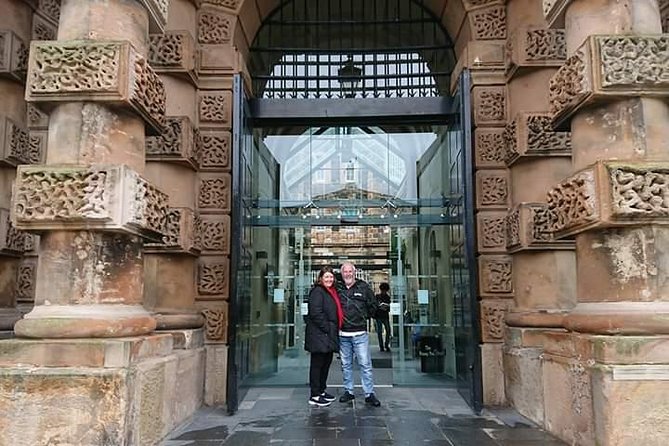
St Peter’s Cathedral gives you a quieter architectural stop in the Falls Road area. Construction began in the 1860s for Belfast’s growing Catholic population, and the church opened in 1866. Its twin spires were added in 1886, while its sandstone exterior and hammer-beam ceiling reflect the ambition of the original project.
The cathedral became the diocesan cathedral for Down and Connor in 1986. It is a Grade A listed building and home to St Peter’s Schola Cantorum. You have roughly 20 minutes, enough to appreciate the building and hear why it mattered to the local Catholic community.
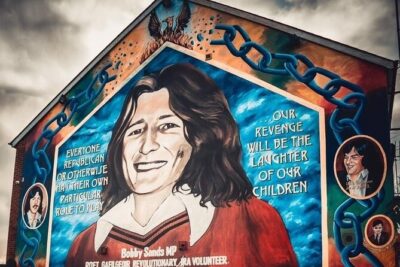
The Bobby Sands mural is one of Belfast’s most recognizable political images. Sands led the 1981 hunger strike while imprisoned in the Maze and died during it. The phoenix, lark, harp, and broken chains carry several layers of republican symbolism, so this is a good place to ask your guide to explain the imagery rather than simply take a photograph.
The tour then visits the Clonard Martyrs memorial garden on Bombay Street. It commemorates republican volunteers, civilian casualties, and prisoners connected with the Greater Clonard area. The memorial includes a Celtic cross, lists of names, and references to people killed by Crown forces and loyalist groups.
These are powerful sites, but they present one community’s memory of the conflict. That is not a flaw, provided it is made clear. If your guide strongly favors one side, ask how unionist communities remember the same years. One guide account praised the depth and personal nature of the commentary, while another felt the IRA received too sympathetic a treatment. That difference is worth keeping in mind.
Shankill Road and the International Mural Wall
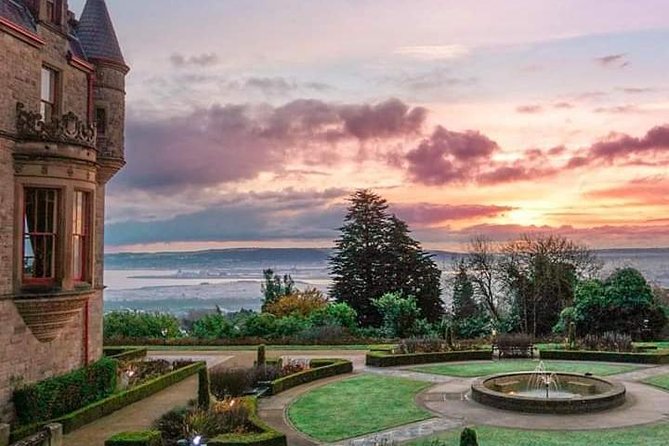
Shankill Road is the loyalist counterpart to the Falls. The road runs about 2.4 kilometers west from central Belfast through a working-class area lined with shops and branching residential streets. Its murals and memorials express British identity, unionism, military service, and loyalty to local groups.
You have about 20 minutes here. That time gives you a useful look at the area, but not a full walking tour. The route also reaches the International Mural Wall on Divis Street, where murals address conflicts and causes from around the world. Themes can include the Spanish Civil War, the Arab-Israeli conflict, the Iraq War, and current political figures.
Belfast’s murals are not all the same. Some are memorials, some are propaganda, some are neighborhood statements, and some have been repainted as attitudes change. You will see a mixture of republican imagery, international solidarity, and newer political references, including a Donald Trump mural.
Clonard Monastery adds another layer. During the Belfast Blitz, more than 300 Protestants from the nearby Shankill area sheltered in its crypt. That detail complicates the easy division between Catholic and Protestant districts. It shows that fear and human kindness could cross the same lines that later became so hard.
Belfast Castle and the view over the city
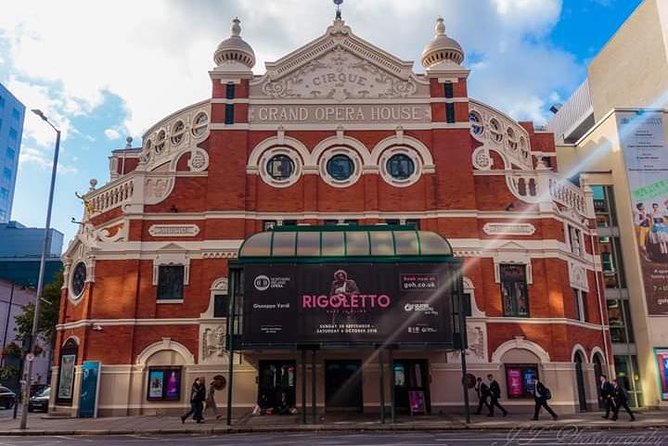
Belfast Castle sits on Cavehill’s lower slopes, about 400 feet above the city. Its position gives you broad views toward Belfast and Belfast Lough, making it a welcome pause after the concentrated political history of West Belfast.
The current building was constructed between 1811 and 1870 in Scottish baronial style by Charles Lanyon and his son. The Chichester family built it after the earlier city-center castle burned in 1708. Belfast City Council received the property in 1934, and a major restoration brought it back to public use in 1988.
The Cat Garden is a playful detail. Nine cats appear in sculptures, mosaics, and clipped shrubs, linked to a local connection with the idea that a cat has nine lives. You get about 30 minutes here, but admission is not included. Confirm the current entry arrangement if you plan to go inside rather than simply view the exterior and grounds.
The castle works best as a scenic stop, especially if you want a break from conflict-related sites. If you have limited time and are choosing between this and Titanic Belfast, remember that the tour only provides a short visit at each. You may prefer to return independently for a longer look.
The Albert Clock, Big Fish, and Belfast’s maritime story
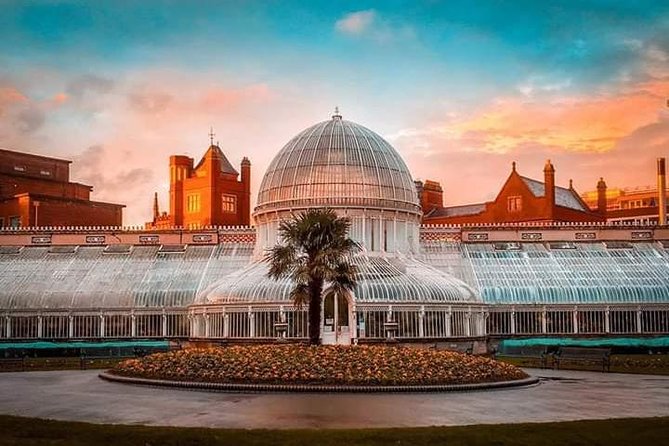
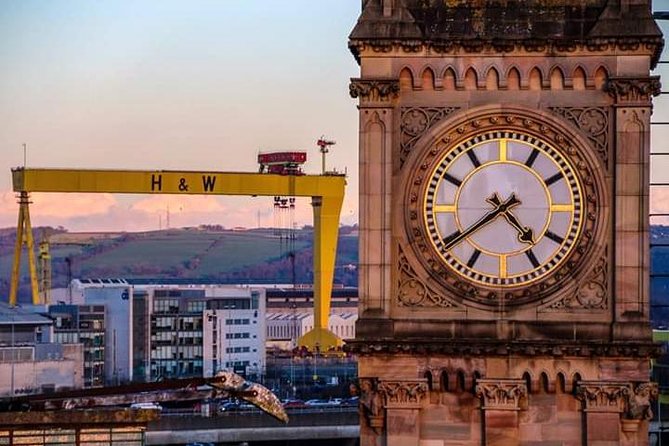
Back in the center, the Albert Memorial Clock gives you a quick look at Belfast’s Victorian civic pride. Completed in 1869, the sandstone tower rises 113 feet and combines French and Italian Gothic details. It leans about four feet from vertical because it was built on wooden piles over reclaimed marshland.
Locals joke that it has the time and the inclination. The clock was also damaged by a 1992 bomb near River House, a reminder that even central landmarks were touched by the conflict.
The Big Fish, or Salmon of Knowledge, is a 10-meter ceramic mosaic on Donegall Quay. Its tiles carry pictures, text, newspaper material, and contributions from local schoolchildren. You can treat it as a giant outdoor history book, with each scale offering a small piece of Belfast’s story.
The Samson and Goliath cranes dominate the skyline from Queen’s Island. Goliath was completed in 1969 and Samson in 1974, so they did not build the Titanic, despite the common assumption. Their scale recalls Harland & Wolff’s importance to Belfast’s shipbuilding era.
SS Nomadic was built to carry passengers and mail to and from the Olympic and Titanic. Launched in 1911, it is the only surviving White Star Line vessel. The tour offers a photo opportunity, but admission is not included.
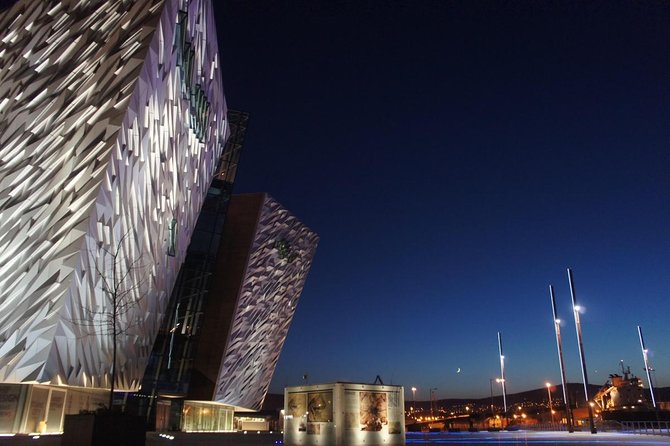
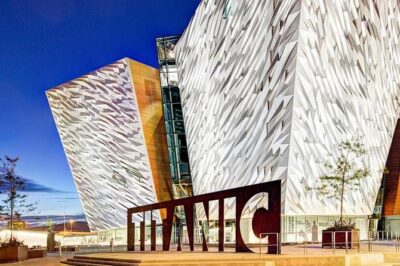
Titanic Belfast receives the same treatment. You can photograph the striking building and Titanic Quarter, a large waterfront redevelopment on the former shipyard site, but the museum ticket costs extra. If Titanic is a priority, plan a separate visit and allow much more time than this tour provides.
Finishing at the Crown Liquor Saloon
The route ends at the Crown Liquor Saloon on Great Victoria Street. Refurbished in 1885, this Victorian gin palace is one of Belfast’s best-known pubs, with elaborate period decoration and a strong connection to the city’s social life.
The stop lasts about 30 minutes and admission is included. The tour description says you can finish by quenching your thirst, but it does not state that a drink is included, so budget for your own order.
Ending here is a good practical touch. You can continue exploring central Belfast afterward, or use the pub as a relaxed place to think over the day. The route also includes a short look at BT9 6RU, one of Belfast’s affluent addresses, with large private homes that contrast sharply with the working-class districts visited earlier.
What the $638.11 price really buys
At $638.11 per person, this is not a bargain sightseeing ride. Its value depends heavily on your group size. The tour is private, so the price may make more sense when shared by several people, but the listed rate is still high and you should confirm the final total before paying.
You are paying for a local guide, private air-conditioned transport, central hotel or cruise-ship pickup, navigation, and a route that would be awkward to assemble on your own. The guide’s personal connection to the Troubles can also add something a book or museum label cannot.
Admissions are mixed. Botanic Gardens and several outdoor sights are included, while Belfast Castle, SS Nomadic, and Titanic Belfast are not. The tour gives you the city’s big picture, then lets you decide where to return for a longer visit.
A luxury Mercedes upgrade may be available for an additional £20, but it is optional and not guaranteed. Tips for the guide are also not included.
Who will get the most from this tour?
I would choose this experience if you have only one day in Belfast, want a private vehicle, or feel uncertain about visiting the peace walls and political neighborhoods independently. It is also a strong fit for families or small groups who want to ask questions without a large crowd listening.
The tour suits history-minded visitors who want the Troubles explained through streets, memorials, and murals. Guides Barry and Joe have been praised for passion, personal accounts, and willingness to answer difficult questions. That can make the experience memorable, but you should actively seek balance when discussing the IRA, British forces, loyalist groups, and civilian deaths.
I would not choose it if your main goals are museum interiors, detailed architecture, or a slow walk through Belfast. The schedule moves quickly, and the route is too packed for extended time at Titanic Belfast, the castle, or the cathedral.
Free cancellation is available up to 24 hours before the start time. Changes or cancellations within 24 hours are not accepted for a refund. Most people can participate, and the tour is only for your own group, but airport pickup and drop-off are not offered.
Should you book Private Belfast Explore Like a Local?
Book it if you want a fast, private introduction to Belfast’s political geography and value a local guide more than formal museum admissions. The peace walls, Falls Road, Shankill Road, murals, Divis Tower, and memorials are the strongest part of the experience.
Think twice if the price is difficult to justify or if you want depth at each stop. At nearly $640 per person, you should confirm the group pricing, vehicle, pickup location, and exact stops before booking.
My practical advice is to take this tour early in your Belfast visit, use it to learn the city’s basic story, and return on foot to the places that catch your interest. If Barry or Joe is available, their personal style may add real value, but ask for a balanced account. Belfast is too complicated for one voice, one mural, or one wall to explain it all.
FAQ
How long does the private Belfast tour last?
The experience lasts approximately two hours and 40 minutes to three hours.
Is hotel pickup included?
Yes. Free pickup and drop-off are offered from central Belfast hotels and cruise ships. Airport pickup and drop-off are not offered.
Is this a private tour?
Yes. Only your group participates, with private transportation and a local qualified guide.
Are admissions included?
Admission is included at Botanic Gardens, Queen’s University, and several listed outdoor sights. Belfast Castle, SS Nomadic, and Titanic Belfast are photo stops where admission is not included.
Is the tour offered in English?
Yes. The tour is offered in English.
Can I cancel for a full refund?
You can cancel for a full refund at least 24 hours before the experience start time. Cancellations or changes made less than 24 hours before the start time are not refunded or accepted.
Newest reviews from Belfast
- VIP Skip-the Line Titanic Museum and Whiskey Tasting Tour★ 4.8 · 11 reviews
- Private Half Day Winter Magic in the Antrim Glens★ 5.0 · 2 reviews
- Giants Causeway Private Tour★ 5.0 · 3 reviews
- Titanic Eastside Bike Tour★ 5.0 · 9 reviews
- The Single Cask Whiskey Experience★ 5.0 · 6 reviews
- This is Belfast Walking Tours. Our history, our culture.★ 5.0 · 7 reviews
- St Patrick’s Centre & Burial Site + Hillsborough Castle & Gardens★ 5.0 · 2 reviews
- Shore Excursion from Belfast to Giants Causeway & Rope Bridge★ 5.0 · 2 reviews
Belfast Tours, compared.
Giant’s Causeway and Game of Thrones Day Tour
Read our review →
Titanic Belfast Entrance Ticket: Titanic Visitor Experience Including SS Nomadic
Read our review →