
Reviewed · MUSEUMS
Peacemakers Museum Entry Ticket
Peace has a story, and Derry tells it plainly. The Peacemakers Museum explains the conflict and peace process from 1972 to 2007 through artefacts, oral history, film, and interactive displays. I like its clear focus on how the Good Friday Agreement came about, and I like the human scale of the story, especially the role of local figures John Hume, Martin McGuinness, and Mitchel McLaughlin.
The museum is also good value at $10.97 per person, with about 90 minutes of material to explore and audio guides in five languages. My main caution is simple: there is a lot of reading and listening, so a rushed visit will leave important parts behind. Check the weekday opening hours carefully before you go, since one visitor arrived to find the museum closed despite online information suggesting it was open.
In This Review
- Key points to know before visiting
- Why the Peacemakers Museum matters in Derry
- Entering the main exhibition, 1972 to 2007
- John Hume, Martin McGuinness, and Mitchel McLaughlin
- Personal stories, prison history, and difficult material
- How the audio guide and written material shape the visit
- Why a visit to the Free Derry Museum can help
- Price, timing, and practical value
- Who will get the most from this museum?
- Should you book the Peacemakers Museum?
- FAQ
- Where is the Peacemakers Museum located?
- How long does a visit take?
- What period does the museum cover?
- Which languages are available for the audio guide?
- Is a written guide available?
- What are the published opening hours?
- Is food or drink included?
- Can I cancel or change my booking?
Key points to know before visiting
- The story covers 1972 to 2007, tracing the conflict from its later years through the peace process and the Agreement’s implementation.
- Three Bogsiders receive special attention: John Hume, Martin McGuinness, and Mitchel McLaughlin.
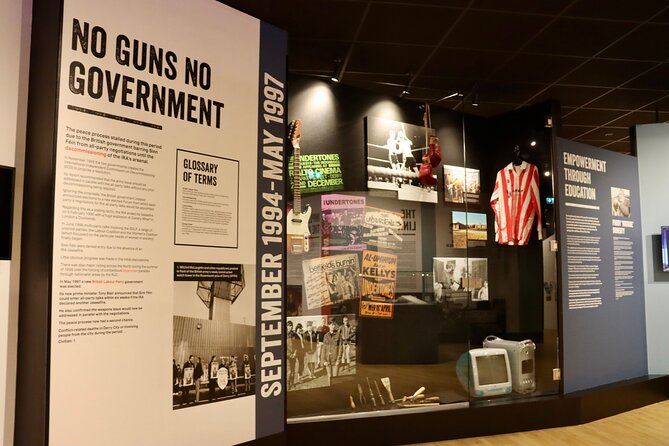
- The exhibits use many formats, including personal objects, archive footage, oral testimony, interactive features, and written displays.
- Audio guides are available in English, Spanish, French, German, and Italian, while the written guide is in English.
- Plan for more than a quick walk-through, since several sections require careful reading and listening.
- The museum pairs well with the nearby Free Derry Museum, which covers the 1960s through the early 1980s.
Why the Peacemakers Museum matters in Derry
Derry is a city where political history is not locked away in a distant century. The Troubles shaped ordinary streets, families, workplaces, schools, and daily routines. The Peacemakers Museum helps you understand how that conflict changed over time, and how political negotiations eventually created a path toward peace.
Its period begins in August 1972 and continues through May 2007. That span gives the museum a useful job. It does not try to explain every event in Northern Ireland from the beginning. Instead, it concentrates on the later conflict, the people involved in it, and the steps that led toward the 1998 Good Friday Agreement and its later implementation.
I appreciate that focus. You can leave with a clearer sense of cause and effect rather than a jumble of dates and names. The displays connect events to decisions, political ideas, and personal experiences. They also address the Agreement as a political framework based on consent, a principle that helped define how Northern Ireland’s future could be determined.
The museum’s emphasis on reconciliation gives the visit a forward-looking tone. That does not make the material easy. Some displays deal with painful experiences, prison life, protest, violence, and loss. But the museum presents the period as a difficult recent past that still has meaning for the future of the island.
Other Derry~Londonderry days:
- Private Guided Walking Tour in Derry City
★ 5.0 · 635 reviews - Derry City: The troubles Bogside walking tour
★ 5.0 · 503 reviews - Walking Bogside History Tour in Guildhall
★ 5.0 · 280 reviews
Entering the main exhibition, 1972 to 2007
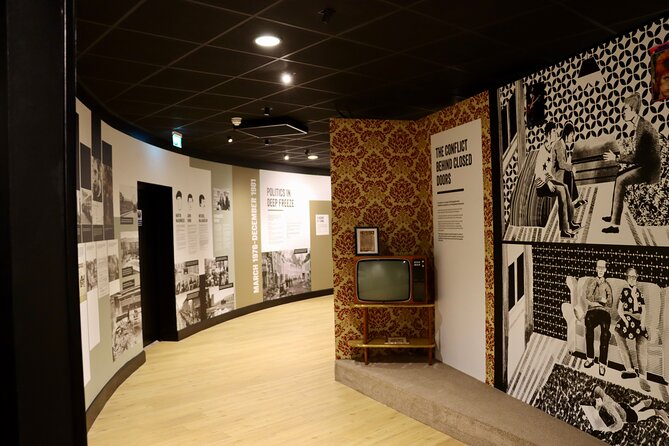
The central visit takes place inside the Peacemakers Museum, where you follow a sequence of displays about the later Troubles and the move toward peace. The museum does not rely on one type of material. Instead, it combines objects, photographs, video, oral accounts, documents, and interactive installations.
That mixture matters. A written panel can explain a political decision, while a filmed interview or personal object can show how that decision affected real people. The use of first-person accounts gives the exhibition a strong sense of humanity. You are not only learning what happened. You are also being reminded that these events took place in a real community, not in an abstract political debate.
The audio guide adds another layer. You can listen in English, Spanish, French, German, or Italian. If English is your preferred language, a written guide is also available. The range of formats makes the museum more approachable for visitors with different levels of background knowledge, though the amount of information can still feel heavy during a short visit.
I would allow the full 90 minutes if you can. One hour may be enough for a brisk overview, but not for every video, oral account, and written display. Several people found themselves reading for longer than expected. That is not a flaw in the subject matter, but it does affect your planning.
If you have only a short window in Derry, decide in advance how much you want to take in. You can walk through the main sections quickly, or you can stop often and listen. The museum rewards the second approach.
John Hume, Martin McGuinness, and Mitchel McLaughlin
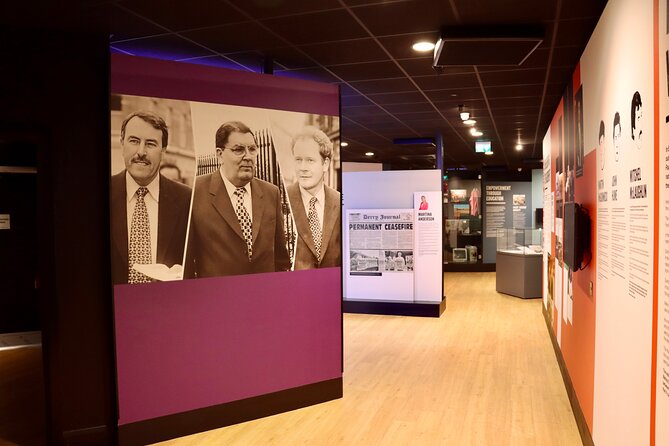
A major strength is the attention given to three Bogsiders: John Hume, Martin McGuinness, and Mitchel McLaughlin. The exhibition explains their role in creating conditions that helped make the peace process possible.
The focus on these local figures gives the museum a strong sense of place. You are not looking at a general account of Northern Ireland that could have been built anywhere. The story is tied to Derry and to people from the Bogside who helped shape the political route toward the 1998 Good Friday Agreement.
The museum also makes clear that the Agreement was not simply a single announcement. It provided a political template for addressing the conflict and for allowing the future of the island to be decided through consent. The displays explore both how the Agreement was reached and what happened as it was put into practice.
That part is especially useful if you know the names but not the process. You might arrive understanding that the Agreement was important, yet still be unclear about how negotiations, political leadership, and public consent fitted together. The museum helps join those pieces.
The presentation is designed to avoid turning the subject into a simple hero story. It looks at key players and difficult choices while keeping attention on reconciliation. That balance is one reason the museum works well for visitors who want more than a partisan account.
Personal stories, prison history, and difficult material
The exhibition includes lesser-known aspects of the Troubles, including material about the Dirty Protest in the female prison. This is a reminder that the conflict was not experienced only by politicians or armed groups. Women, prisoners, families, and local residents also carried its effects.
Some sections may be emotionally demanding. One former resident of Belfast described childhood memories returning during a visit and feeling physically and emotionally overwhelmed. That response is worth taking seriously. The museum deals with recent events, and some of its first-person material may feel close to home even if you have no personal connection to Derry.
You do not need specialist knowledge to follow the displays, but you should come prepared to think. The museum does not offer a light sightseeing stop between cafés. It asks you to consider how people lived through fear, uncertainty, political division, and changing hopes.
At the same time, the exhibition is not presented as an unrelenting catalogue of suffering. Its focus on the peace process and reconciliation gives the visit direction. The difficult sections help explain why the Agreement mattered, and why the possibility of a more peaceful future was so significant.
If you are visiting with children or teenagers, consider their age and interest. The museum is open to most participants, but the subject is serious and some material may need explanation. A family member or teacher can help put difficult displays into context.
Other Derry Londonderry museums worth an hour:
- IRA Troubles Conflict Private Tour Museum Graves Murals and Political Analysis
★ 5.0 · 67 reviews - Saint Patrick Centre Exhibition experience
★ 4.5 · 33 reviews - Titanic Museum and Whiskey Distillery Exploration with Tasting
★ 4.5 · 25 reviews - Belfast: Ulster Folk Museum Entry Ticket
★ 4.8 · 23 reviews
How the audio guide and written material shape the visit
The audio guide is included, which adds value to the ticket price. You can choose English, Spanish, French, German, or Italian, while the written guide is in English.
The museum’s variety of media gives you choices. You can read a panel, watch archive footage, listen to an oral account, or use an interactive display. That helps break up the visit, though it also means you may need to manage your time.
I would not try to consume every item in one pass if the museum is busy or your schedule is tight. Choose the subjects that matter most to you, then return to displays you want to understand better. The amount of reading is one of the clearest practical drawbacks. A quick visit can become a skim rather than a real understanding.
A booklet is also worth considering if it is available during your visit. It was praised as a compact way to keep the main story in order, especially for visitors who wanted a useful overview without trying to remember every display.
Staff are described as friendly and willing to talk about their own experiences of living through the Troubles. That personal contact can add something the formal exhibition cannot. Still, do not assume you will receive a guided tour. Your ticket is for museum entry, with the audio guide and written guide included.
Why a visit to the Free Derry Museum can help
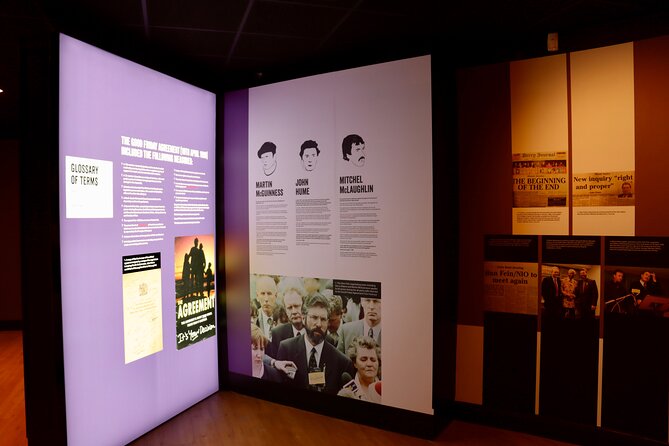
The Peacemakers Museum works particularly well as part of a wider Derry history day. The nearby Free Derry Museum covers the 1960s through the early 1980s, while the Peacemakers Museum begins its main period in August 1972 and follows the story toward 2007.
Visiting the Free Derry Museum first can help you understand the earlier setting. You will then have a clearer base for the later political developments and peace negotiations presented at the Peacemakers Museum.
This order is not required, but it makes sense if you want a fuller account. The two museums approach different sections of the story, so seeing both can reduce confusion about dates and turning points. The Peacemakers Museum is especially useful after you have learned how the conflict developed in its earlier years.
Give yourself enough time between the two visits. The Peacemakers Museum alone can take about 90 minutes, and its reading and video sections may slow you down. If you add the Free Derry Museum, you are planning a serious history outing rather than a quick attraction stop.
Price, timing, and practical value
At $10.97 per person, the ticket is fairly priced for a museum visit of about 90 minutes, especially since the audio guide is included in five languages and all fees and taxes are covered.
The value depends on how you visit. If you rush through in 30 minutes, the price may feel less worthwhile because much of the exhibition’s strength comes from the stories, archive footage, and written context. If you stay for the full visit, the ticket provides a substantial account of a complex period at a modest cost.
The listed opening hours are Monday through Friday, 9:30 a.m. to 5 p.m., for the period from July 29, 2024, through February 16, 2027. These hours make a morning or afternoon visit easy to arrange, but they do not offer a weekend option in the published schedule.
Opening-hour confusion is the main logistical warning. One visitor tried twice over several days and found the museum closed despite online information saying it was open. I would confirm the hours directly before setting out, particularly if your Derry visit is built around this museum.
The museum is near public transportation, and service animals are allowed. Most people can participate. Food and drink are not included in the ticket, though a café was praised for quality, generous portions, and good prices. Treat that as a possible extra rather than part of the admission.
The ticket is mobile, so you can keep the admission on your phone. Confirmation is provided at booking. The experience is non-refundable and cannot be changed, so check your date and opening time carefully before paying.
Who will get the most from this museum?
I would recommend the Peacemakers Museum to anyone who wants to understand the Troubles beyond a quick walking tour or a few famous photographs. It suits visitors with a strong interest in Northern Ireland, recent political history, peace negotiations, and local personal accounts.
It is also a good choice if you have limited background knowledge. The displays explain who was involved, what happened, and what the outcomes meant. You do not need to arrive with a long list of dates.
People with family or personal connections to the Troubles may find the experience especially powerful, though also difficult. The first-person material can bring back memories. Give yourself permission to take a break if the subject becomes too intense.
You may want to skip it if you are looking for a quick, light attraction or if your schedule allows only a few minutes. The museum needs attention. Its strength is detail, not speed.
The experience is offered in English, but the audio guide broadens access for Spanish, French, German, and Italian speakers. Written material is in English. Because there is a lot to read, visitors who prefer a fully guided spoken experience should check how much audio content they want to use before arriving.
Should you book the Peacemakers Museum?
Yes, if you want a thoughtful account of how Derry moved from conflict toward peace. The museum’s best features are its local focus, its use of personal stories and archive material, and its clear attention to John Hume, Martin McGuinness, and Mitchel McLaughlin.
Book it as a planned 90-minute visit, not a spare half hour. Pair it with the Free Derry Museum if you want the earlier part of the story, and confirm the weekday opening hours before committing because the ticket cannot be refunded or changed.
At $10.97, it offers strong value for a serious, well-presented museum visit. It will not make the Troubles feel simple, and that is part of its worth. You leave with a better grasp of the conflict, the people affected by it, and the political effort that made peace possible.
FAQ
Where is the Peacemakers Museum located?
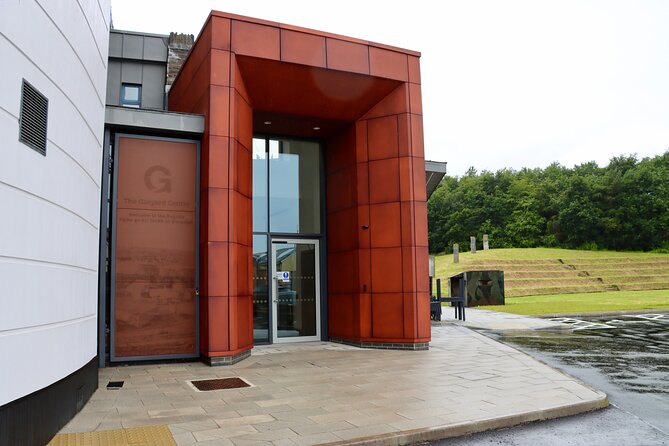
The museum is in Derry-Londonderry, Northern Ireland.
How long does a visit take?
The expected visit lasts approximately 1 hour and 30 minutes.
What period does the museum cover?
The museum explores events from August 1972 through May 2007, including the development of the conflict, the peace process, and the Agreement’s implementation.
Which languages are available for the audio guide?
The audio guide is offered in English, Spanish, French, German, and Italian.
Is a written guide available?
Yes. A written guide is offered in English.
What are the published opening hours?
The published hours are Monday through Friday, 9:30 a.m. to 5 p.m., for the period from July 29, 2024, through February 16, 2027.
Is food or drink included?
No. Food and drink are not included in the admission ticket.
Can I cancel or change my booking?
No. The experience is non-refundable and cannot be changed for any reason.
Newest reviews from Derry Londonderry
- Derrie Danders: Wander around the Waterside on a self-guided GPS audio tour★ 4.5 · 3 reviews
- Derrie Danders: Unveiling Derry’s Dark & Haunted Past Audio Tour★ 4.5 · 3 reviews
- Derrie Danders: A Self-Guided Audio Tour of the Riverside and South City★ 5.0 · 3 reviews
- Giant’s Causeway & Game of Thrones (luxury Private Tour)★ 5.0 · 15 reviews
- Londonderry Private Walking Tour With A Professional Guide★ 5.0 · 2 reviews
- Full-day private tour from Game of Thrones Odyssey★ 5.0 · 2 reviews
- Full Day Private Luxury Tour of Causeway Coast (Giants Causeway)★ 5.0 · 5 reviews
- Derry/Londonderry – Darker History Walking Tours★ 5.0 · 2 reviews
Museums, compared.
IRA Troubles Conflict Private Tour Museum Graves Murals and Political Analysis
Read our review →
Titanic Museum and Whiskey Distillery Exploration with Tasting
Read our review →
VIP Skip-the Line Titanic Museum and Whiskey Tasting Tour
Read our review →
Belfast City Sightseeing Tour Including Titanic Museum | 6 Hours
Read our review →
Browse the lists this tour appears in